Department of Child and Adolescent Psychiatry, Psychotherapy and Psychosomatics, University of Leipzig, Leipzig, Germany.
Department of Medical Psychology and Medical Sociology, University of Leipzig, Leipzig, Germany.
PLoS One. 2018 Oct 8;13(10):e0205401. doi: 10.1371/journal.pone.0205401. eCollection 2018.
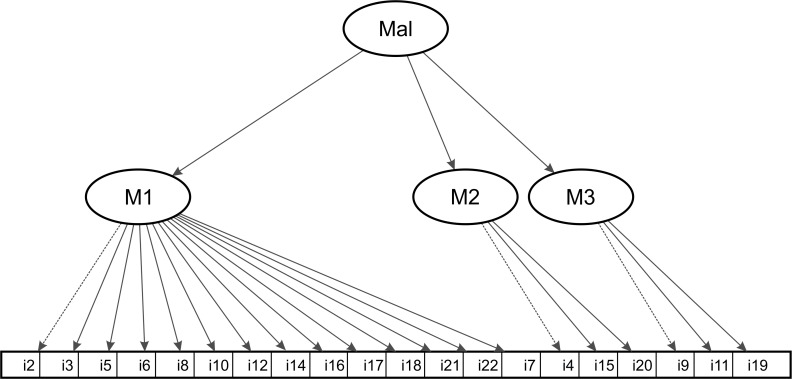
Child victims' reports of psychological and physical abuse by caregivers are a fundamental source of information beyond official records and caregiver reports. However, few or no sensitive and age-appropriate child-report instruments exist that have undergone in-depth validity and reliability testing across a broad age-range. Our study addresses this gap by examining psychometric properties of a picture-based, modularized version of the Parent-Child Conflict Tactics Scale (CTSPC-R), encompassing the maltreatment subtypes of psychological and physical abuse. A sample of 904 children and adolescents aged 4-16 years from the community (n = 568), child psychiatric services (n = 159), and from Child Protective Services (CPS; n = 177) completed the CTSPC-R. Measures to test convergent (maltreatment in parent interviews and CPS records) and concurrent validity (psychiatric symptoms) were collected. The CTSPC-R comprises 22 items, arranged in three severity modules by increasing level of psychological and physical abuse by caregivers. Companion picture cards were provided for children aged 4 and 8 years. The best fit to the data was attained with a second-order factor model, assuming three inter-correlated factors corresponding to the three severity modules, and a latent second-order factor representing combined physical and psychological abuse. The three factors showed good internal consistencies. Supporting convergent validity at the global and subtype-level of maltreatment, the CTSPC-R severity scale was associated with lifetime CPS-contact, presence of caregiver-reported emotional maltreatment and physical abuse, and dimensions of chronicity and severity. Discriminant validity was supported by non-significant correlations with caregiver-reported lack of supervision, failure to provide, and sexual abuse. Bolstering concurrent validity, moderate and severe physical abuse predicted caregiver-reported internalizing and externalizing symptoms. These effects were independent of child age, gender or community vs. non-community samples. Our study supports the CTSPC-R as a scientifically and clinically sound tool for ascertaining the child's own perspective on psychological and physical abuse from an early age onwards.
儿童受害者对照顾者心理和身体虐待的报告是超越官方记录和照顾者报告的基本信息来源。然而,很少有经过深入有效性和可靠性测试的敏感和适合年龄的儿童报告工具,并且这些工具适用于广泛的年龄范围。我们的研究通过检查基于图片的、模块化的父母-儿童冲突策略量表(CTSPC-R)的心理测量特性来解决这一差距,该量表涵盖了心理和身体虐待的虐待亚型。来自社区(n=568)、儿童精神病服务(n=159)和儿童保护服务(CPS;n=177)的 904 名 4-16 岁的儿童和青少年完成了 CTSPC-R。收集了用于测试收敛性(父母访谈和 CPS 记录中的虐待)和同时有效性(精神症状)的测量。CTSPC-R 由 22 个项目组成,通过增加照顾者心理和身体虐待的严重程度分为三个严重程度模块。为 4 岁和 8 岁的儿童提供配套图片卡。数据拟合度最好的是二阶因子模型,假设存在三个相互关联的因子,对应于三个严重程度模块,以及一个代表身体和心理虐待综合的潜在二阶因子。这三个因素具有良好的内部一致性。支持虐待的全球和亚型水平的收敛有效性,CTSPC-R 严重程度量表与终生 CPS 接触、照顾者报告的情感虐待和身体虐待以及慢性和严重程度维度相关。与照顾者报告的缺乏监督、未能提供和性虐待无显著相关性,支持判别有效性。支持同时有效性,中度和重度身体虐待预测照顾者报告的内化和外化症状。这些影响独立于儿童年龄、性别或社区与非社区样本。我们的研究支持 CTSPC-R 作为一种科学和临床上合理的工具,用于从早期开始确定儿童自身对心理和身体虐待的看法。