Department of Anatomy, Chonnam National University Medical School, Gwangju 61469, Korea.
Department of Statistics, College of Natural Sciences, Chonnam National University, Gwangju 61186, Korea.
Int J Mol Sci. 2018 Oct 8;19(10):3062. doi: 10.3390/ijms19103062.
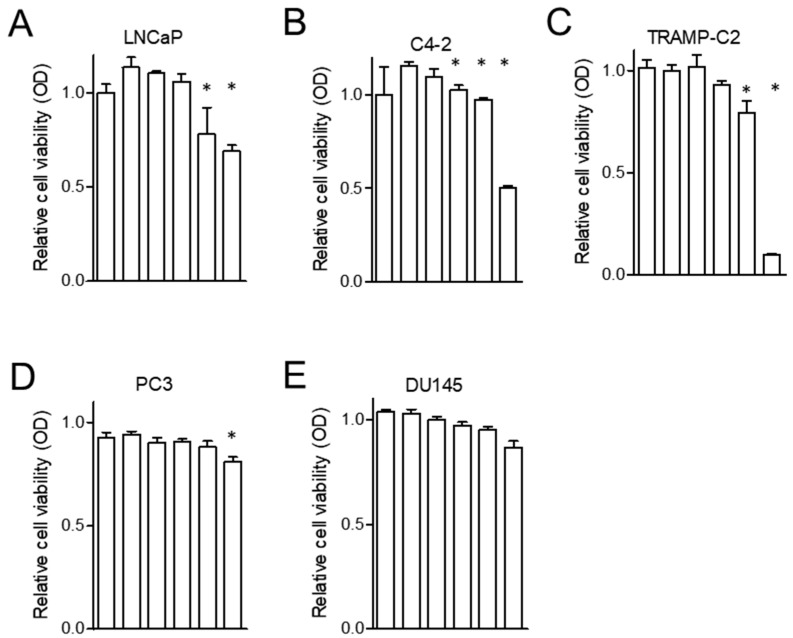
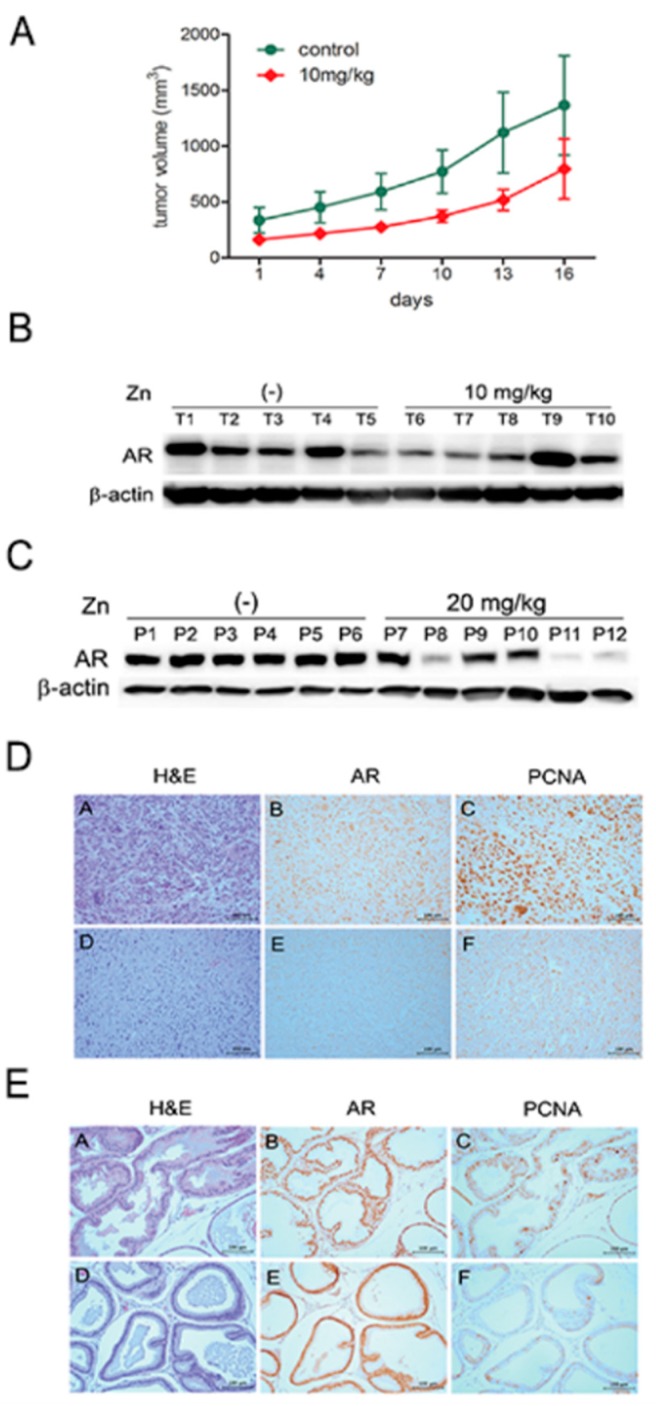
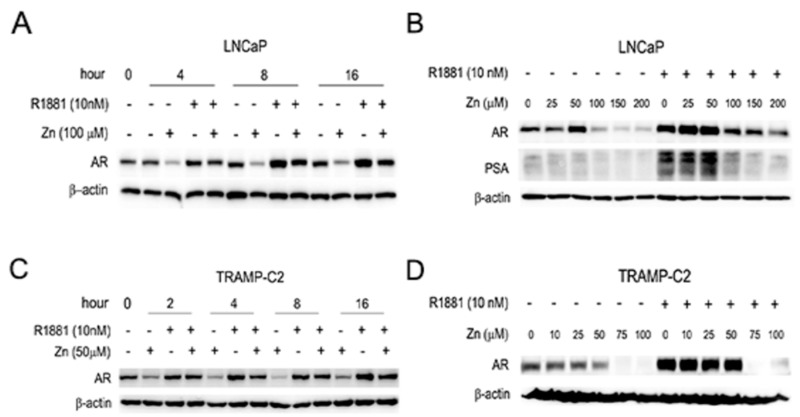
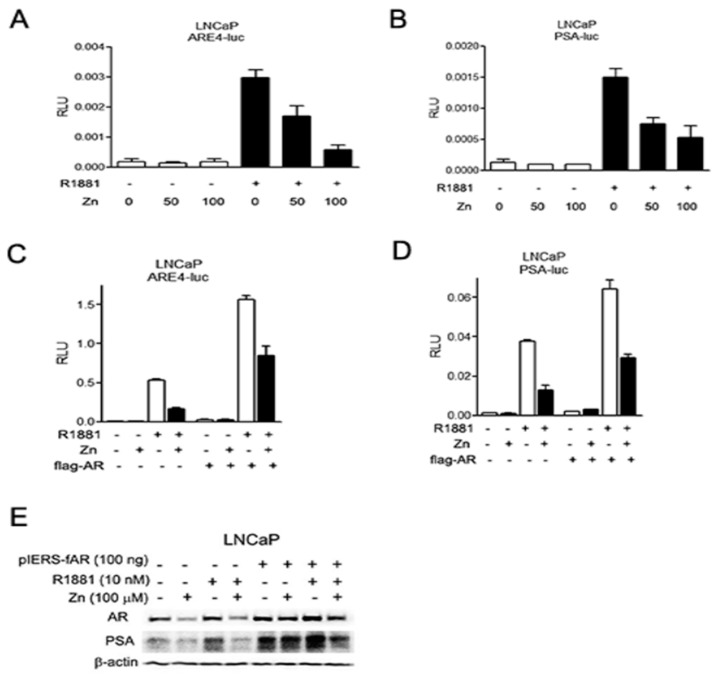
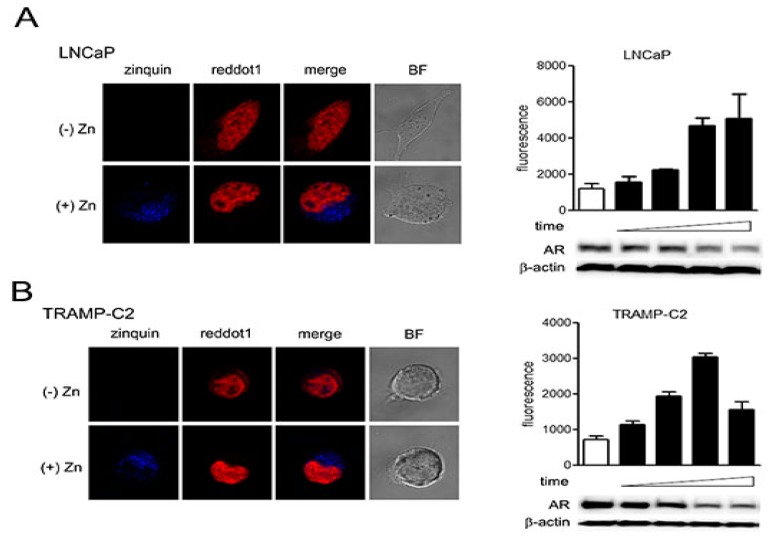
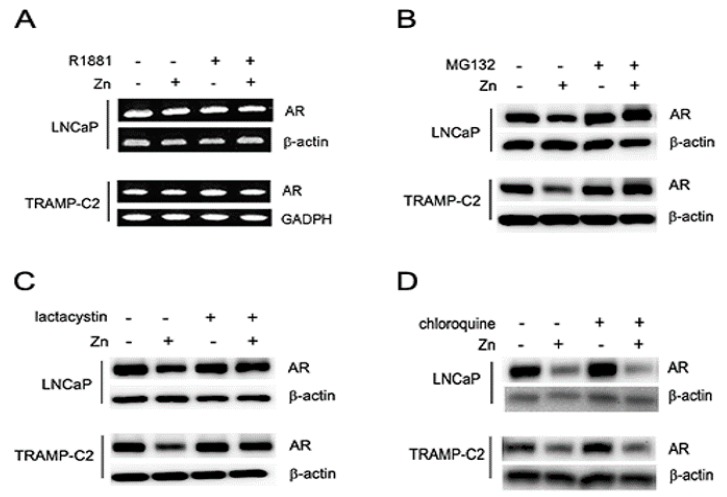
The prostate gland contains a high level of intracellular zinc, which is dramatically diminished during prostate cancer (PCa) development. Owing to the unclear role of zinc in this process, therapeutic applications using zinc are limited. This study aimed to clarify the role of zinc and its underlying mechanism in the growth of PCa. ZnCl₂ suppressed the proliferation of androgen receptor (AR)-retaining PCa cells, whereas it did not affect AR-deficient PCa cells. In LNCaP and TRAMP-C2 cells, zinc downregulated the expression of AR in a dose- and time-dependent fashion. Zinc-mediated AR suppression accordingly inhibited the androgen-mediated transactivation and expression of the androgen target, prostate specific antigen (PSA). This phenomenon resulted from facilitated protein degradation, not transcriptional control. In studies using mice bearing TRAMP-C2 subcutaneous tumors, the intraperitoneal injection of zinc significantly reduced tumor size. Analyses of both xenograft tumors and normal prostates showed reduced expression of AR and increased cell death. Considering the significant loss of intracellular zinc and the dominant growth-modulating role of AR during PCa development, loss of zinc may be a critical step in the transformation of normal cells to cancer cells. This study provides the underlying mechanism by which zinc functions as a PCa suppressor, and forms the foundation for developing zinc-mediated therapeutics for PCa.
前列腺组织中含有高水平的细胞内锌,而这种锌在前列腺癌(PCa)发展过程中显著减少。由于锌在这一过程中的作用尚不清楚,因此利用锌进行治疗的应用受到限制。本研究旨在阐明锌及其在 PCa 生长中的潜在机制的作用。氯化锌抑制了保留雄激素受体(AR)的 PCa 细胞的增殖,而对缺乏 AR 的 PCa 细胞没有影响。在 LNCaP 和 TRAMP-C2 细胞中,锌以剂量和时间依赖的方式下调 AR 的表达。锌介导的 AR 抑制因此抑制了雄激素介导的转激活和雄激素靶标前列腺特异性抗原(PSA)的表达。这种现象是由于促进了蛋白质降解,而不是转录控制。在携带 TRAMP-C2 皮下肿瘤的小鼠研究中,腹腔内注射锌显著减小了肿瘤体积。对异种移植瘤和正常前列腺的分析表明,AR 表达降低,细胞死亡增加。考虑到细胞内锌的大量流失和 AR 在 PCa 发展过程中对生长的主要调节作用,锌的流失可能是正常细胞向癌细胞转化的关键步骤。本研究提供了锌作为 PCa 抑制剂发挥作用的潜在机制,并为开发针对 PCa 的锌介导治疗奠定了基础。