• 文献检索
  • 文档翻译
  • 深度研究
  • 学术资讯
  • Suppr Zotero 插件Zotero 插件
  • 邀请有礼
  • 套餐&价格
  • 历史记录
应用&插件
Suppr Zotero 插件Zotero 插件浏览器插件Mac 客户端Windows 客户端微信小程序
定价
高级版会员购买积分包购买API积分包
服务
文献检索文档翻译深度研究API 文档MCP 服务
关于我们
关于 Suppr公司介绍联系我们用户协议隐私条款
关注我们

Suppr 超能文献

核心技术专利:CN118964589B侵权必究
粤ICP备2023148730 号-1Suppr @ 2026

文献检索

告别复杂PubMed语法,用中文像聊天一样搜索,搜遍4000万医学文献。AI智能推荐,让科研检索更轻松。

立即免费搜索

文件翻译

保留排版,准确专业,支持PDF/Word/PPT等文件格式,支持 12+语言互译。

免费翻译文档

深度研究

AI帮你快速写综述,25分钟生成高质量综述,智能提取关键信息,辅助科研写作。

立即免费体验

重度精神疾病患者的内化耻辱感及其相关因素。

Internalized stigma and its correlates among patients with severe mental illness.

作者信息

Szcześniak Dorota, Kobyłko Agnieszka, Wojciechowska Irena, Kłapciński Michał, Rymaszewska Joanna

机构信息

Division of Consultation Psychiatry and Neuroscience, Department of Psychiatry,

Department of Psychiatry, Wroclaw Medical University, Wroclaw, Poland.

出版信息

Neuropsychiatr Dis Treat. 2018 Oct 8;14:2599-2608. doi: 10.2147/NDT.S169051. eCollection 2018.

DOI:10.2147/NDT.S169051
PMID:30349258
原文链接:https://pmc.ncbi.nlm.nih.gov/articles/PMC6183546/
Abstract

PURPOSE

The aim of this study was to investigate the perceived level of internalized stigma among patients with severe mental illnesses and its relationship with demographic and clinical variables in Poland.

PATIENTS AND METHODS

A study sample (n=114, mean age=42.46±14.1 years; 55% of females) consisting of patients with nonorganic psychotic disorders as well as unipolar and bipolar affective disorders was evaluated (58% of outpatients and 39% of inpatients). All patients filled in the Internalized Stigma of Mental Illness (ISMI) scale (maximum severity=4). The demographic and clinical data were collected.

RESULTS

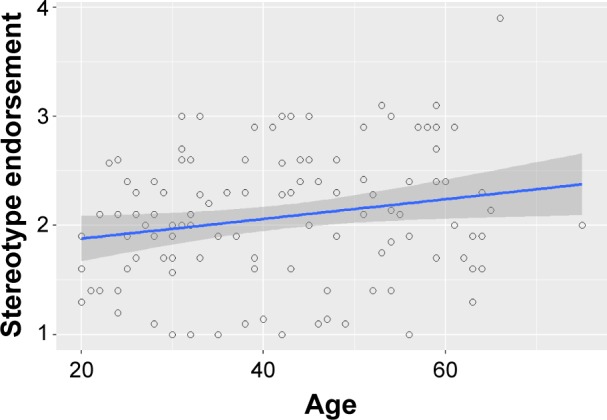
The study population demonstrated a mild level of internalized stigma (2.23±0.5). The highest score was observed in the alienation domain (2.63±0.8) and reflected moderate severity. The lowest score was noted in the stereotype endorsement domain (2.08±0.6). Moreover, the highest degree of internalized stigma was present in participants with unipolar affective disorder and was of moderate severity (2.46±0.6), while the level was moderate in the alienation domain (2.85±0.8). The level of vocational training education was the only variable associated with higher internalized stigma (=0.02). There were no associations between gender, employment, and marital status and internalized stigma. The duration of the disease was the only clinical factor showing a significant positive correlation with stigma internalization (=0.23; =0.01). The number of hospital admissions and suicide attempts was not significantly correlated with internalized stigma.

CONCLUSION

People with severe mental illnesses in Poland experience a mild level of self-reported internalized stigma. Internalized stigmatization was most strongly associated with alienation, which indicates the need for stigma assessment procedures followed by stigma intervention programs in daily clinical practice. This is in accordance with the trend of environmental "open door" psychiatry, which could be the first step to decrease the level of stigma and internalized stigma in psychiatric patients in Poland.

摘要

目的

本研究旨在调查波兰严重精神疾病患者内化耻辱感的感知水平及其与人口统计学和临床变量的关系。

患者与方法

对一组研究样本(n = 114,平均年龄 = 42.46±14.1岁;55%为女性)进行评估,样本包括非器质性精神障碍患者以及单相和双相情感障碍患者(58%为门诊患者,39%为住院患者)。所有患者填写了精神疾病内化耻辱感(ISMI)量表(最高严重程度 = 4)。收集了人口统计学和临床数据。

结果

研究人群表现出轻度的内化耻辱感(2.23±0.5)。在疏离领域观察到最高分(2.63±0.8),反映出中度严重程度。在刻板印象认同领域得分最低(2.08±0.6)。此外,单相情感障碍参与者的内化耻辱感程度最高,为中度严重(2.46±0.6),而在疏离领域该水平为中度(2.85±0.8)。职业培训教育水平是与较高内化耻辱感相关的唯一变量(P = 0.02)。性别、就业状况和婚姻状况与内化耻辱感之间无关联。疾病持续时间是唯一与耻辱感内化呈显著正相关的临床因素(r = 0.23;P = 0.01)。住院次数和自杀未遂次数与内化耻辱感无显著相关性。

结论

波兰的严重精神疾病患者自我报告的内化耻辱感水平较轻。内化耻辱感与疏离感关联最为紧密,这表明在日常临床实践中需要进行耻辱感评估程序,随后开展耻辱感干预项目。这与环境友好型“开放门”精神病学的趋势相符,这可能是降低波兰精神病患者耻辱感和内化耻辱感水平的第一步。
https://cdn.ncbi.nlm.nih.gov/pmc/blobs/5dd8/6183546/fcc264c1c10b/ndt-14-2599Fig1.jpg

相似文献

1
Internalized stigma and its correlates among patients with severe mental illness.重度精神疾病患者的内化耻辱感及其相关因素。
Neuropsychiatr Dis Treat. 2018 Oct 8;14:2599-2608. doi: 10.2147/NDT.S169051. eCollection 2018.
2
Personality Factors Crucial in Internalized Stigma Understanding in Psychiatry.人格因素在精神科内化耻辱感理解中至关重要。
Healthcare (Basel). 2021 Apr 13;9(4):456. doi: 10.3390/healthcare9040456.
3
The Relationship Between Internalized Stigma with Self-reported Cognitive Dysfunction and Insight in Schizophrenia.精神分裂症中内化耻辱感与自我报告的认知功能障碍及自知力之间的关系
Psychiatry Clin Psychopharmacol. 2024 Jun 1;34(2):119-126. doi: 10.5152/pcp.2024.23787. eCollection 2024 Jun.
4
The Internalized Stigma of Mental Illness (ISMI) scale: validation of the Japanese version.精神疾病内化耻辱感(ISMI)量表:日文版的验证
BMC Psychiatry. 2016 Apr 29;16:116. doi: 10.1186/s12888-016-0825-6.
5
Self-perception of mental illness, and subjective and objective cognitive functioning in people with schizophrenia.精神分裂症患者对精神疾病的自我认知以及主观和客观认知功能
Neuropsychiatr Dis Treat. 2019 Apr 23;15:967-976. doi: 10.2147/NDT.S193239. eCollection 2019.
6
Internalized stigma predicts erosion of morale among psychiatric outpatients.内化耻辱感预示着精神科门诊患者士气的低落。
Psychiatry Res. 2004 Dec 30;129(3):257-65. doi: 10.1016/j.psychres.2004.08.003.
7
Measuring the internalized stigma of parents of persons with a serious mental illness: the factor structure of the parents' internalized stigma of mental illness scale.测量严重精神疾病患者父母的内化耻辱感:精神疾病父母内化耻辱感量表的因子结构
J Nerv Ment Dis. 2013 Mar;201(3):183-7. doi: 10.1097/NMD.0b013e3182845d00.
8
Association between insight and internalized stigma and other clinical factors among patients with depression: A cross-sectional study.抑郁症患者的自知力与内化耻辱感及其他临床因素之间的关联:一项横断面研究。
Indian J Psychiatry. 2020 Mar-Apr;62(2):186-192. doi: 10.4103/psychiatry.IndianJPsychiatry_612_19. Epub 2020 Mar 17.
9
Facility based cross-sectional study of self stigma among people with mental illness: towards patient empowerment approach.基于医疗机构的横断面研究:精神疾病患者的自我污名化——迈向患者赋权方法。
Int J Ment Health Syst. 2013 Sep 3;7(1):21. doi: 10.1186/1752-4458-7-21.
10
Internalized stigma among patients with schizophrenia in Ethiopia: a cross-sectional facility-based study.埃塞俄比亚精神分裂症患者的内化污名:一项基于医疗机构的横断面研究。
BMC Psychiatry. 2012 Dec 29;12:239. doi: 10.1186/1471-244X-12-239.

引用本文的文献

1
Sources of Stigma and its Relation to Internalized Stigma in Women with Borderline Personality Disorder.边缘型人格障碍女性的污名来源及其与内化污名的关系。
Actas Esp Psiquiatr. 2025 Aug;53(4):683-692. doi: 10.62641/aep.v53i4.1926.
2
A pilot short-term study of feasibility, acceptability and preliminary efficacy of 3-stage 8-session 4-week group therapy-based narrative intervention in 17 improved hospitalized female schizophrenia patients in southern China.对中国南方17名病情有所好转的住院女性精神分裂症患者进行的一项试点短期研究,该研究旨在探讨基于团体治疗的三阶段八节为期四周的叙事干预的可行性、可接受性及初步疗效。
Front Public Health. 2025 Jun 10;13:1594471. doi: 10.3389/fpubh.2025.1594471. eCollection 2025.
3

本文引用的文献

1
Mediating effects of self-stigma on the relationship between perceived stigma and psychosocial outcomes among psychiatric outpatients: findings from a cross-sectional survey in Singapore.自我污名对精神科门诊患者感知污名与心理社会结局之间关系的中介作用:新加坡一项横断面调查的结果
BMJ Open. 2017 Aug 29;7(8):e018228. doi: 10.1136/bmjopen-2017-018228.
2
Stigma experienced by caregivers of patients with severe mental disorders: A nationwide multicentric study.照顾严重精神障碍患者的护理人员所经历的污名:一项全国性多中心研究。
Int J Soc Psychiatry. 2017 Aug;63(5):407-417. doi: 10.1177/0020764017709484. Epub 2017 May 24.
3
Stigma Among Historically Marginalized Young Adults with Serious Mental Illnesses: A Mixed Methods Study.
历史上处于边缘地位的患有严重精神疾病的年轻成年人中的耻辱感:一项混合方法研究。
Stigma Health. 2025 Feb;10(1):50-62. doi: 10.1037/sah0000454. Epub 2023 Apr 20.
4
Psychometric properties of the revised internalized skin bias questionnaire.修订后的内化皮肤偏见问卷的心理测量特性。
J Eur Acad Dermatol Venereol. 2025 Apr;39(4):846-854. doi: 10.1111/jdv.20370. Epub 2024 Oct 9.
5
Internalised stigma among people with mental illness in Africa, pooled effect estimates and subgroup analysis on each domain: systematic review and meta-analysis.非洲精神疾病患者内化污名的研究:系统评价和各领域的荟萃效应估计及亚组分析。
BMC Psychiatry. 2023 Jun 29;23(1):480. doi: 10.1186/s12888-023-04950-2.
6
The clinical characterization of the adult patient with bipolar disorder aimed at personalization of management.成年双相情感障碍患者的临床特征,旨在实现管理的个性化。
World Psychiatry. 2022 Oct;21(3):364-387. doi: 10.1002/wps.20997.
7
Mental health in a heterogeneous clinical sample. A cross-sectional study of predictors and gender differences.异质性临床样本中的心理健康。一项关于预测因素和性别差异的横断面研究。
Heliyon. 2022 Jun 29;8(7):e09823. doi: 10.1016/j.heliyon.2022.e09823. eCollection 2022 Jul.
8
The stigma of patients with chronic insomnia: a clinical study.慢性失眠患者的耻辱感:一项临床研究。
BMC Psychiatry. 2022 Jul 5;22(1):449. doi: 10.1186/s12888-022-04091-y.
9
Adapting the Health Stigma and Discrimination Framework to understand the association between stigma and sleep deficiency: A systematic review.适应健康污名和歧视框架以理解污名与睡眠不足之间的关联:系统评价。
Sleep Health. 2022 Jun;8(3):334-345. doi: 10.1016/j.sleh.2022.03.004. Epub 2022 Apr 30.
10
Internalized stigma in patients with schizophrenia: A hospital-based cross-sectional study from Nepal.精神分裂症患者的内化污名:来自尼泊尔的一项基于医院的横断面研究。
PLoS One. 2022 Mar 11;17(3):e0264466. doi: 10.1371/journal.pone.0264466. eCollection 2022.
Comparison of self-stigma and quality of life in patients with depressive disorders and schizophrenia spectrum disorders - a cross-sectional study.
抑郁症和精神分裂症谱系障碍患者的自我污名与生活质量比较——一项横断面研究
Neuropsychiatr Dis Treat. 2016 Nov 24;12:3021-3030. doi: 10.2147/NDT.S121556. eCollection 2016.
4
Self-stigma and schizophrenia: a cross-sectional study.自我污名与精神分裂症:一项横断面研究。
Neuropsychiatr Dis Treat. 2016 Nov 24;12:3011-3020. doi: 10.2147/NDT.S120298. eCollection 2016.
5
Connection between self-stigma, adherence to treatment, and discontinuation of medication.自我污名、治疗依从性与停药之间的关联。
Patient Prefer Adherence. 2016 Jul 22;10:1289-98. doi: 10.2147/PPA.S99136. eCollection 2016.
6
Self-perceived cognitive deficits and their relationship with internalized stigma and quality of life in patients with schizophrenia.精神分裂症患者的自我认知缺陷及其与内化耻辱感和生活质量的关系。
Neuropsychiatr Dis Treat. 2016 Jun 16;12:1411-7. doi: 10.2147/NDT.S108537. eCollection 2016.
7
Are self-stigma, quality of life, and clinical data interrelated in schizophrenia spectrum patients? A cross-sectional outpatient study.精神分裂症谱系患者的自我污名、生活质量和临床数据之间相互关联吗?一项横断面门诊研究。
Patient Prefer Adherence. 2016 Mar 4;10:265-74. doi: 10.2147/PPA.S96201. eCollection 2016.
8
Internalized stigma and quality of life domains among people with mental illness: the mediating role of self-esteem.精神疾病患者的内化耻辱感与生活质量领域:自尊的中介作用。
J Ment Health. 2016;25(1):55-61. doi: 10.3109/09638237.2015.1124387. Epub 2016 Jan 6.
9
Introduction to the special issue on structural stigma and health.结构性污名与健康特刊引言
Soc Sci Med. 2014 Feb;103:1-6. doi: 10.1016/j.socscimed.2013.12.017. Epub 2013 Dec 25.
10
Internalized Stigma of Mental Illness (ISMI) scale: a multinational review.内化的精神疾病耻辱感量表(ISMI):一项多国综述。
Compr Psychiatry. 2014 Jan;55(1):221-31. doi: 10.1016/j.comppsych.2013.06.005. Epub 2013 Sep 21.