Department of Cardiothoracic Surgery, University of Pittsburgh, School of Medicine, Pittsburgh, PA, United States.
Front Immunol. 2018 Oct 15;9:2298. doi: 10.3389/fimmu.2018.02298. eCollection 2018.
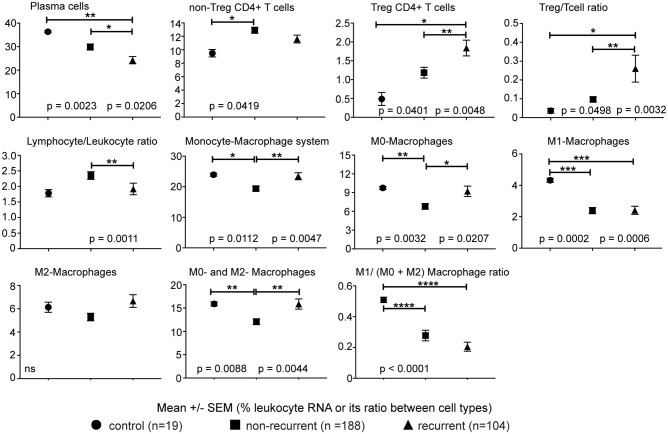
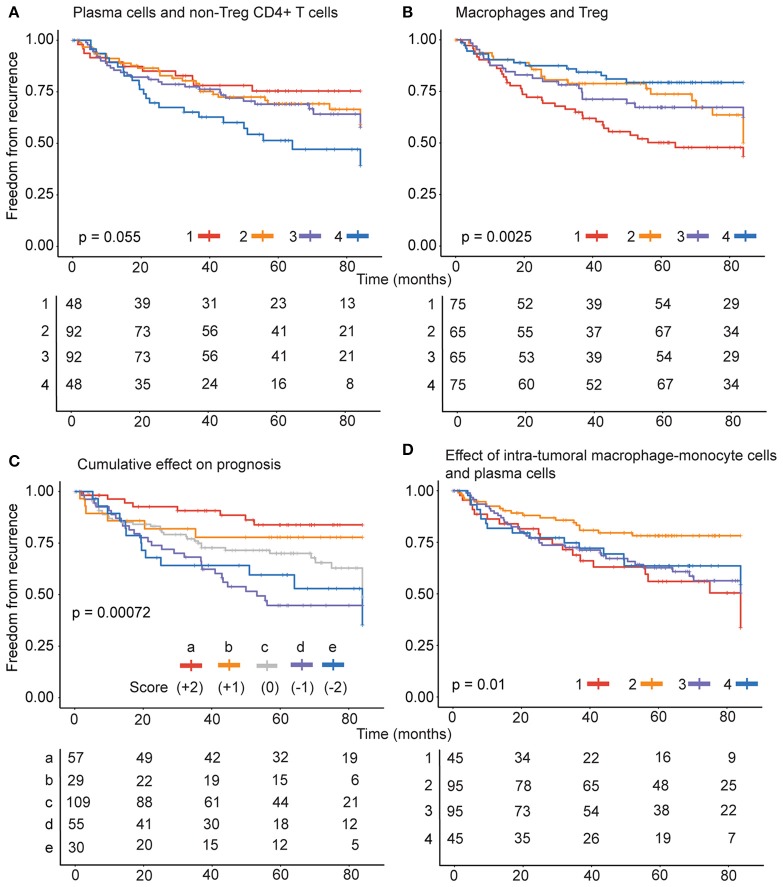
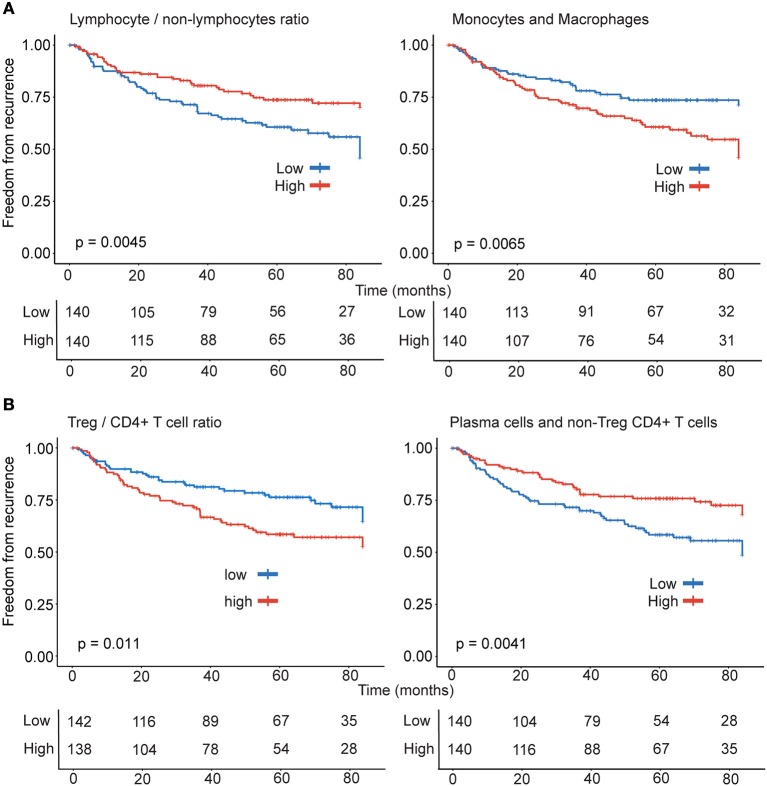
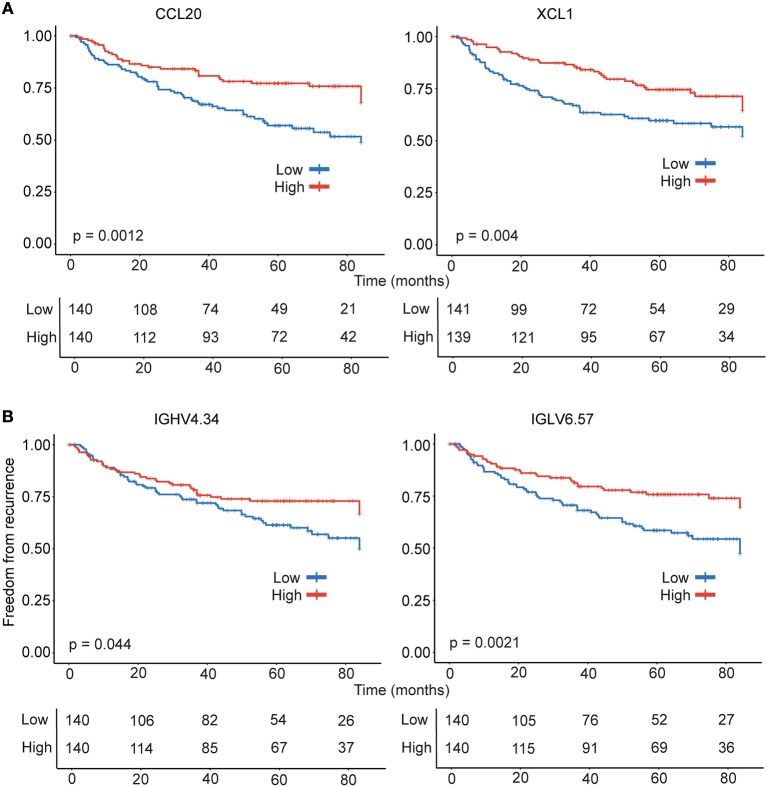
Studies in the past have identified selected immune cells that associate with different clinical outcomes in non-small cell lung cancer (NSCLC). Considering the fact that immune responses are heterogenous and that the clinical outcome could be influenced by the interplay of various immune cell types, it is imperative to evaluate multiple intra-tumoral immune cell types in the same set of patients. To evaluate the individual and combined effects of diverse intra-tumoral immune cell types on recurrence after complete surgical resection in early stage lung adenocarcinoma. We obtained NCBI GEO datasets for lung adenocarcinoma, the most prevalent histological subtype of NSCLC and re-analyzed the gene expression data of 292 patients with early stage cancer (IA/IB). CIBERSORT was used to resolve 22 immune cell types from the tumor transcriptomes. Survival analysis was carried out to assess the effect of immune cell types and genes associated with recurrence. Out of the 22 cell types, a high proportion of Tregs and monocyte-macrophages in the tumors were associated with significantly increased probability of recurrence. Conversely, increased proportion of non-Treg CD4+ T cells and plasma cells were associated with a lower probability of recurrence. The higher expression of (which can direct the migration of cells of B cell lineage), (associated with prototypical Th1 responses) and the immunoglobulin chains and were associated with a significantly lower probability of recurrence. Importantly, the intra-tumoral immune phenotype comprising these four cell types varied among patients and differentially associated with recurrence depending on net levels of positive and negative prognostic factors. Despite a high level of intra-tumoral plasma cells, a concomitant high level of monocyte-macrophages reduced the freedom from recurrence from 80 to ~50% at 80 months ( < 0.05). Furthermore, stratification of the patients on the basis of a score estimated from the levels of four cell types enabled the identification of patients with significantly increased probability of recurrence (50%) after surgery. Our analysis suggests that concomitant levels of macrophages and plasma cells, in addition to the T regs and non-TregCD4+ T cells in tumors can identify patients with early stage lung cancer at greater risk of recurrence.
过去的研究已经确定了与非小细胞肺癌(NSCLC)不同临床结果相关的选定免疫细胞。考虑到免疫反应是异质的,并且临床结果可能受到各种免疫细胞类型相互作用的影响,因此必须在同一组患者中评估多种肿瘤内免疫细胞类型。评估不同肿瘤内免疫细胞类型对早期肺腺癌完全手术后复发的单独和联合作用。我们获得了 NCBI GEO 数据集,用于肺腺癌,这是非小细胞肺癌最常见的组织学亚型,并重新分析了 292 例早期癌症(IA/IB)患者的基因表达数据。CIBERSORT 用于从肿瘤转录组中解析 22 种免疫细胞类型。生存分析用于评估免疫细胞类型和与复发相关的基因的影响。在 22 种细胞类型中,肿瘤中 Tregs 和单核细胞-巨噬细胞的高比例与复发概率显著增加相关。相反,非 Treg CD4+ T 细胞和浆细胞比例的增加与复发概率降低相关。(可以指导细胞系 B 细胞的迁移)、(与典型的 Th1 反应相关)和免疫球蛋白链 和 的高表达与复发概率显著降低相关。重要的是,这四种细胞类型的肿瘤内免疫表型在患者之间存在差异,并且根据正负预后因素的净水平,与复发的相关性也不同。尽管肿瘤内浆细胞水平较高,但单核细胞-巨噬细胞水平同时升高会使 80 个月时的无复发生存率从80%降低至50%(<0.05)。此外,基于四种细胞类型水平估计的评分对患者进行分层,可识别手术后复发概率显著增加(~50%)的患者。我们的分析表明,除了肿瘤中的 Tregs 和非 TregCD4+ T 细胞外,巨噬细胞和浆细胞的同时水平也可以识别早期肺癌患者中复发风险较高的患者。