Bertarelli Foundation Chair in Translational NeuroEngineering, Institute of Bioengineering, Swiss Federal Institute of Technology (EPFL), Lausanne, Switzerland.
Center for Neuroprosthetics and Brain Mind Institute, School of Life Sciences, Swiss Federal Institute of Technology (EPFL), Lausanne, Switzerland.
Nat Neurosci. 2018 Dec;21(12):1728-1741. doi: 10.1038/s41593-018-0262-6. Epub 2018 Oct 31.
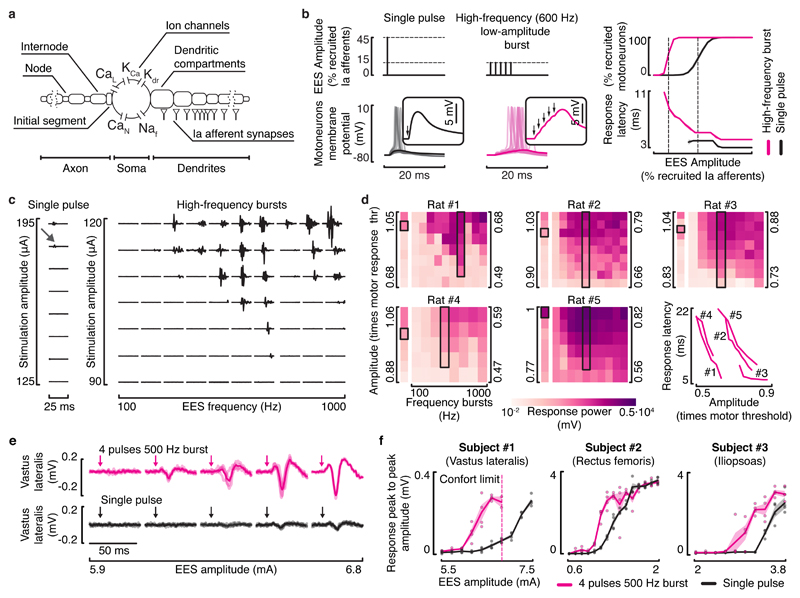
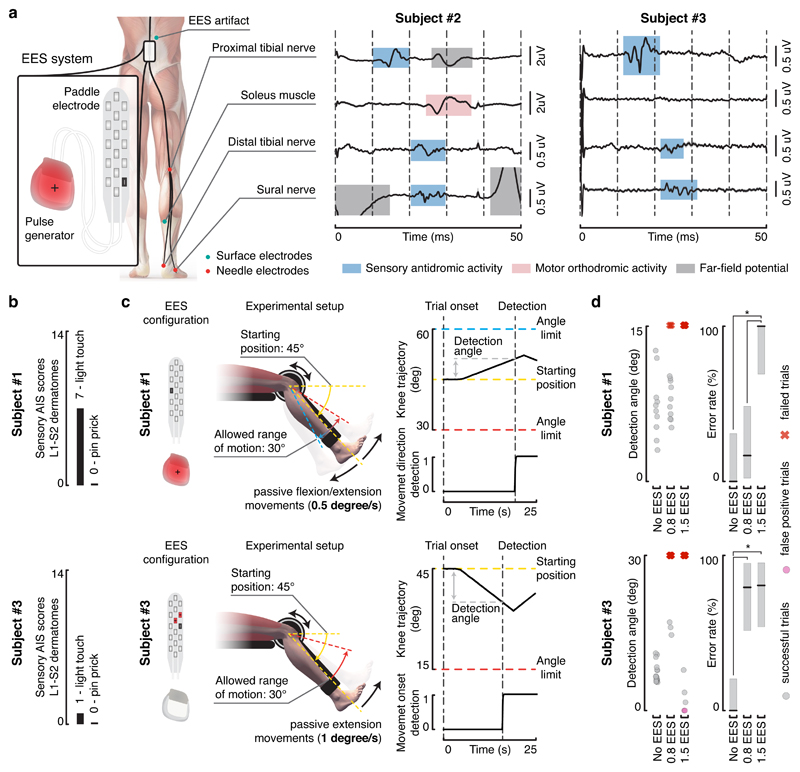
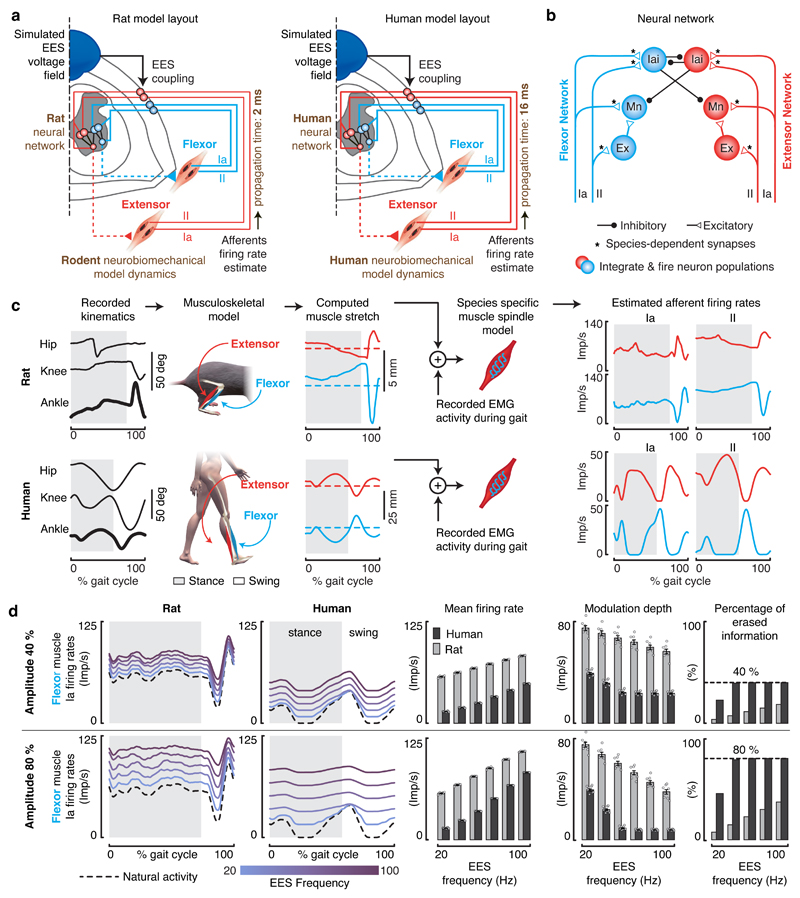
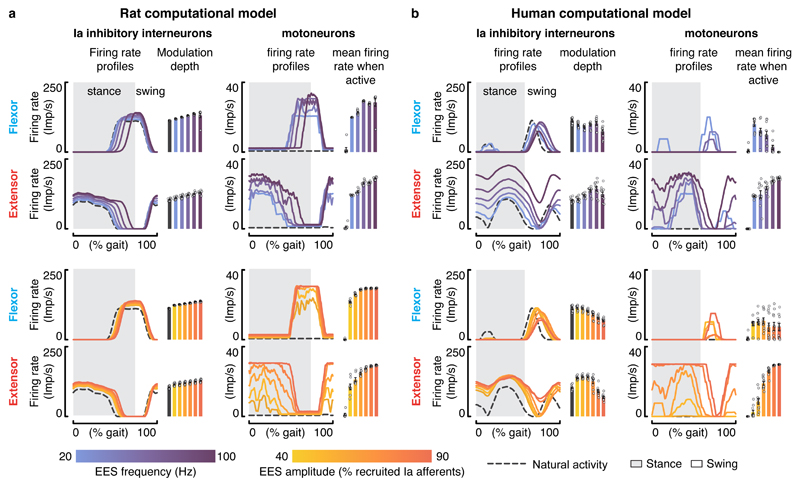
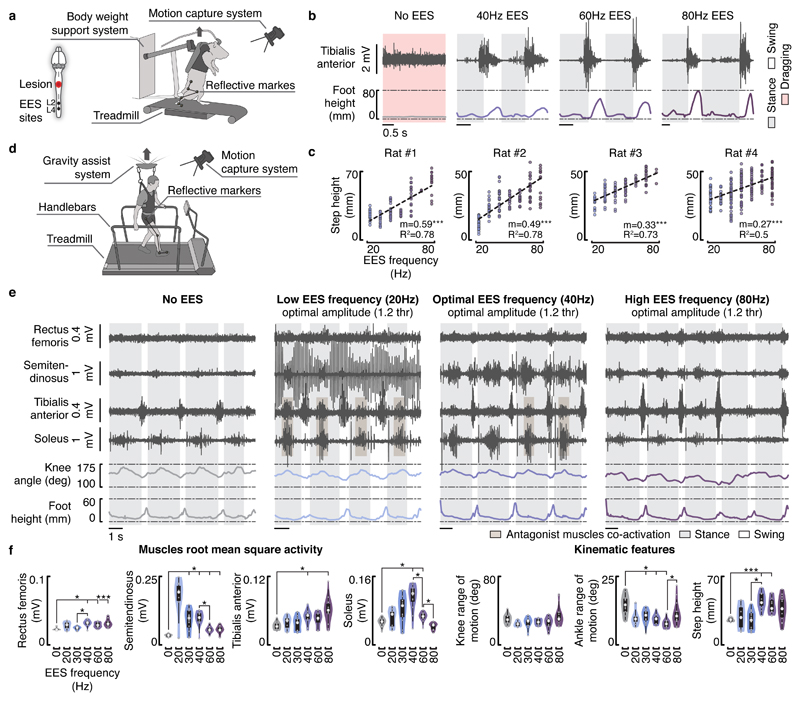
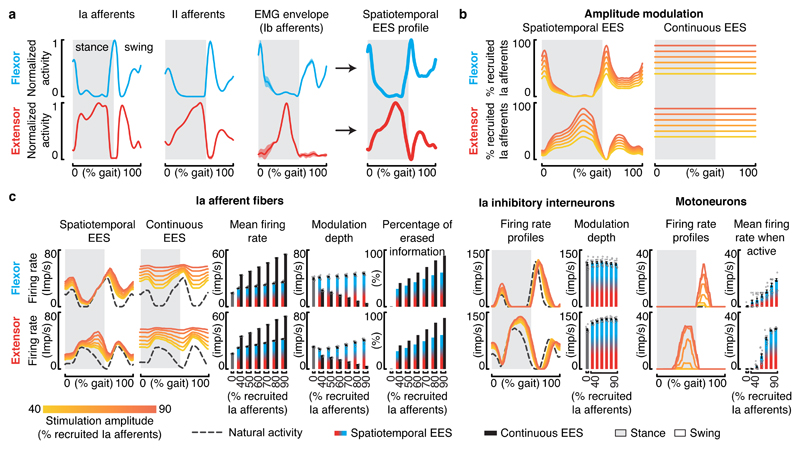
Epidural electrical stimulation (EES) of the spinal cord restores locomotion in animal models of spinal cord injury but is less effective in humans. Here we hypothesized that this interspecies discrepancy is due to interference between EES and proprioceptive information in humans. Computational simulations and preclinical and clinical experiments reveal that EES blocks a significant amount of proprioceptive input in humans, but not in rats. This transient deafferentation prevents modulation of reciprocal inhibitory networks involved in locomotion and reduces or abolishes the conscious perception of leg position. Consequently, continuous EES can only facilitate locomotion within a narrow range of stimulation parameters and is unable to provide meaningful locomotor improvements in humans without rehabilitation. Simulations showed that burst stimulation and spatiotemporal stimulation profiles mitigate the cancellation of proprioceptive information, enabling robust control over motor neuron activity. This demonstrates the importance of stimulation protocols that preserve proprioceptive information to facilitate walking with EES.
脊髓硬膜外电刺激 (EES) 可恢复脊髓损伤动物模型中的运动功能,但在人类中的效果较差。在这里,我们假设这种种间差异是由于 EES 与人类本体感觉信息之间的干扰造成的。计算模拟以及临床前和临床实验表明,EES 会阻断人类大量的本体感觉输入,而在大鼠中则不会。这种短暂的去传入会阻止参与运动的交互抑制网络的调制,并减少或消除腿部位置的意识感知。因此,连续的 EES 只能在较窄的刺激参数范围内促进运动,并且如果没有康复,就无法在人类中提供有意义的运动改善。模拟表明,爆发刺激和时空刺激模式可以减轻本体感觉信息的消除,从而能够对运动神经元活动进行强大的控制。这证明了保留本体感觉信息的刺激方案对于促进 EES 行走的重要性。