Kiehn Ole
Mammalian Locomotor Laboratory, Department of Neuroscience, Karolinska Institutet, Retziusväg 8, 17177 Stockholm, Sweden.
Nat Rev Neurosci. 2016 Apr;17(4):224-38. doi: 10.1038/nrn.2016.9. Epub 2016 Mar 3.
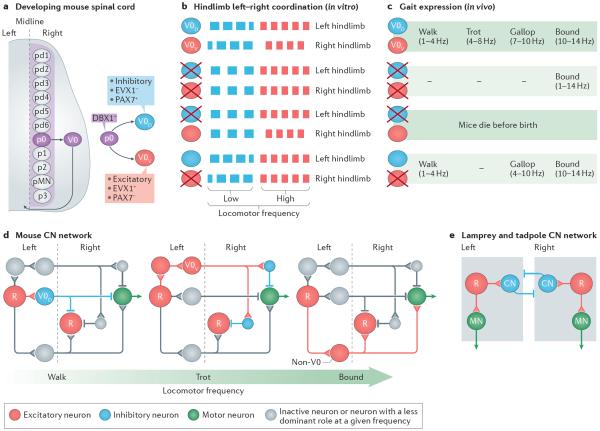
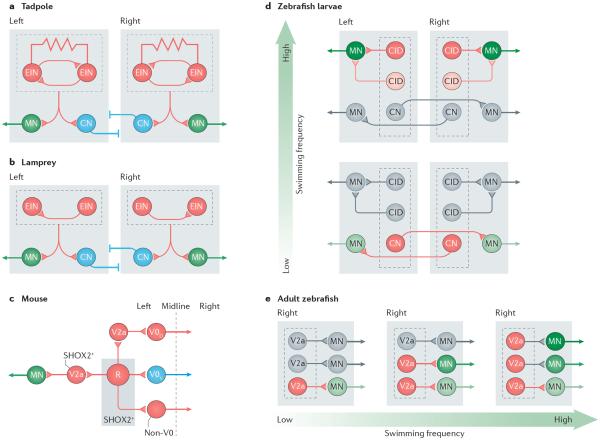
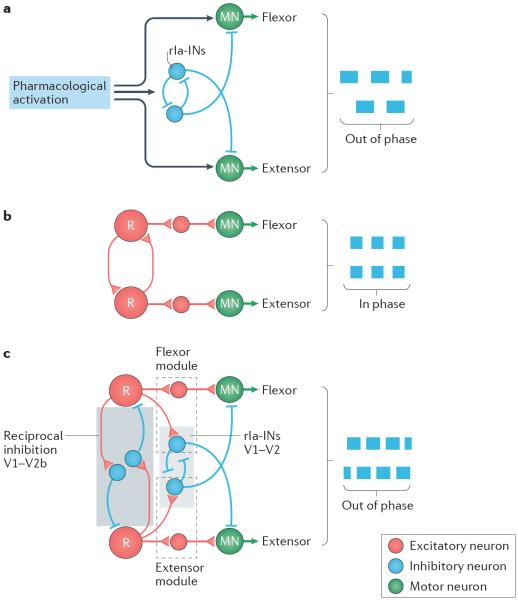
Unravelling the functional operation of neuronal networks and linking cellular activity to specific behavioural outcomes are among the biggest challenges in neuroscience. In this broad field of research, substantial progress has been made in studies of the spinal networks that control locomotion. Through united efforts using electrophysiological and molecular genetic network approaches and behavioural studies in phylogenetically diverse experimental models, the organization of locomotor networks has begun to be decoded. The emergent themes from this research are that the locomotor networks have a modular organization with distinct transmitter and molecular codes and that their organization is reconfigured with changes to the speed of locomotion or changes in gait.
揭示神经网络的功能运作并将细胞活动与特定行为结果联系起来,是神经科学面临的最大挑战之一。在这个广泛的研究领域中,控制运动的脊髓网络研究已取得了重大进展。通过在系统发育多样的实验模型中联合运用电生理和分子遗传网络方法以及行为研究,运动网络的组织已开始被解码。这项研究中出现的共同主题是,运动网络具有模块化组织,带有独特的递质和分子编码,并且其组织会随着运动速度的变化或步态的改变而重新配置。