Department of Histology and Cell Biology, Matsumoto Dental University, 1780 Gobara-Hirooka, Shiojiri, Nagano 399-0781, Japan.
Int J Mol Sci. 2018 Nov 9;19(11):3523. doi: 10.3390/ijms19113523.
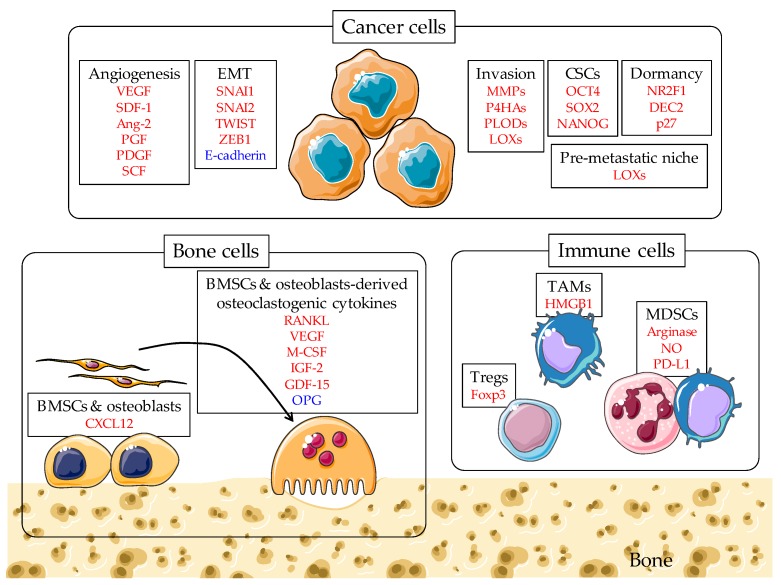
Hypoxia is a common feature of solid tumors and is associated with an increased risk of metastasis and a poor prognosis. Recent imaging techniques revealed that bone marrow contains a quite hypoxic microenvironment. Low oxygen levels activate hypoxia signaling pathways such as hypoxia-inducible factors, which play critical roles in the key stages of metastatic dissemination including angiogenesis, epithelial-mesenchymal transition, invasion, maintenance of cancer stem cells, tumor cell dormancy, release of extracellular vesicles, and generation of pre-metastatic niches. Hypoxia also affects bone cells, such as osteoblasts and osteoclasts, and immune cells, which also act to support the development and progression of bone metastases. Paradoxically, hypoxia and related signaling molecules are recognized as high-priority therapeutic targets and many candidate drugs are currently under preclinical and clinical investigation. The present review focuses on our current knowledge of the potential roles of hypoxia in cancer metastasis to bone by considering the interaction between metastatic cancer cells and the bone microenvironment. Current therapeutic approaches targeting hypoxia are also described.
缺氧是实体瘤的常见特征,与转移风险增加和预后不良相关。最近的成像技术揭示了骨髓中存在着相当缺氧的微环境。低氧水平激活缺氧信号通路,如缺氧诱导因子,它们在转移扩散的关键阶段发挥关键作用,包括血管生成、上皮-间充质转化、侵袭、维持癌症干细胞、肿瘤细胞休眠、细胞外囊泡的释放以及前转移龛的形成。缺氧还会影响骨细胞,如成骨细胞和破骨细胞,以及免疫细胞,这些细胞也会支持骨转移的发展和进展。矛盾的是,缺氧和相关信号分子被认为是高度优先的治疗靶点,许多候选药物目前正在进行临床前和临床研究。本综述通过考虑转移性癌细胞与骨微环境之间的相互作用,关注缺氧在癌症骨转移中的潜在作用。还描述了当前针对缺氧的治疗方法。