Department of Prosthodontics and Digital Technology, School of Dental Medicine, Stony Brook University, New York, NY 11794, USA.
Department of Periodontics, School of Dental Medicine, Stony Brook University, New York, NY 11794, USA.
Int J Mol Sci. 2018 Nov 13;19(11):3585. doi: 10.3390/ijms19113585.
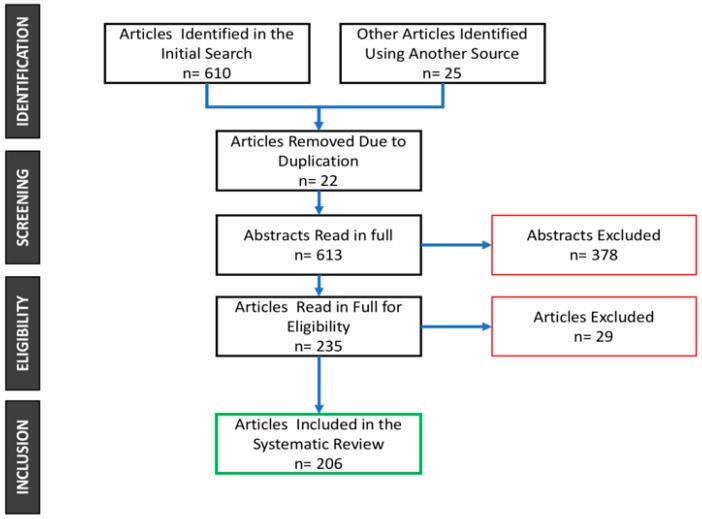
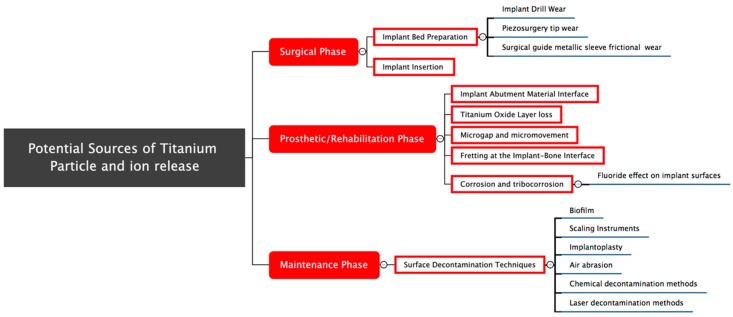
Implant surface characteristics, as well as physical and mechanical properties, are responsible for the positive interaction between the dental implant, the bone and the surrounding soft tissues. Unfortunately, the dental implant surface does not remain unaltered and changes over time during the life of the implant. If changes occur at the implant surface, mucositis and peri-implantitis processes could be initiated; implant osseointegration might be disrupted and bone resorption phenomena (osteolysis) may lead to implant loss. This systematic review compiled the information related to the potential sources of titanium particle and ions in implant dentistry. Research questions were structured in the Population, Intervention, Comparison, Outcome (PICO) framework. PICO questionnaires were developed and an exhaustive search was performed for all the relevant studies published between 1980 and 2018 involving titanium particles and ions related to implant dentistry procedures. Preferred Reporting Items for Systematic Reviews and Meta-Analyses (PRISMA) guidelines were followed for the selection and inclusion of the manuscripts in this review. Titanium particle and ions are released during the implant bed preparation, during the implant insertion and during the implant decontamination. In addition, the implant surfaces and restorations are exposed to the saliva, bacteria and chemicals that can potentially dissolve the titanium oxide layer and, therefore, corrosion cycles can be initiated. Mechanical factors, the micro-gap and fluorides can also influence the proportion of metal particles and ions released from implants and restorations.
种植体表面的特性以及物理和机械性能,决定了种植体与骨和周围软组织之间的积极相互作用。不幸的是,种植体表面并非一成不变,在种植体的使用寿命期间会随时间而发生变化。如果种植体表面发生变化,可能会引发黏膜炎和种植体周围炎;种植体骨整合可能会被破坏,骨吸收现象(骨溶解)可能导致种植体丢失。本系统评价综述了与种植体牙科相关的钛颗粒和离子的潜在来源的信息。研究问题在人群、干预、比较、结果(PICO)框架中进行了构建。制定了 PICO 问卷,并对所有在 1980 年至 2018 年间发表的与种植体牙科程序中钛颗粒和离子相关的相关研究进行了全面搜索。本综述中手稿的选择和纳入均遵循系统评价和荟萃分析的首选报告项目(PRISMA)指南。在种植体床准备、种植体插入和种植体去污过程中会释放钛颗粒和离子。此外,种植体表面和修复体暴露于唾液、细菌和化学物质中,这些物质可能会溶解钛氧化物层,从而引发腐蚀循环。机械因素、微间隙和氟化物也会影响从种植体和修复体中释放的金属颗粒和离子的比例。