Center for Energy, Environment and Economy (CEEE), Özyegin University, Istanbul, 34794, Turkey.
Sci Rep. 2018 Nov 15;8(1):16891. doi: 10.1038/s41598-018-35082-3.
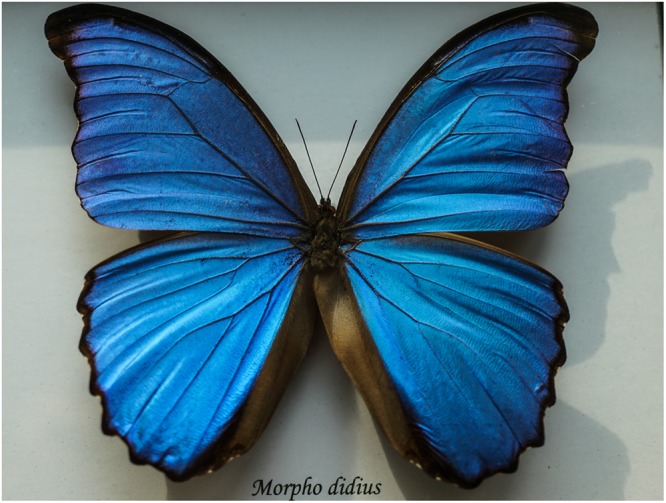
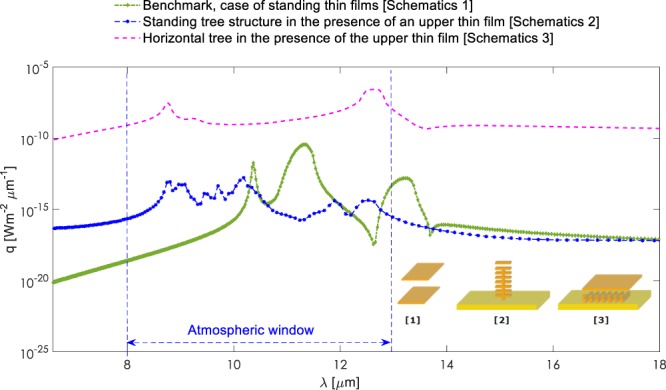
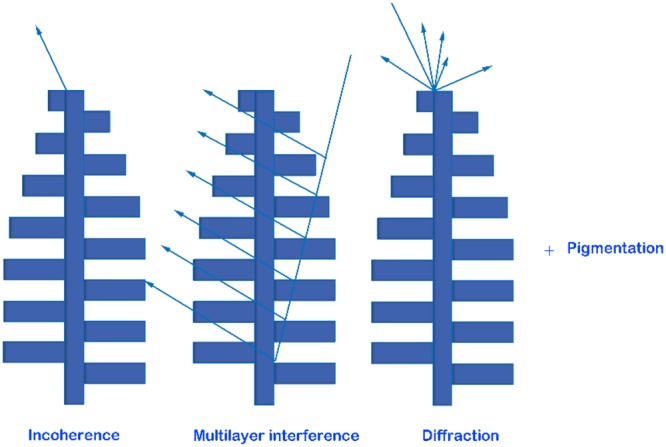
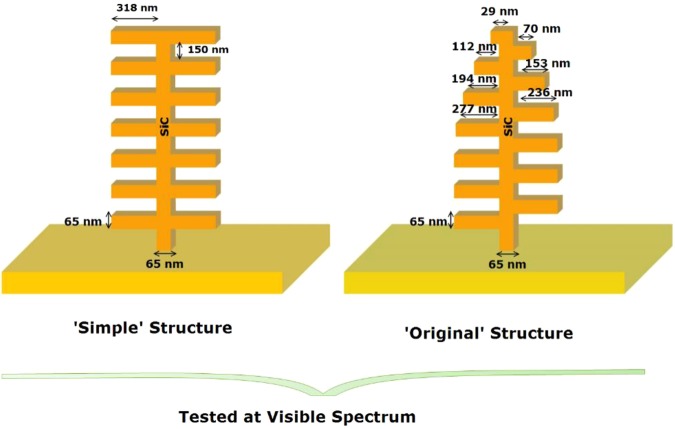
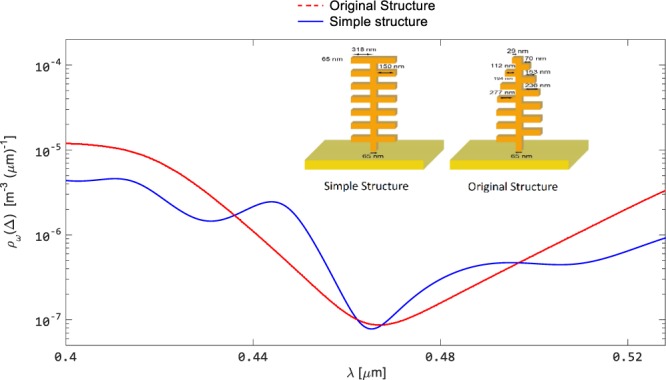
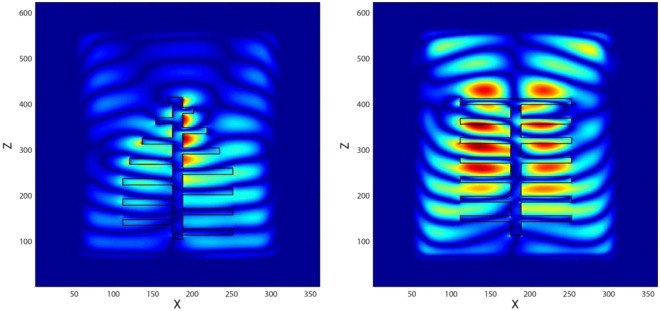
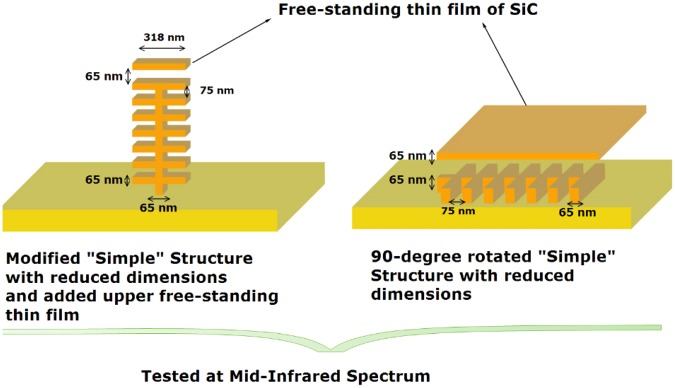
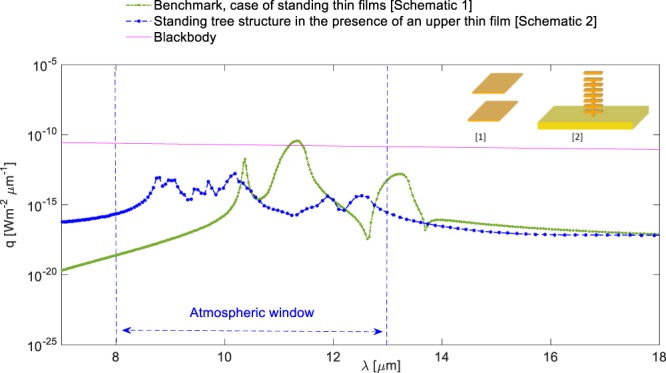
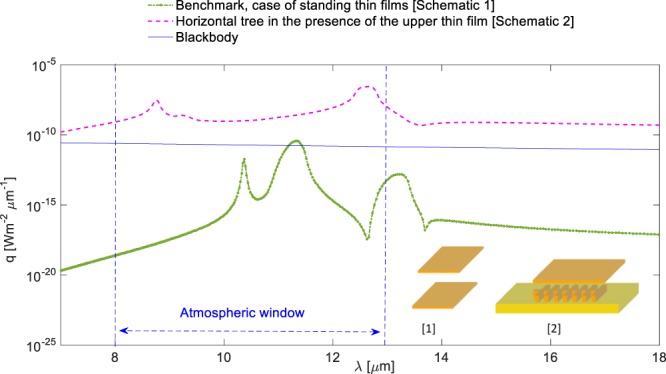
In nature, novel colors and patterns have evolved in various species for survival, recognizability or mating purposes. Investigations of the morphology of various butterfly wings have shown that in addition to the pigmentation, micro and nanostructures within the wings have also allowed better communication systems and the pheromone-producing organs which are the main regulators of the temperature within butterfly wings. Within the blue spectrum (450-495 nm), Morpho didius butterfly exhibit iridescence in their structure-based wings' color. Inspired by the rich physics behind this concept, we present a designer metamaterial system that has the potential to be used for near-field radiative cooling applications. This biomimicry design involves SiC palm tree-like structures placed in close proximity of a thin film in a vacuum environment separated by nanoscale gaps. The near-field energy exchange is enhanced significantly by decreasing the dimensions of the tree and rotating the free-standing structure by 90 degrees clockwise and bringing it to the close proximity of a second thin film. This exchange is calculated by using newly developed near-field radiative transfer finite difference time domain (NF-RT-FDTD) algorithm. Several orders of enhancement of near-field heat flux within the infrared atmospheric window (8-13 μm bandwidth) are achieved. This spectrally selective enhancement is associated with the geometric variations, the spatial location of the source of excitation and the material characteristics, and can be tuned to tailor strong radiative cooling mechanisms.
在自然界中,各种生物为了生存、识别或交配目的而进化出了新颖的颜色和图案。对各种蝴蝶翅膀的形态学研究表明,除了色素沉着外,翅膀内的微观和纳米结构也允许更好的通讯系统和信息素产生器官,这些器官是蝴蝶翅膀内部温度的主要调节者。在蓝色光谱(450-495nm)范围内,Morpho didius 蝴蝶的翅膀结构呈现出虹彩。受这一概念背后丰富物理学的启发,我们提出了一种设计师超材料系统,该系统具有用于近场辐射冷却应用的潜力。这种仿生设计涉及放置在真空中的 SiC 棕榈树状结构,靠近薄膜,通过纳米级间隙隔开。通过减小树的尺寸并将自由站立的结构顺时针旋转 90 度并使其靠近第二薄膜,可以显著增强近场能量交换。通过使用新开发的近场辐射传输有限差分时间域(NF-RT-FDTD)算法来计算这种交换。在红外大气窗口(8-13μm 带宽)内实现了近场热通量的几个数量级的增强。这种光谱选择性增强与几何变化、激励源的空间位置和材料特性有关,可以进行调整以定制强大的辐射冷却机制。