Department of Stem Cell Biology, Friedrich-Alexander University (FAU) Erlangen-Nürnberg, Erlangen, Germany.
Fraunhofer Institute for Biomedical Engineering, Joseph-von-Fraunhofer-Weg 1, Sulzbach, Germany.
Stem Cells Transl Med. 2019 Mar;8(3):247-259. doi: 10.1002/sctm.18-0121. Epub 2018 Nov 19.
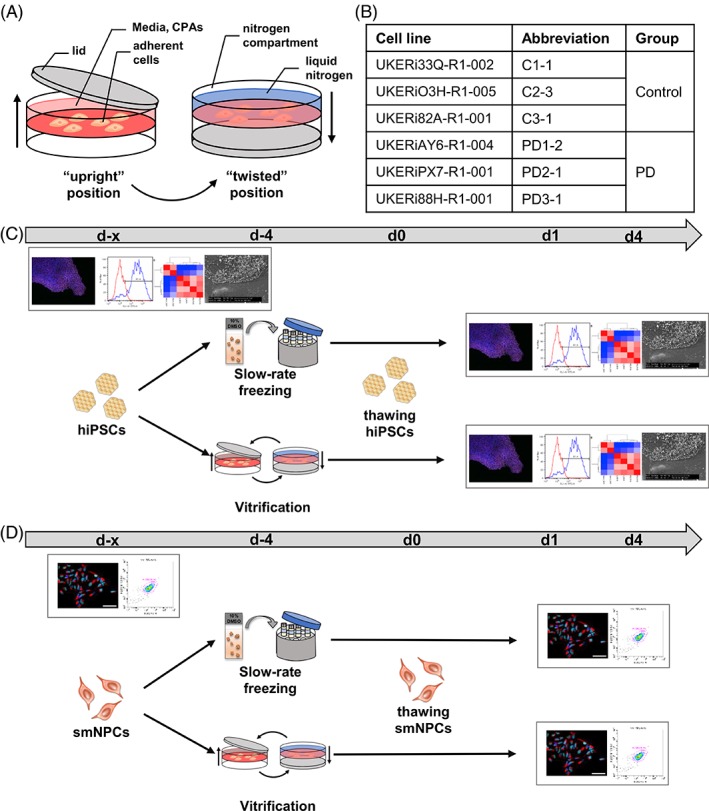
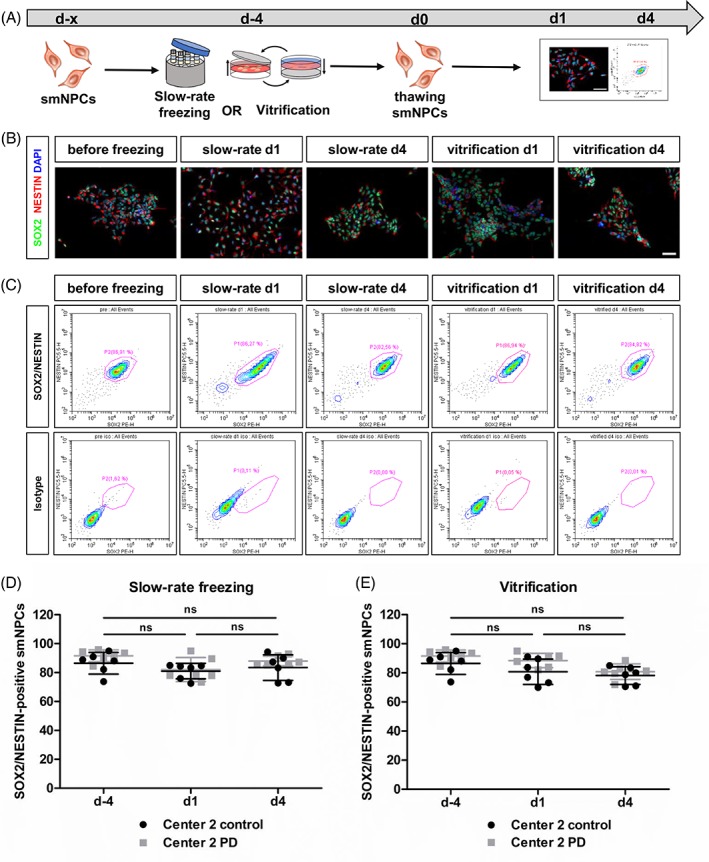
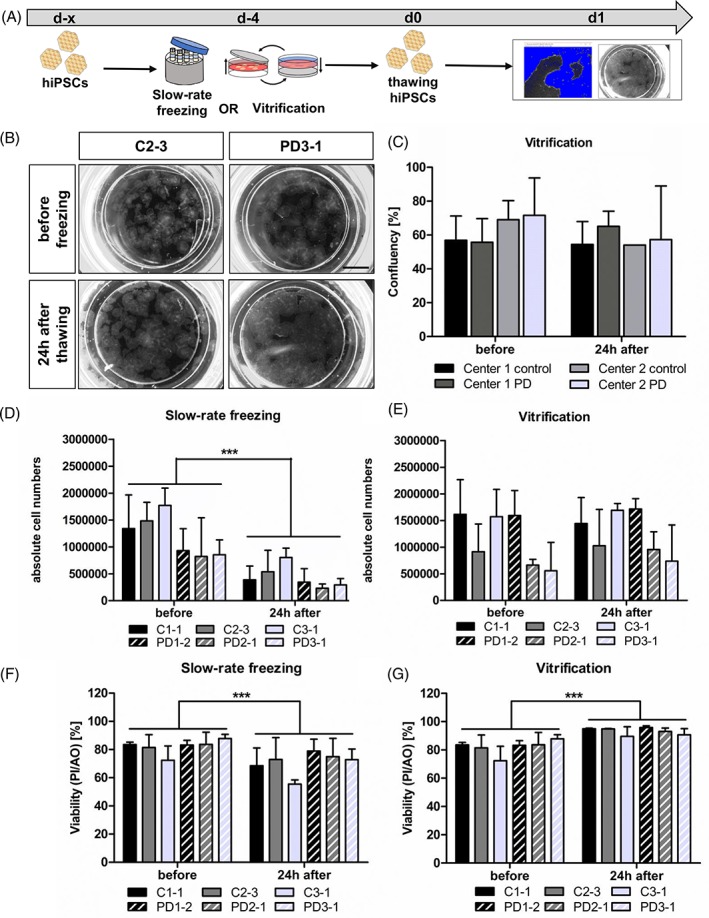
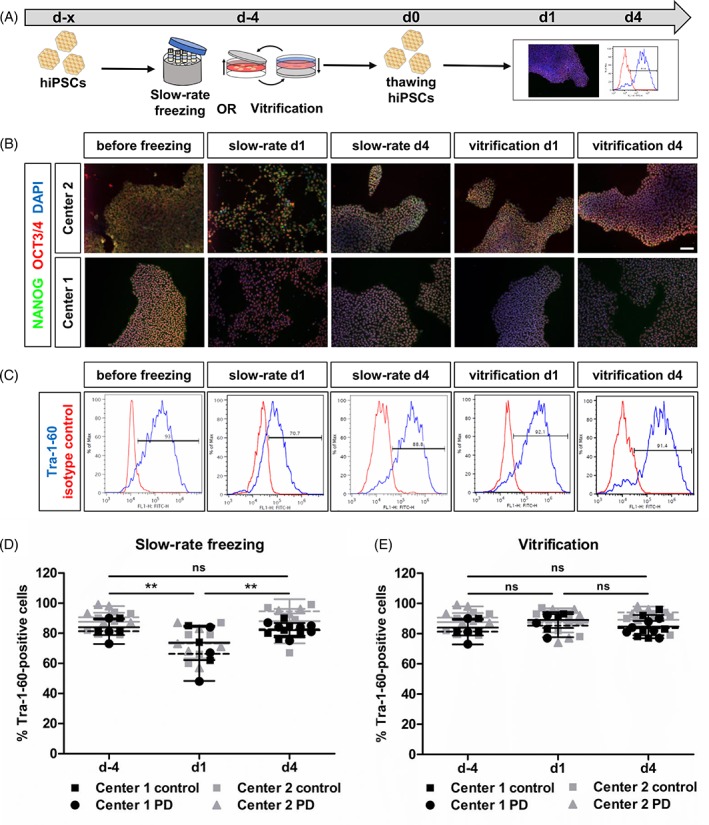
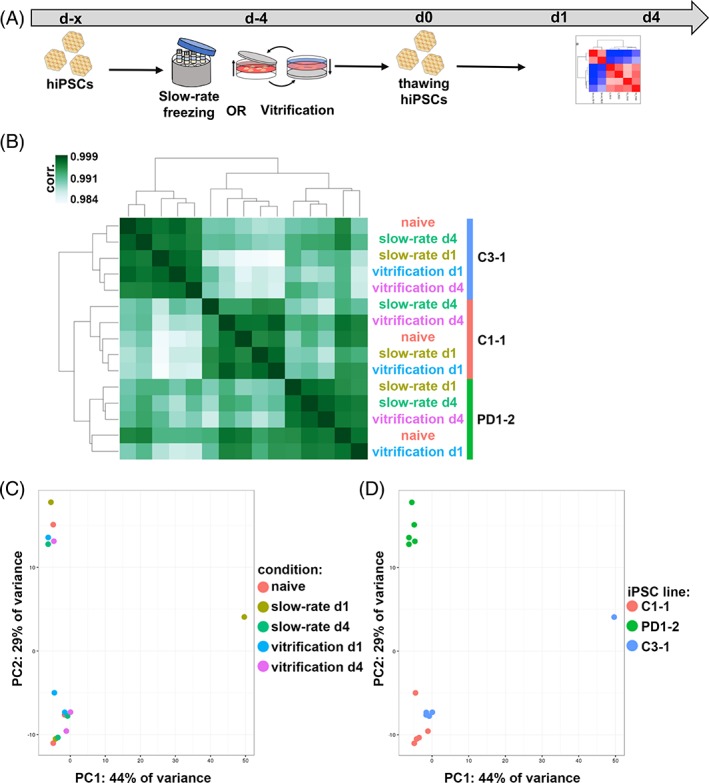
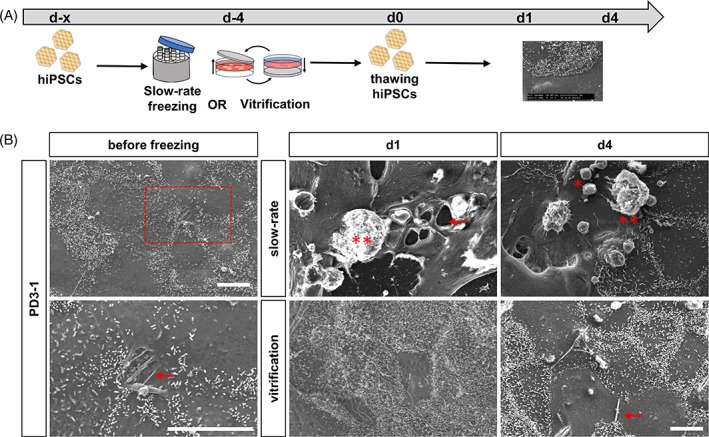
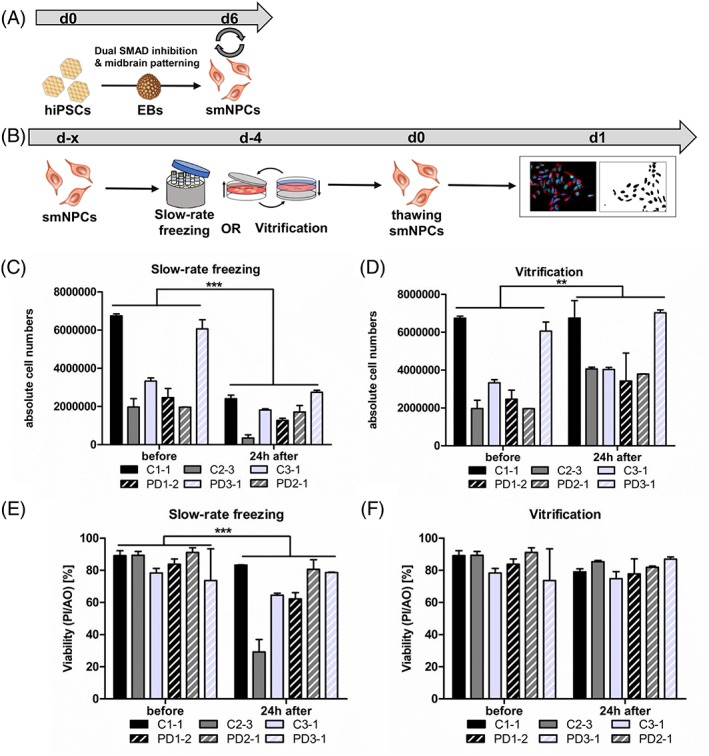
Human induced pluripotent stem cells (hiPSCs) are an important tool for research and regenerative medicine, but their efficient cryopreservation remains a major challenge. The current gold standard is slow-rate freezing of dissociated colonies in suspension, but low recovery rates limit immediate post-thawing applicability. We tested whether ultrafast cooling by adherent vitrification improves post-thawing survival in a selection of hiPSCs and small molecule neural precursor cells (smNPCs) from Parkinson's disease and controls. In a dual-center study, we compared the results by immunocytochemistry (ICC), fluorescence-activated cell sorting analysis, and RNA-sequencing (RNA-seq). Adherent vitrification was achieved in the so-called TWIST substrate, a device combining cultivation, vitrification, storage, and post-thawing cultivation. Adherent vitrification resulted in preserved confluency and significantly higher cell numbers, and viability at day 1 after thawing, while results were not significantly different at day 4 after thawing. RNA-seq and ICC of hiPSCs revealed no change in gene expression and pluripotency markers, indicating that physical damage of slow-rate freezing disrupts cellular membranes. Scanning electron microscopy showed preserved colony integrity by adherent vitrification. Experiments using smNPCs demonstrated that adherent vitrification is also applicable to neural derivatives of hiPSCs. Our data suggest that, compared to the state-of-the-art slow-rate freezing in suspension, adherent vitrification is an improved cryopreservation technique for hiPSCs and derivatives. Stem Cells Translational Medicine 2019;8:247&259.
人诱导多能干细胞(hiPSCs)是研究和再生医学的重要工具,但它们的高效冷冻保存仍然是一个主要挑战。目前的金标准是在悬浮液中对分离的细胞集落进行慢速率冷冻,但低回收率限制了即时解冻后的适用性。我们测试了在一系列帕金森病和对照的 hiPSC 和小分子神经前体细胞(smNPC)中,通过贴壁玻璃化进行超快冷却是否能提高解冻后的存活率。在一项双中心研究中,我们通过免疫细胞化学(ICC)、荧光激活细胞分选分析和 RNA 测序(RNA-seq)比较了结果。贴壁玻璃化是在所谓的 TWIST 基质中实现的,该装置结合了培养、玻璃化、储存和解冻后培养。贴壁玻璃化导致细胞融合度保持不变,解冻后第 1 天的细胞数量和活力显著增加,而解冻后第 4 天的结果没有显著差异。hiPSC 的 RNA-seq 和 ICC 显示基因表达和多能性标记物没有变化,表明慢速率冷冻的物理损伤破坏了细胞膜。扫描电子显微镜显示贴壁玻璃化保持了细胞集落的完整性。使用 smNPC 的实验表明,贴壁玻璃化也适用于 hiPSC 的神经衍生物。与目前的悬浮液慢速率冷冻相比,我们的数据表明,贴壁玻璃化是一种改进的 hiPSC 和衍生物的冷冻保存技术。《干细胞转化医学》2019 年;8:247&259。