Temerty Centre for Therapeutic Brain Intervention, Centre for Addiction and Mental Health, University of Toronto, Toronto, ON, Canada.
Campbell Family Mental Health Research Institute, Centre for Addiction and Mental Health, Department of Psychiatry, University of Toronto, Toronto, ON, Canada.
Transl Psychiatry. 2018 Nov 23;8(1):253. doi: 10.1038/s41398-018-0302-8.
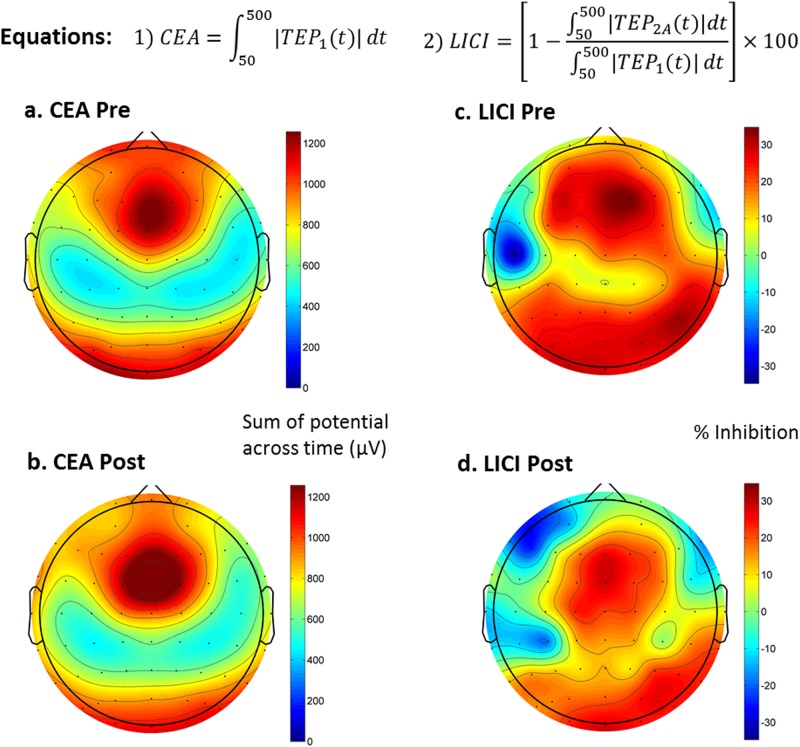
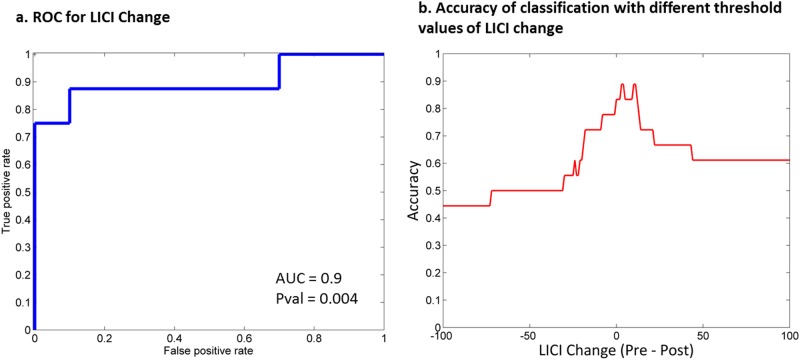
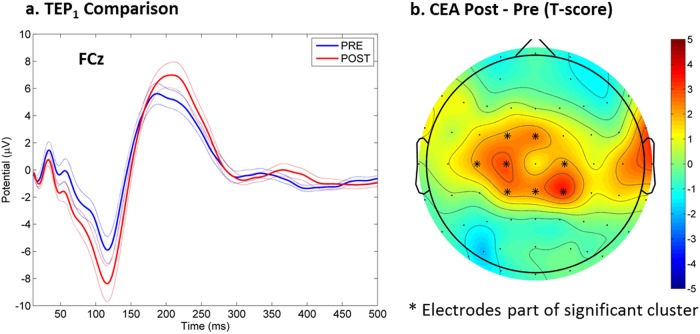
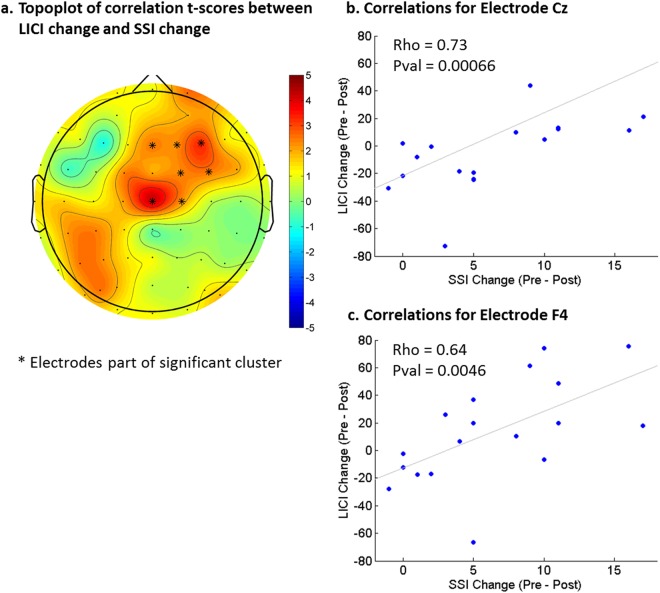
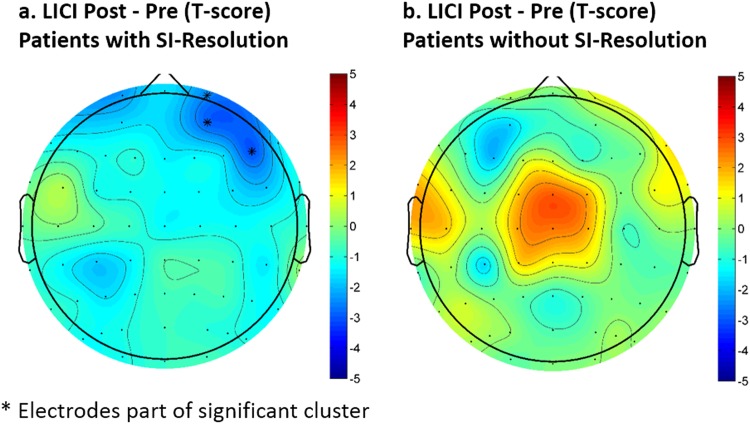
Therapeutic seizures may work for treatment-resistant depression (TRD) by producing neuroplasticity. We evaluated whether magnetic seizure therapy (MST) produces changes in suicidal ideation and neuroplasticity as indexed through transcranial magnetic stimulation and electroencephalography (TMS-EEG) of the dorsolateral prefrontal cortex (DLPFC). Twenty-three patients with TRD were treated with MST. Changes in suicidal ideation was assessed through the Scale for Suicidal Ideation (SSI). Before and after the treatment course, neuroplasticity in excitatory and inhibitory circuits was assessed with TMS-EEG measures of cortical-evoked activity (CEA) and long-interval cortical inhibition (LICI) from the left DLPFC, and the left motor cortex as a control condition. As in our previous report, the relationship between TMS-EEG measures and suicidal ideation was examined with the SSI. Results show that 44.4% of patients experienced resolution of suicidal ideation. Based on DLPFC assessment, MST produced significant CEA increase over the frontal central electrodes (cluster p < 0.05), but did not change LICI on a group level. MST also reduced the SSI scores (p < 0.005) and the amount of reduction correlated with the decrease in LICI over the right frontal central electrodes (cluster p < 0.05; rho = 0.73 for Cz). LICI change identified patients who were resolved of suicidal ideation with 90% sensitivity and 88% specificity (AUC = 0.9, p = 0.004). There was no significant finding with motor cortex assessment. Overall, MST produced significant rates of resolution of suicidal ideation. MST also produced neuroplasticity in the frontal cortex, likely through long-term potentiation (LTP)-like mechanisms. The largest reduction in suicidal ideation was demonstrated in patients showing concomitant decreases in cortical inhibition-a mechanism linked to enhanced LTP-like plasticity. These findings provide insights into the mechanisms through which patients experience resolution of suicidal ideation following seizure treatments in depression.
治疗性癫痫发作可能通过产生神经可塑性而对治疗抵抗性抑郁症 (TRD) 有效。我们评估了磁惊厥治疗 (MST) 是否会通过经颅磁刺激和脑电图 (TMS-EEG) 改变背外侧前额叶皮层 (DLPFC) 来改变自杀意念和神经可塑性。23 例 TRD 患者接受 MST 治疗。通过自杀意念量表 (SSI) 评估自杀意念的变化。在治疗过程前后,通过 TMS-EEG 评估兴奋性和抑制性回路的神经可塑性,使用左侧 DLPFC 和左侧运动皮层的皮质诱发电活动 (CEA) 和长间隔皮质抑制 (LICI) 的测量值作为对照条件。与我们之前的报告一样,用 SSI 检查 TMS-EEG 测量值与自杀意念之间的关系。结果表明,44.4%的患者自杀意念得到缓解。基于 DLPFC 评估,MST 使额中央电极的 CEA 显著增加(簇 p < 0.05),但组水平上未改变 LICI。MST 还降低了 SSI 评分(p < 0.005),减少量与右额中央电极的 LICI 减少相关(簇 p < 0.05;rho = 0.73 用于 Cz)。LICI 变化可识别出 90%的自杀意念缓解患者和 88%的特异性(AUC = 0.9,p = 0.004)。运动皮层评估未发现显著结果。总体而言,MST 使自杀意念缓解的发生率显著增加。MST 还在前额皮层产生了神经可塑性,可能通过长时程增强 (LTP) 样机制。在显示皮质抑制同时减少的患者中,自杀意念的减少最大 - 这种机制与增强的 LTP 样可塑性有关。这些发现为理解患者在抑郁症中经历癫痫发作治疗后自杀意念缓解的机制提供了线索。