Department of Biology, Washington University in St. Louis, St. Louis, Missouri, United States of America.
PLoS Genet. 2018 Nov 26;14(11):e1007818. doi: 10.1371/journal.pgen.1007818. eCollection 2018 Nov.
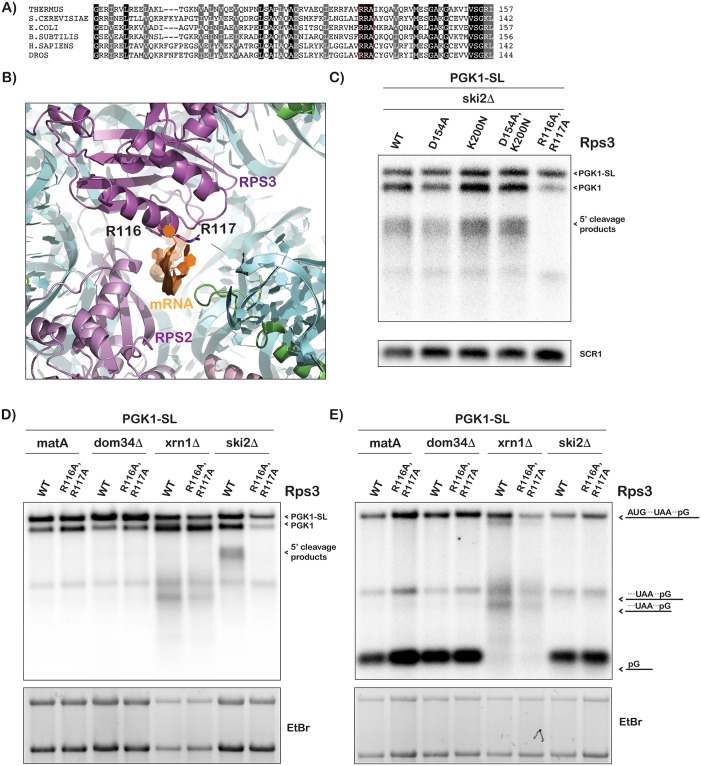
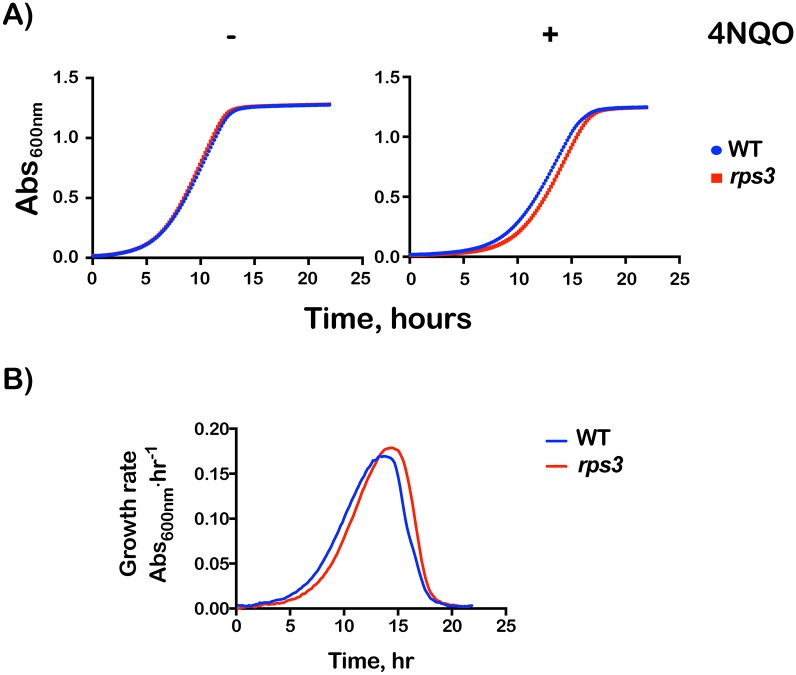
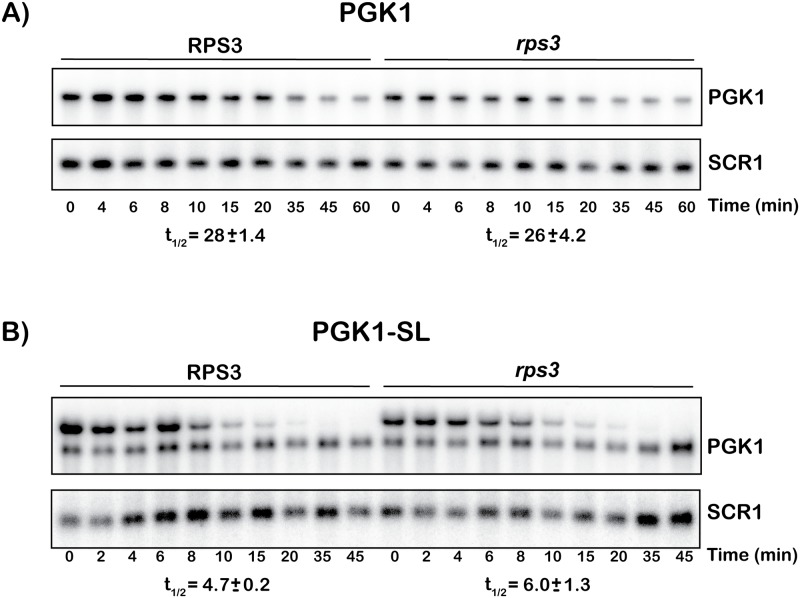
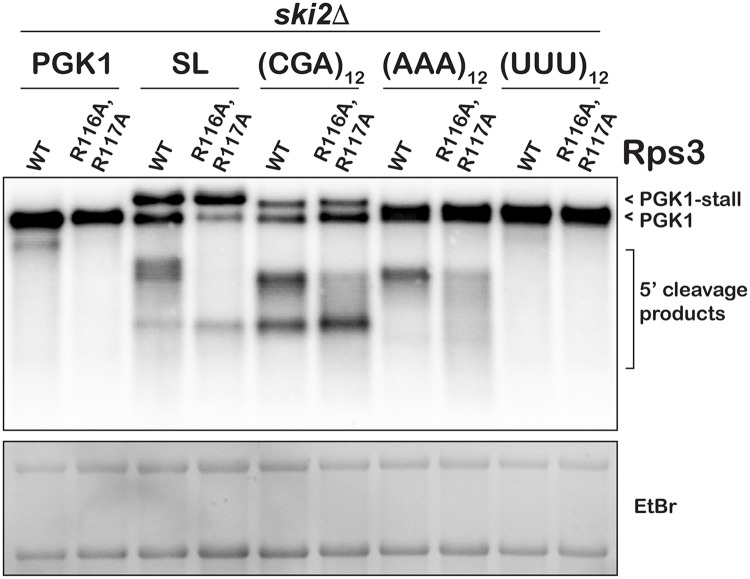
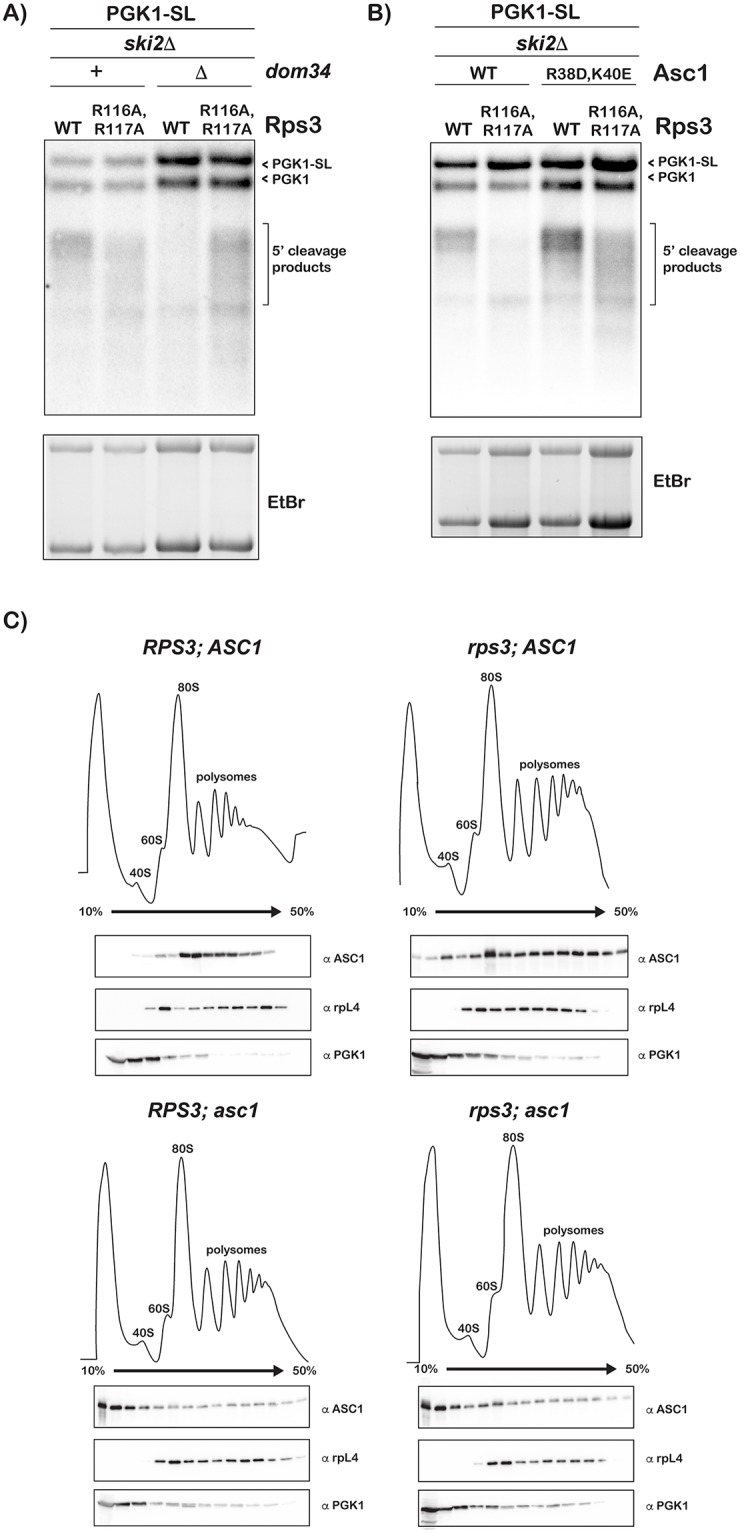
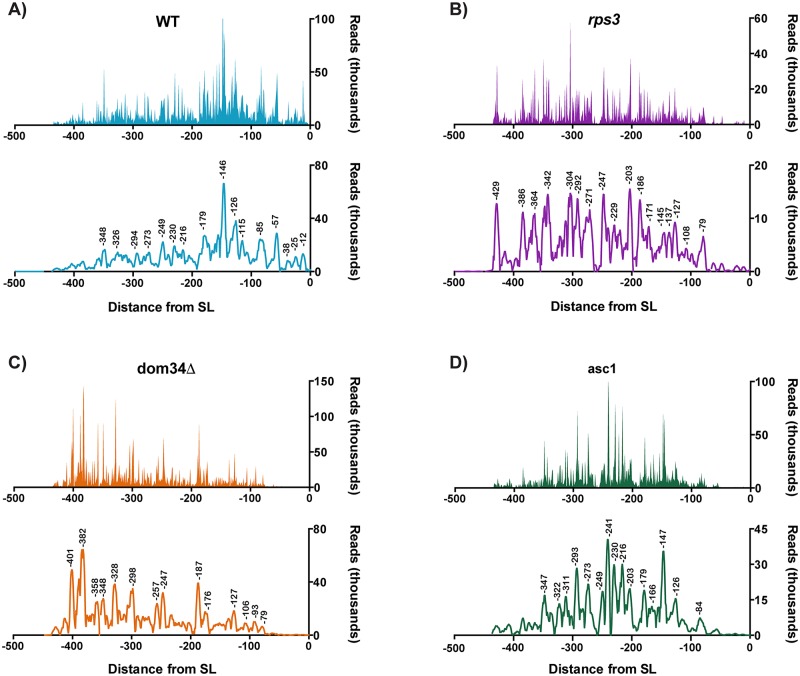
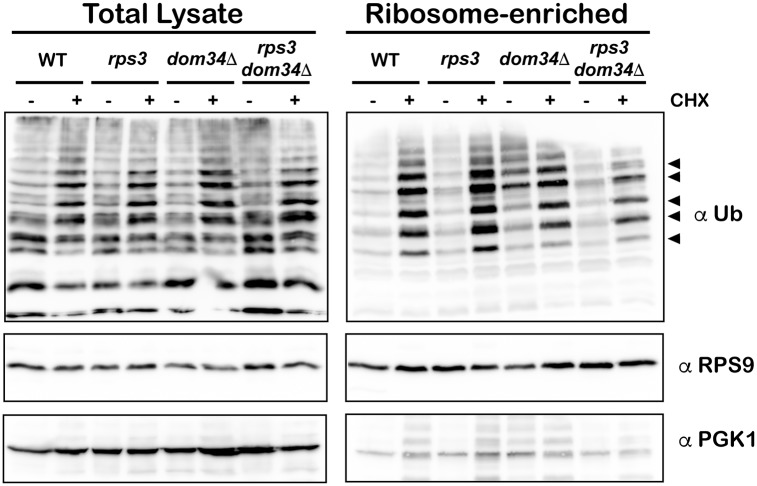
No-go Decay (NGD) is a process that has evolved to deal with stalled ribosomes resulting from structural blocks or aberrant mRNAs. The process is distinguished by an endonucleolytic cleavage prior to degradation of the transcript. While many of the details of the pathway have been described, the identity of the endonuclease remains unknown. Here we identify residues of the small subunit ribosomal protein Rps3 that are important for NGD by affecting the cleavage reaction. Mutation of residues within the ribosomal entry tunnel that contact the incoming mRNA leads to significantly reduced accumulation of cleavage products, independent of the type of stall sequence, and renders cells sensitive to damaging agents thought to trigger NGD. These phenotypes are distinct from those seen in combination with other NGD factors, suggesting a separate role for Rps3 in NGD. Conversely, ribosomal proteins ubiquitination is not affected by rps3 mutations, indicating that upstream ribosome quality control (RQC) events are not dependent on these residues. Together, these results suggest that Rps3 is important for quality control on the ribosome and strongly supports the notion that the ribosome itself plays a central role in the endonucleolytic cleavage reaction during NGD.
无终止衰变(NGD)是一种进化而来的过程,用于处理由于结构块或异常 mRNA 而导致的核糖体停滞。该过程的特点是在转录本降解之前进行内切核酸酶切割。虽然该途径的许多细节已经被描述,但内切核酸酶的身份仍然未知。在这里,我们通过影响切割反应来鉴定小亚基核糖体蛋白 Rps3 的残基,这些残基对于 NGD 很重要。突变与进入的 mRNA 接触的核糖体进入隧道内的残基会导致切割产物的积累显著减少,而与停顿序列的类型无关,并使细胞对被认为触发 NGD 的损伤剂敏感。这些表型与与其他 NGD 因子组合时看到的表型不同,表明 Rps3 在 NGD 中具有单独的作用。相反,核糖体蛋白的泛素化不受 rps3 突变的影响,表明上游核糖体质量控制(RQC)事件不依赖于这些残基。总之,这些结果表明 Rps3 对于核糖体上的质量控制很重要,并强烈支持核糖体本身在 NGD 期间的内切核酸酶切割反应中起核心作用的观点。