Mokkapati V R S S, Pandit Santosh, Kim Jinho, Martensson Anders, Lovmar Martin, Westerlund Fredrik, Mijakovic Ivan
Division of Systems Biology, Department of Biology and Biological Engineering, Chalmers University of Technology, Kemivagen 10, Goteborg, Sweden.
Applied Chemistry, Polymer Technology, Chemistry and Chemical Engineering, Chalmers University of Technology, Kemivagen 10, Goteborg, Sweden.
R Soc Open Sci. 2018 Nov 14;5(11):181083. doi: 10.1098/rsos.181083. eCollection 2018 Nov.
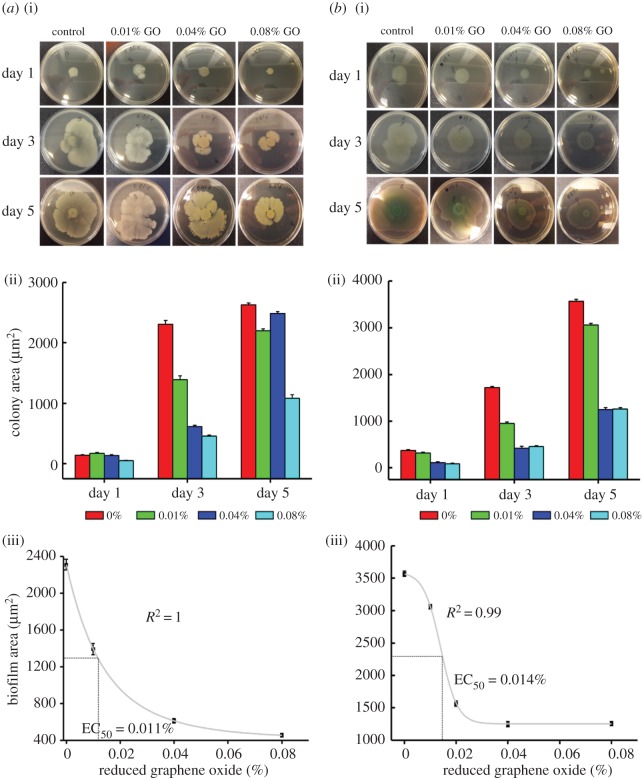
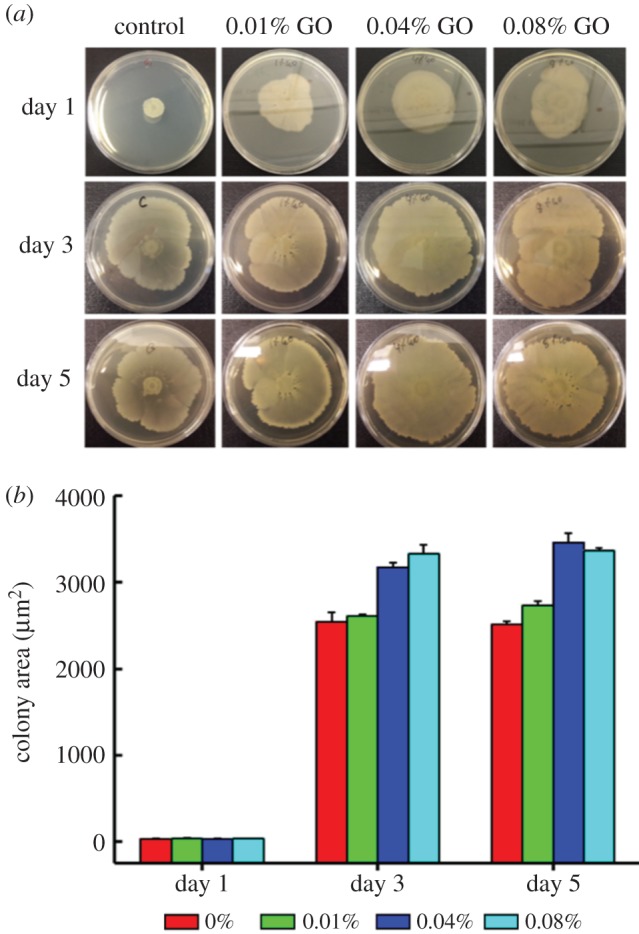
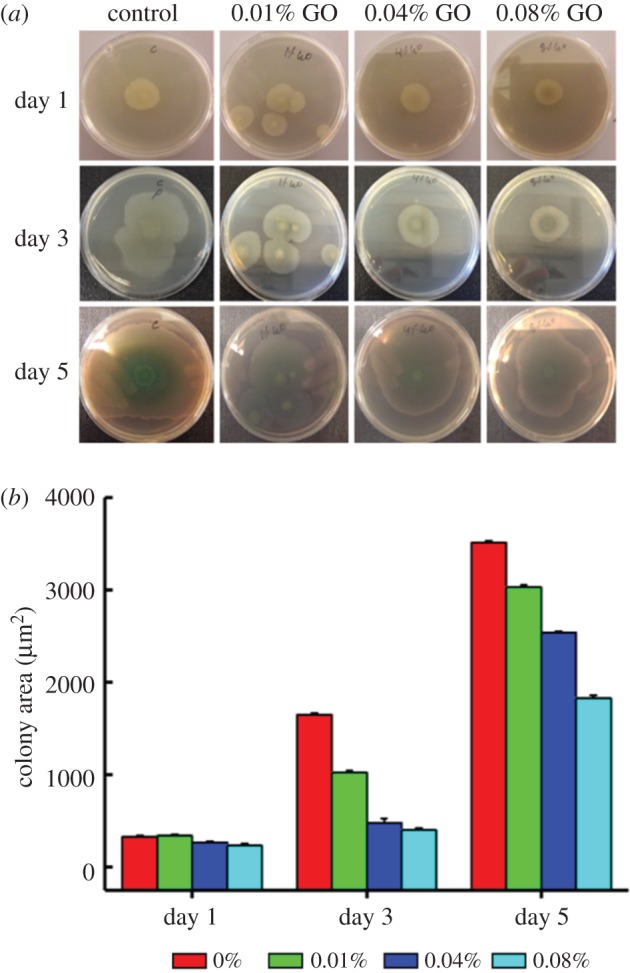
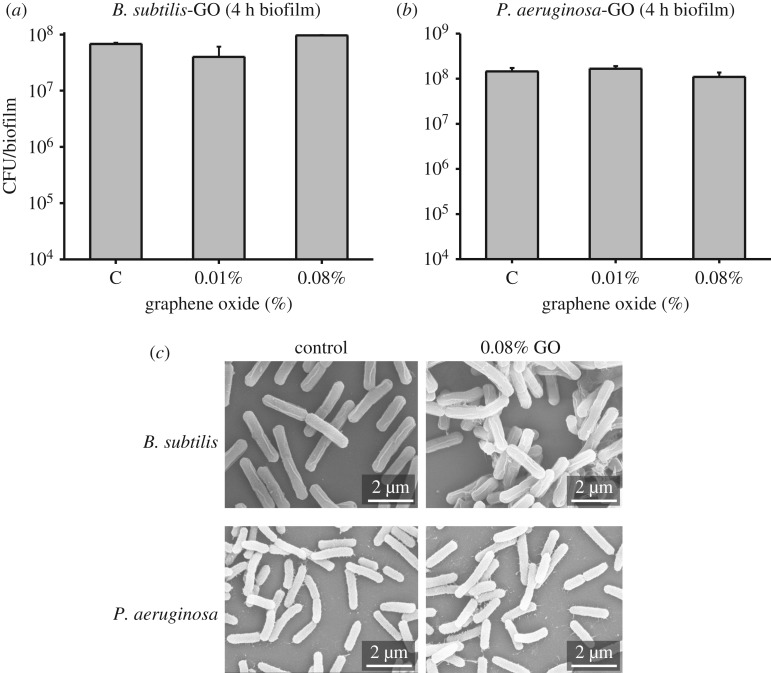
There are contradictory reports in the literature regarding the anti-bacterial activity of graphene, graphene oxide (GO) and reduced graphene oxide (rGO). This controversy is mostly due to variations in key parameters of the reported experiments, like: type of substrate, form of graphene, number of layers, type of solvent and most importantly, type of bacteria. Here, we present experimental data related to bacterial response to GO and rGO integrated in solid agar-based nutrient plates-a standard set-up for bacterial growth that is widely used by microbiologists. and strains were used for testing bacterial growth. We observed that plate-integrated rGO showed strong anti-bacterial activity against both bacterial species. By contrast, plate-integrated GO was harmless to both bacteria. These results reinforce the notion that the response of bacteria depends critically on the type of graphene material used and can vary dramatically from one bacterial strain to another, depending on bacterial physiology.
关于石墨烯、氧化石墨烯(GO)和还原氧化石墨烯(rGO)的抗菌活性,文献中有相互矛盾的报道。这种争议主要是由于所报道实验的关键参数存在差异,例如:底物类型、石墨烯形式、层数、溶剂类型,最重要的是细菌类型。在这里,我们展示了与细菌对整合在基于固体琼脂的营养平板中的GO和rGO的反应相关的实验数据——这是微生物学家广泛使用的用于细菌生长的标准设置。使用了 和 菌株来测试细菌生长。我们观察到平板整合的rGO对两种细菌都表现出很强的抗菌活性。相比之下,平板整合的GO对两种细菌都是无害的。这些结果强化了这样一种观念,即细菌的反应关键取决于所使用的石墨烯材料类型,并且根据细菌生理学的不同,从一种细菌菌株到另一种细菌菌株可能会有很大差异。