Department of Pathology and Laboratory Medicine, Brown University , Providence, Rhode Island 02912, United States.
Chem Res Toxicol. 2012 Jan 13;25(1):15-34. doi: 10.1021/tx200339h. Epub 2011 Oct 21.
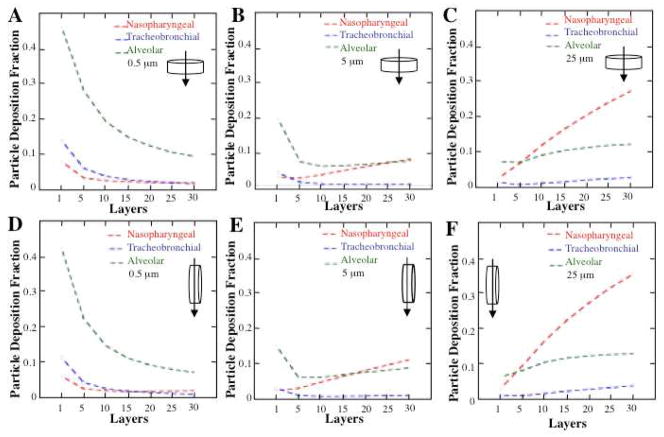
Graphene is a single-atom thick, two-dimensional sheet of hexagonally arranged carbon atoms isolated from its three-dimensional parent material, graphite. Related materials include few-layer-graphene (FLG), ultrathin graphite, graphene oxide (GO), reduced graphene oxide (rGO), and graphene nanosheets (GNS). This review proposes a systematic nomenclature for this set of Graphene-Family Nanomaterials (GFNs) and discusses specific materials properties relevant for biomolecular and cellular interactions. We discuss several unique modes of interaction between GFNs and nucleic acids, lipid bilayers, and conjugated small molecule drugs and dyes. Some GFNs are produced as dry powders using thermal exfoliation, and in these cases, inhalation is a likely route of human exposure. Some GFNs have aerodynamic sizes that can lead to inhalation and substantial deposition in the human respiratory tract, which may impair lung defense and clearance leading to the formation of granulomas and lung fibrosis. The limited literature on in vitro toxicity suggests that GFNs can be either benign or toxic to cells, and it is hypothesized that the biological response will vary across the material family depending on layer number, lateral size, stiffness, hydrophobicity, surface functionalization, and dose. Generation of reactive oxygen species (ROS) in target cells is a potential mechanism for toxicity, although the extremely high hydrophobic surface area of some GFNs may also lead to significant interactions with membrane lipids leading to direct physical toxicity or adsorption of biological molecules leading to indirect toxicity. Limited in vivo studies demonstrate systemic biodistribution and biopersistence of GFNs following intravenous delivery. Similar to other smooth, continuous, biopersistent implants or foreign bodies, GFNs have the potential to induce foreign body tumors. Long-term adverse health impacts must be considered in the design of GFNs for drug delivery, tissue engineering, and fluorescence-based biomolecular sensing. Future research is needed to explore fundamental biological responses to GFNs including systematic assessment of the physical and chemical material properties related to toxicity. Complete materials characterization and mechanistic toxicity studies are essential for safer design and manufacturing of GFNs in order to optimize biological applications with minimal risks for environmental health and safety.
石墨烯是一种由六边形排列的碳原子组成的单层二维薄片,这些碳原子是从其三维母体材料石墨中分离出来的。相关材料包括少层石墨烯(FLG)、超薄石墨、氧化石墨烯(GO)、还原氧化石墨烯(rGO)和石墨烯纳米片(GNS)。本综述为这组石墨烯家族纳米材料(GFNs)提出了一种系统的命名法,并讨论了与生物分子和细胞相互作用相关的特定材料特性。我们讨论了 GFNs 与核酸、脂质双层和共轭小分子药物和染料之间的几种独特相互作用模式。一些 GFNs 是通过热剥离制成的干粉,在这种情况下,吸入是人类暴露的一种可能途径。一些 GFNs 的空气动力学尺寸可以导致吸入,并在人体呼吸道中大量沉积,这可能会损害肺部防御和清除功能,导致肉芽肿和肺纤维化的形成。关于体外毒性的有限文献表明,GFNs 对细胞可能是良性的,也可能是有毒的,据推测,根据材料家族的不同,生物反应会有所不同,具体取决于层数、横向尺寸、刚性、疏水性、表面功能化和剂量。目标细胞中活性氧(ROS)的产生是一种潜在的毒性机制,尽管一些 GFNs 极高的疏水性表面积也可能导致与膜脂质的显著相互作用,从而导致直接的物理毒性,或吸附生物分子,从而导致间接毒性。有限的体内研究表明,静脉注射后 GFNs 可在全身分布和生物持久性。与其他光滑、连续、生物持久性的植入物或异物一样,GFNs 有引发异物肿瘤的潜力。在设计用于药物输送、组织工程和基于荧光的生物分子传感的 GFNs 时,必须考虑到长期的不良健康影响。需要进一步研究来探索对 GFNs 的基本生物学反应,包括对与毒性相关的物理和化学材料特性进行系统评估。为了在最小的环境健康和安全风险下优化生物应用,对 GFNs 进行全面的材料特性描述和机制毒性研究是至关重要的。