Singh Shantanu, Kaur Harleen, Singh Shivank, Khawaja Imran
Pulmonary Medicine, Marshall University School of Medicine, Huntington, USA.
Neurology, Univeristy of Missouri, Columbia, USA.
Cureus. 2018 Oct 15;10(10):e3453. doi: 10.7759/cureus.3453.
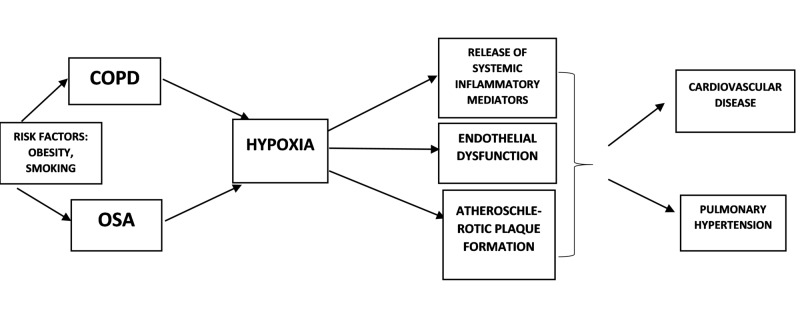
The overlap syndrome (OS) was first coined by David C. Flenley in 1985 to describe the coexistence of obstructive sleep apnea (OSA) in patients with chronic obstructive pulmonary disease (COPD). Patients with OS experience more profound nocturnal oxygen desaturation (NOD) than patients with OSA or COPD alone. This underlying hypoxia in OS increases the risk of cardiovascular disease including atrial fibrillation, right heart failure, and pulmonary hypertension, thereby increasing the mortality associated with the disease. Keeping in mind the risk of mortality, it is crucial for clinicians to clinically evaluate the patients with OSA or COPD for the occurrence of OS and provide effective treatment options for the same. This review aims to highlight the pathophysiology and the risks associated with the OS along with early detection and appropriate management protocols to reduce the mortality associated with it.
重叠综合征(OS)于1985年由大卫·C·弗莱利首次提出,用于描述慢性阻塞性肺疾病(COPD)患者中阻塞性睡眠呼吸暂停(OSA)的共存情况。与单纯患有OSA或COPD的患者相比,OS患者夜间氧饱和度下降(NOD)更为严重。OS中这种潜在的缺氧会增加包括心房颤动、右心衰竭和肺动脉高压在内的心血管疾病风险,从而增加与该疾病相关的死亡率。考虑到死亡风险,临床医生对患有OSA或COPD的患者进行OS发生情况的临床评估并提供有效的治疗方案至关重要。本综述旨在强调OS的病理生理学、与之相关的风险以及早期检测和适当的管理方案,以降低与之相关的死亡率。