Laboratory for Sleep, Cognition and Consciousness Research, Centre for Cognitive Neuroscience, University of Salzburg, Salzburg, Austria.
Department of Sport and Exercise Science, University of Salzburg, Salzburg, Austria.
J Sleep Res. 2019 Aug;28(4):e12797. doi: 10.1111/jsr.12797. Epub 2018 Dec 18.
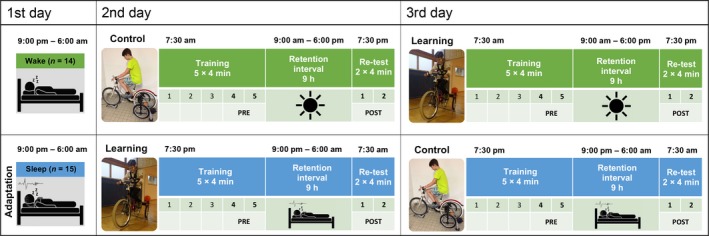
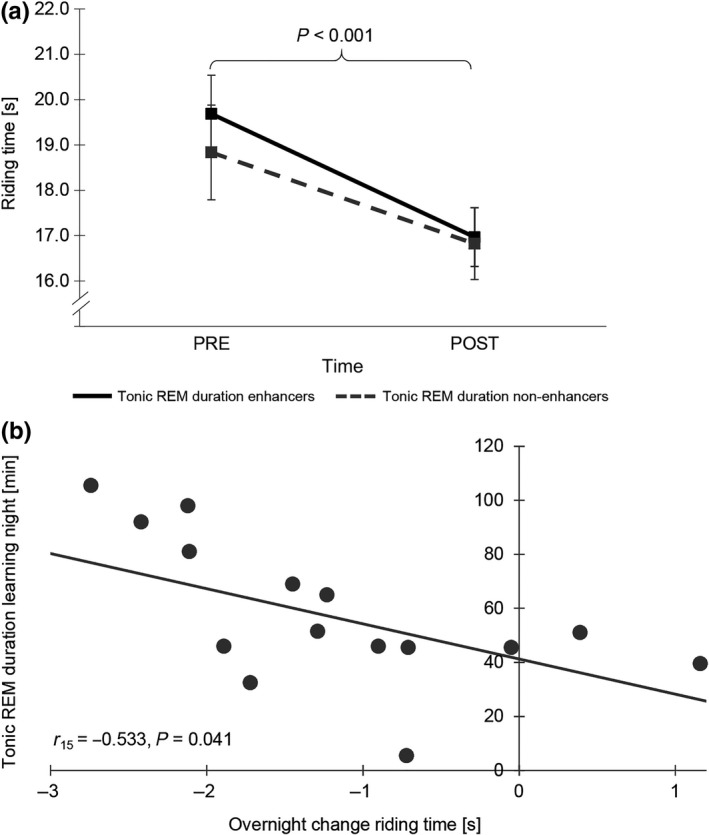
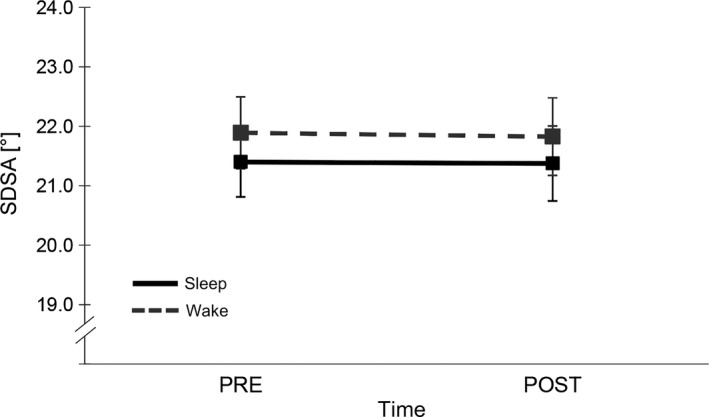
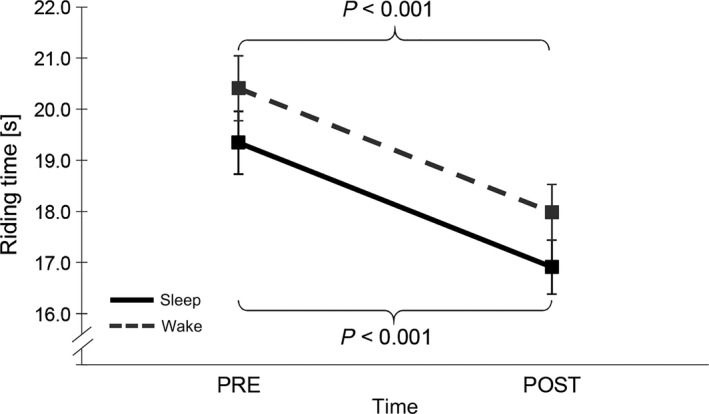
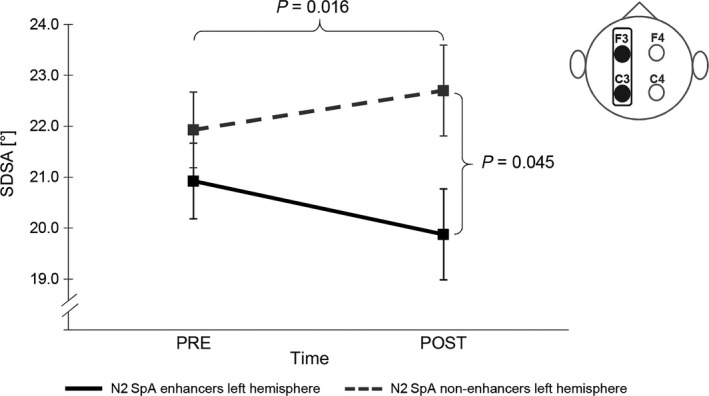
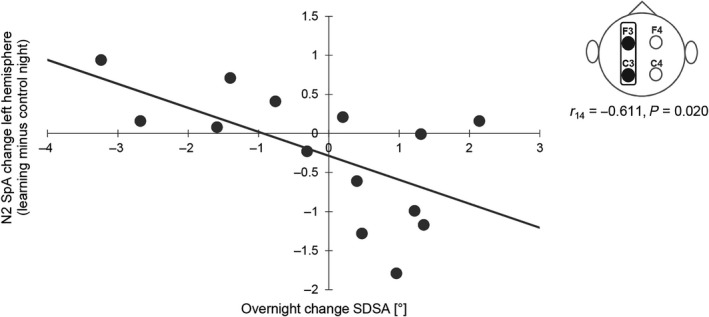
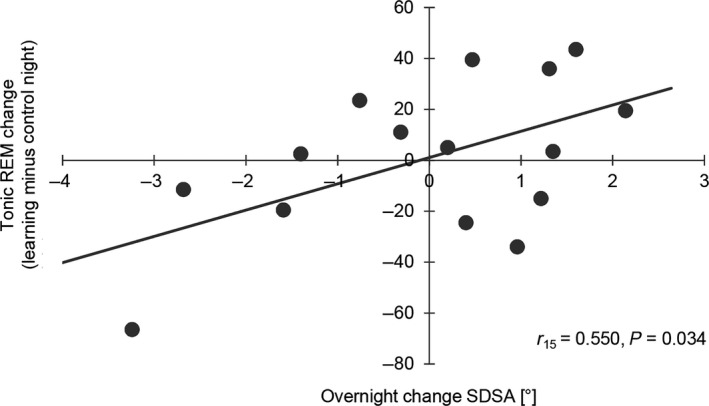
Sleep has been shown to facilitate the consolidation of newly acquired motor memories in adults. However, the role of sleep in motor memory consolidation is less clear in children and adolescents, especially concerning real-life gross-motor skills. Therefore, we investigated the effects of sleep and wakefulness on a complex gross-motor adaptation task by using a bicycle with an inverse steering device. A total of 29 healthy adolescents aged between 11 and 14 years (five female) were either trained to ride an inverse steering bicycle (learning condition) or a stationary bicycle (control condition). Training took place in the morning (wake, n = 14) or in the evening (sleep, n = 15) followed by a 9-hr retention interval and a subsequent re-test session. Slalom cycling performance was assessed by speed (riding time) and accuracy (standard deviation of steering angle) measures. Behavioural results showed no evidence for sleep-dependent memory consolidation. However, overnight gains in accuracy were associated with an increase in left hemispheric N2 slow sleep spindle activity from control to learning night. Furthermore, decreases in REM and tonic REM duration were related to higher overnight improvements in accuracy. Regarding speed, an increase in REM and tonic REM duration was favourable for higher overnight gains in riding time. Thus, although not yet detectable on a behavioural level, sleep seemed to play a role in the acquisition of gross-motor skills. A promising direction for future research is to focus on the possibility of delayed performance gains in adolescent populations.
睡眠已被证明有助于成年人巩固新获得的运动记忆。然而,睡眠在儿童和青少年的运动记忆巩固中的作用尚不清楚,特别是对于现实生活中的大运动技能。因此,我们通过使用具有反向转向装置的自行车来研究睡眠和清醒对复杂大运动适应任务的影响。共有 29 名年龄在 11 至 14 岁之间的健康青少年(5 名女性)参与了研究,他们要么接受反向转向自行车(学习条件)的训练,要么接受固定自行车(对照条件)的训练。训练分别在早上(清醒组,n=14)或晚上(睡眠组,n=15)进行,随后是 9 小时的保持间隔和随后的重新测试。通过速度(骑行时间)和准确性(转向角度的标准差)来评估障碍赛骑行表现。行为结果没有证据表明存在睡眠依赖的记忆巩固。然而,从对照夜到学习夜,准确性的夜间提高与左半球 N2 慢睡眠纺锤波活动的增加有关。此外,快速眼动和紧张性快速眼动持续时间的减少与准确性的夜间提高有关。关于速度,快速眼动和紧张性快速眼动持续时间的增加有利于夜间骑行时间的提高。因此,尽管在行为水平上尚未检测到,但睡眠似乎在大运动技能的获得中发挥了作用。未来研究的一个有前途的方向是关注青少年群体中延迟表现提高的可能性。