Department of Genetics, 5th floor ERIBA building, Antonius Deusinglaan 1, 9713AV Groningen, University of Groningen, University Medical Center Groningen, Groningen, The Netherlands.
Genome Med. 2018 Dec 19;10(1):96. doi: 10.1186/s13073-018-0608-4.
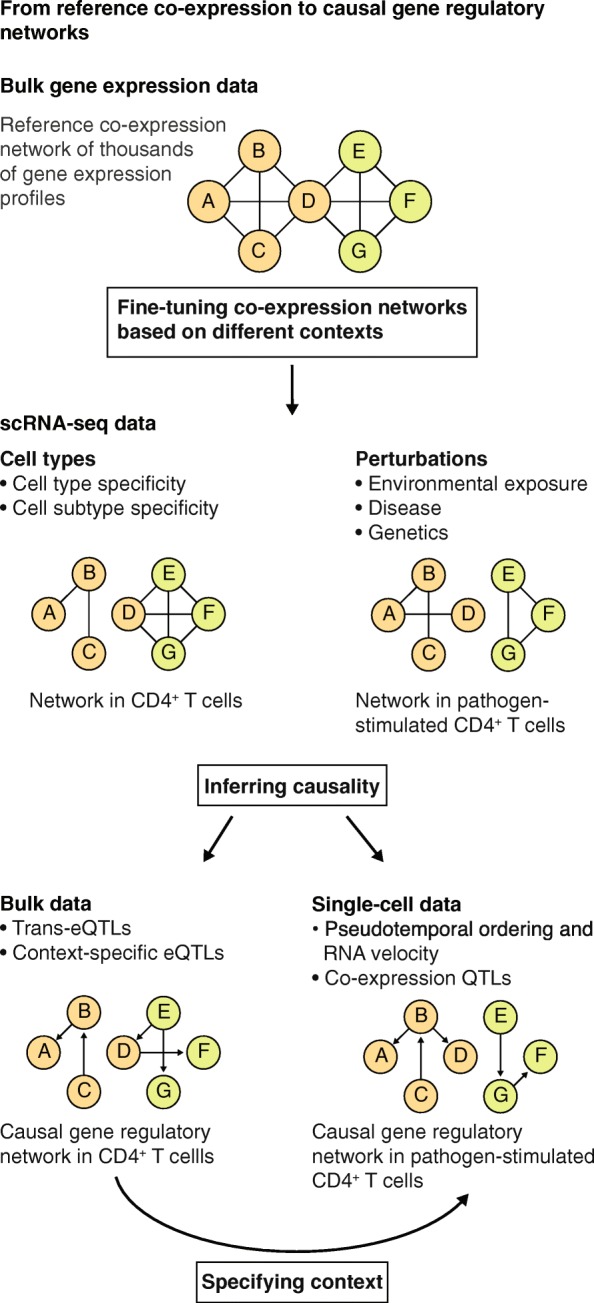
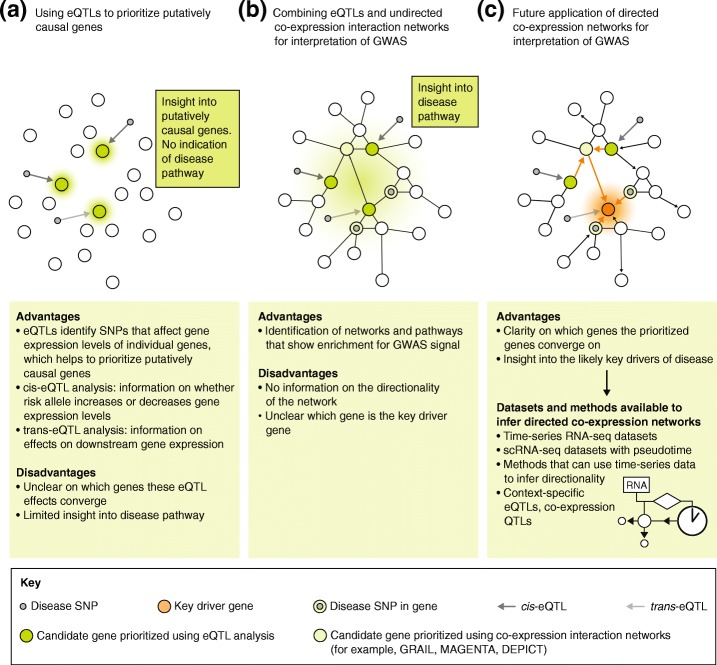
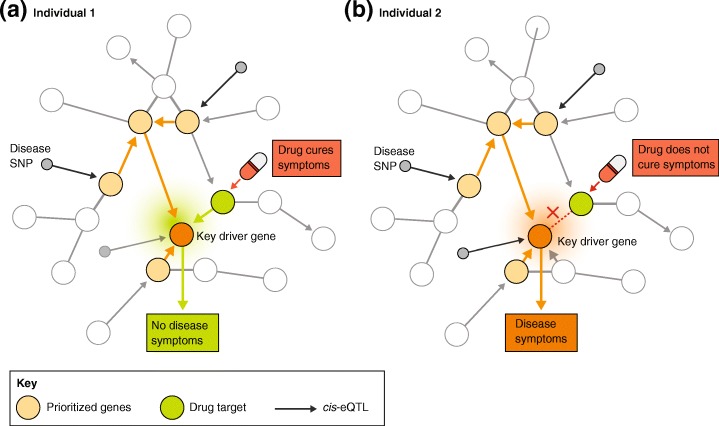
Only a small fraction of patients respond to the drug prescribed to treat their disease, which means that most are at risk of unnecessary exposure to side effects through ineffective drugs. This inter-individual variation in drug response is driven by differences in gene interactions caused by each patient's genetic background, environmental exposures, and the proportions of specific cell types involved in disease. These gene interactions can now be captured by building gene regulatory networks, by taking advantage of RNA velocity (the time derivative of the gene expression state), the ability to study hundreds of thousands of cells simultaneously, and the falling price of single-cell sequencing. Here, we propose an integrative approach that leverages these recent advances in single-cell data with the sensitivity of bulk data to enable the reconstruction of personalized, cell-type- and context-specific gene regulatory networks. We expect this approach will allow the prioritization of key driver genes for specific diseases and will provide knowledge that opens new avenues towards improved personalized healthcare.
只有一小部分患者对治疗其疾病的药物有反应,这意味着大多数患者都面临着因无效药物而遭受不必要的副作用风险。这种药物反应的个体间差异是由每个患者的遗传背景、环境暴露和参与疾病的特定细胞类型的比例引起的基因相互作用的差异驱动的。现在,通过构建基因调控网络,利用 RNA 速度(基因表达状态的时间导数)、同时研究数十万个细胞的能力和单细胞测序价格的下降,这些基因相互作用可以被捕获。在这里,我们提出了一种综合方法,利用单细胞数据的这些最新进展和批量数据的敏感性,实现个性化、细胞类型和特定于上下文的基因调控网络的重建。我们期望这种方法将能够优先考虑特定疾病的关键驱动基因,并提供新知识,为改善个性化医疗保健开辟新途径。