He Wenqiao, Wen Yuqi, Xiong Yiquan, Zhang Minyi, Cheng Mingji, Chen Qing
Department of Epidemiology, School of Public Health, Guangdong Provincial Key Laboratory of Tropical Disease Research, Southern Medical University, 1838 Guangzhou North Road, Guangzhou, 510515, China.
BMC Vet Res. 2018 Dec 22;14(1):414. doi: 10.1186/s12917-018-1746-z.
Urban rodents and house shrews are closely correlated in terms of location with humans and can transmit many pathogens to them. Hepatitis E has been confirmed to be a zoonotic disease. However, the zoonotic potential of rat HEV is still unclear. The aim of this study was to determine the prevalence and genomic characteristics of hepatitis E virus (HEV) in rodents and house shrews.
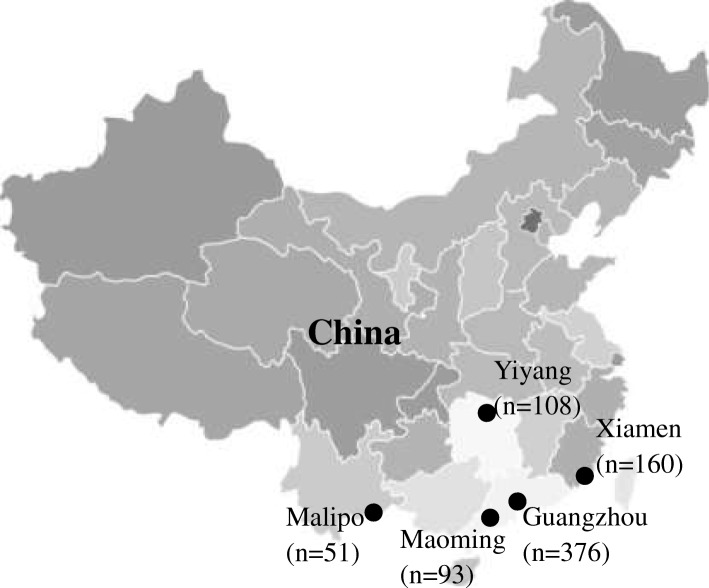
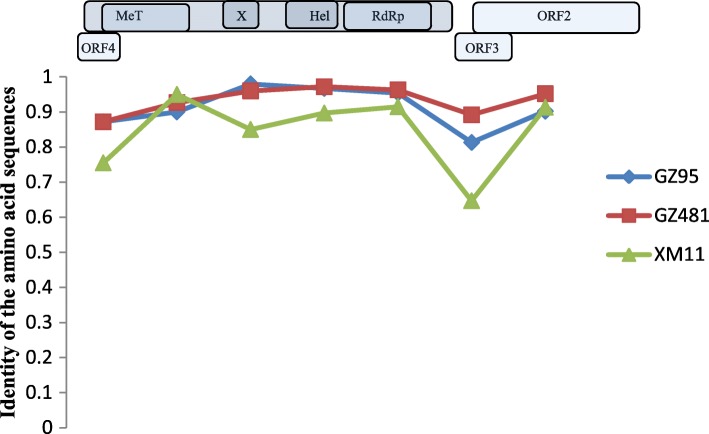
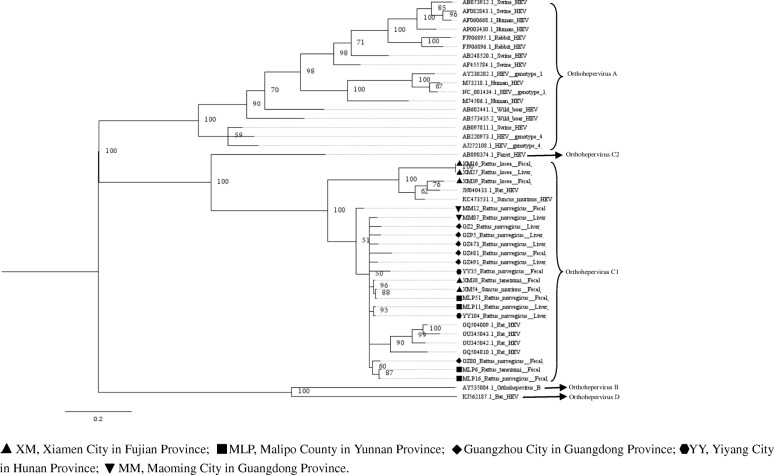
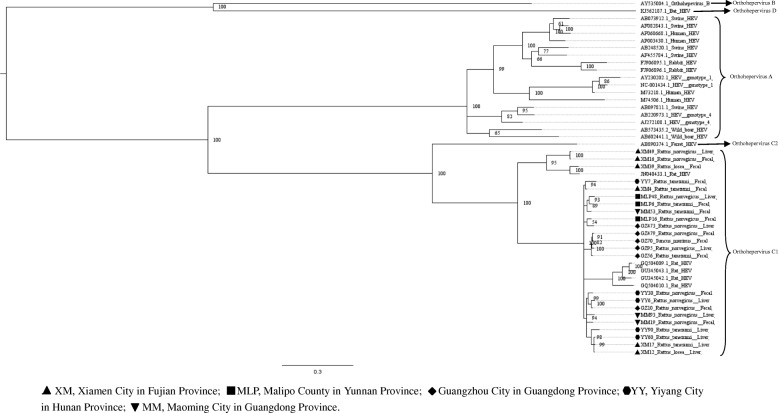
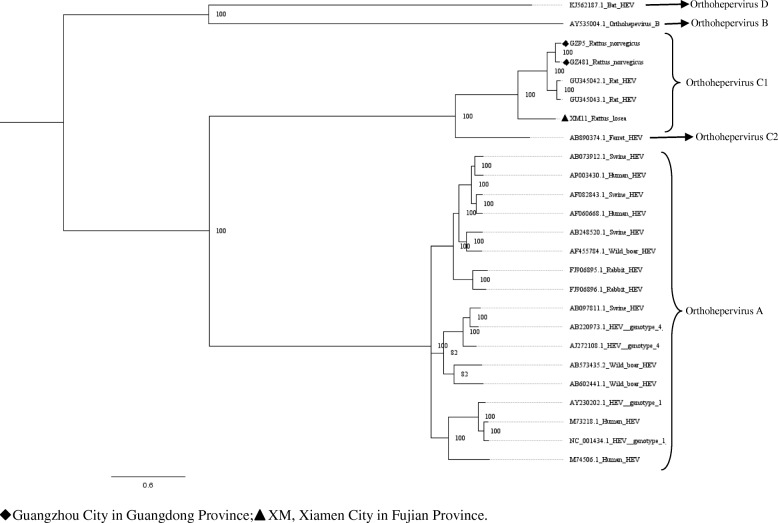
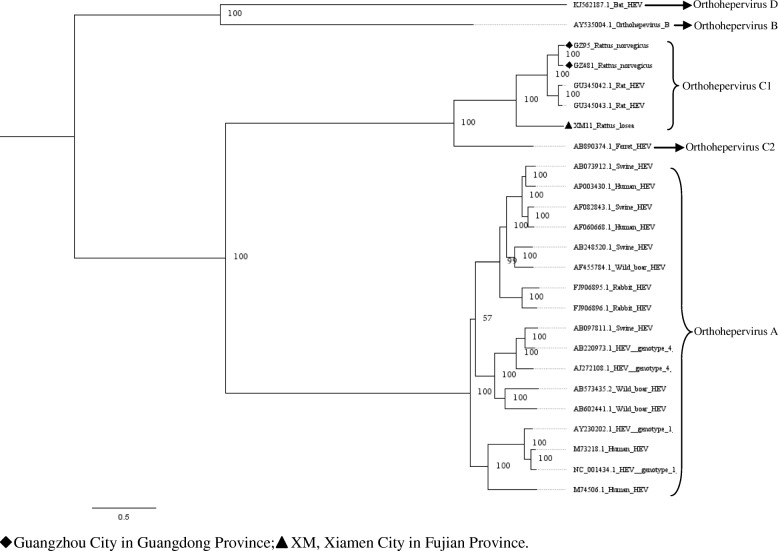
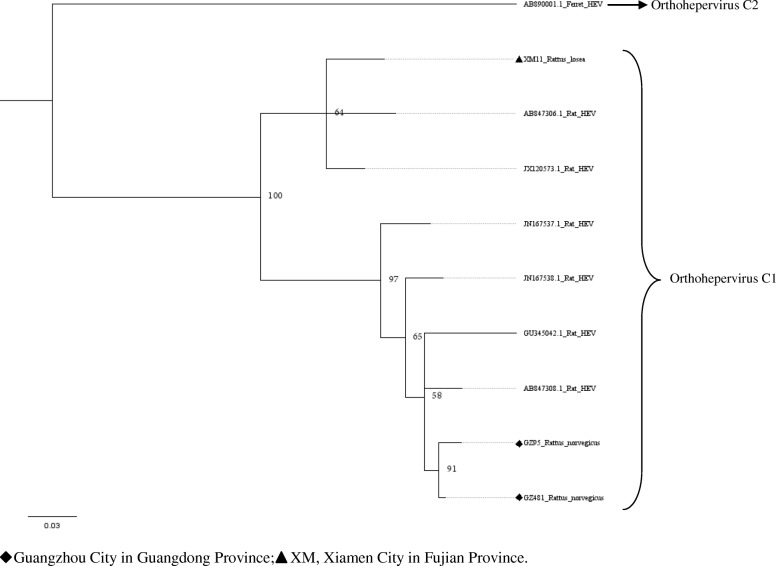
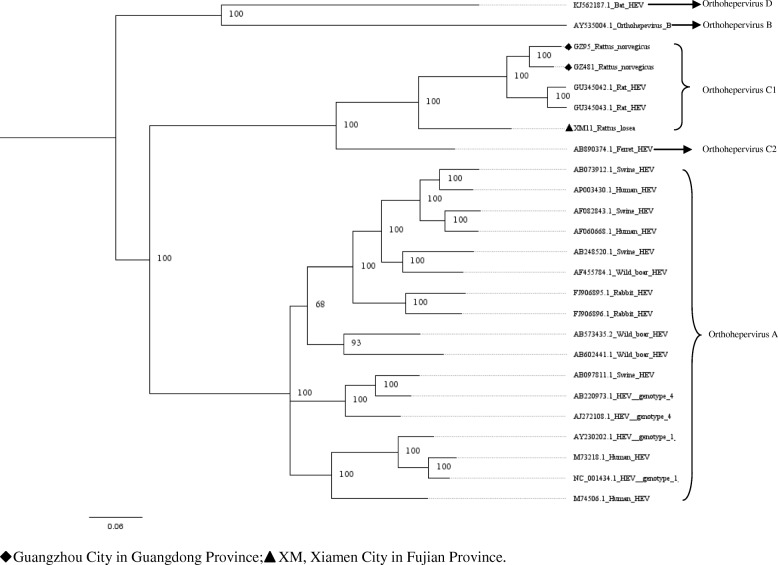
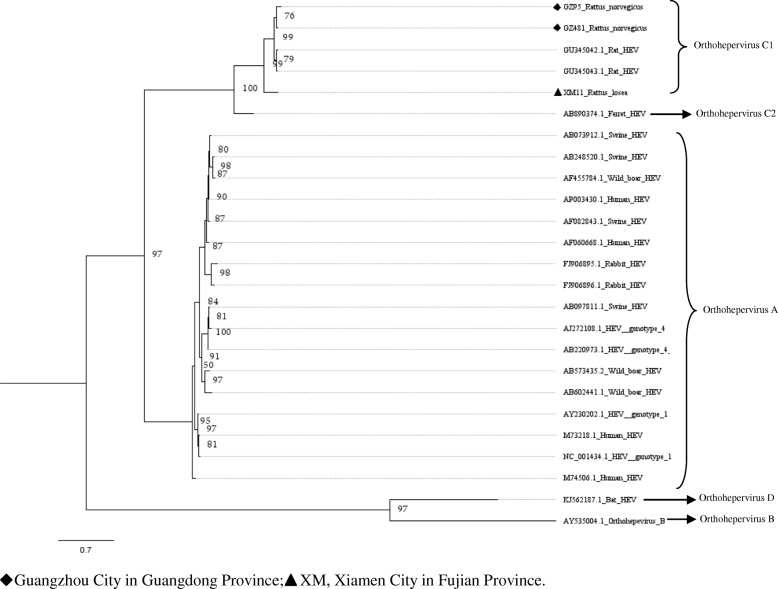
We collected a total of 788 animals from four provinces in China. From the 614 collected murine rodents, 20.19% of the liver tissue samples and 45.76% of the fecal samples were positive for HEV. From the 174 house shrews (Suncus murinus), 5.17% fecal samples and 0.57% liver tissue samples were positive for HEV. All of the HEV sequences obtained in this study belonged to Orthohepevirus C1. However, we observed a lower percentage of identity in the ORF3 region upon comparing the amino acid sequences between Rattus norvegicus and Rattus losea. HEV derived from house shrews shared a high percentage of identity with rat HEV. Notably, the first near full-length of the HEV genome from Rattus losea is described in our study, and we also report the first near full-length rat HEV genomes in Rattus norvegicus from China.
HEV is prevalent among the three common species of murine rodents (Rattus. norvegicus, Rattus. tanezumi, and Rattus. losea) in China. HEV sequences detected from house shrews were similar to rat HEV sequences. The high identity of HEV from murine rodents and house shrews suggested that HEV can spread among different animal species.
城市啮齿动物和家鼩鼱在分布上与人类密切相关,可向人类传播多种病原体。戊型肝炎已被确认为一种人畜共患病。然而,大鼠戊型肝炎病毒的人畜共患病潜力仍不清楚。本研究旨在确定啮齿动物和家鼩鼱中戊型肝炎病毒(HEV)的流行情况和基因组特征。
我们从中国四个省份共收集了788只动物。在收集的614只鼠类啮齿动物中,20.19%的肝脏组织样本和45.76%的粪便样本HEV呈阳性。在174只家鼩鼱(臭鼩)中,5.17%的粪便样本和0.57%的肝脏组织样本HEV呈阳性。本研究中获得的所有HEV序列均属于正戊型肝炎病毒C1型。然而,在比较褐家鼠和黄毛鼠的氨基酸序列时,我们发现开放阅读框3(ORF3)区域的同源性百分比更低。源自家鼩鼱的HEV与大鼠HEV具有较高的同源性。值得注意的是,我们在本研究中描述了黄毛鼠的首个近全长HEV基因组,并且还报道了来自中国褐家鼠的首个近全长大鼠HEV基因组。
HEV在中国三种常见的鼠类啮齿动物(褐家鼠、黄胸鼠和黄毛鼠)中普遍存在。从家鼩鼱中检测到的HEV序列与大鼠HEV序列相似。鼠类啮齿动物和家鼩鼱的HEV高度同源,表明HEV可在不同动物物种间传播。