Department of Mathematics, University of Pittsburgh, Pittsburgh, PA, USA; Center for the Neural Basis of Cognition, Pittsburgh, PA, USA.
Center for the Neural Basis of Cognition, Pittsburgh, PA, USA; Department of Neuroscience, University of Pittsburgh, Pittsburgh, PA, USA.
Neuron. 2019 Jan 16;101(2):337-348.e4. doi: 10.1016/j.neuron.2018.11.034. Epub 2018 Dec 20.
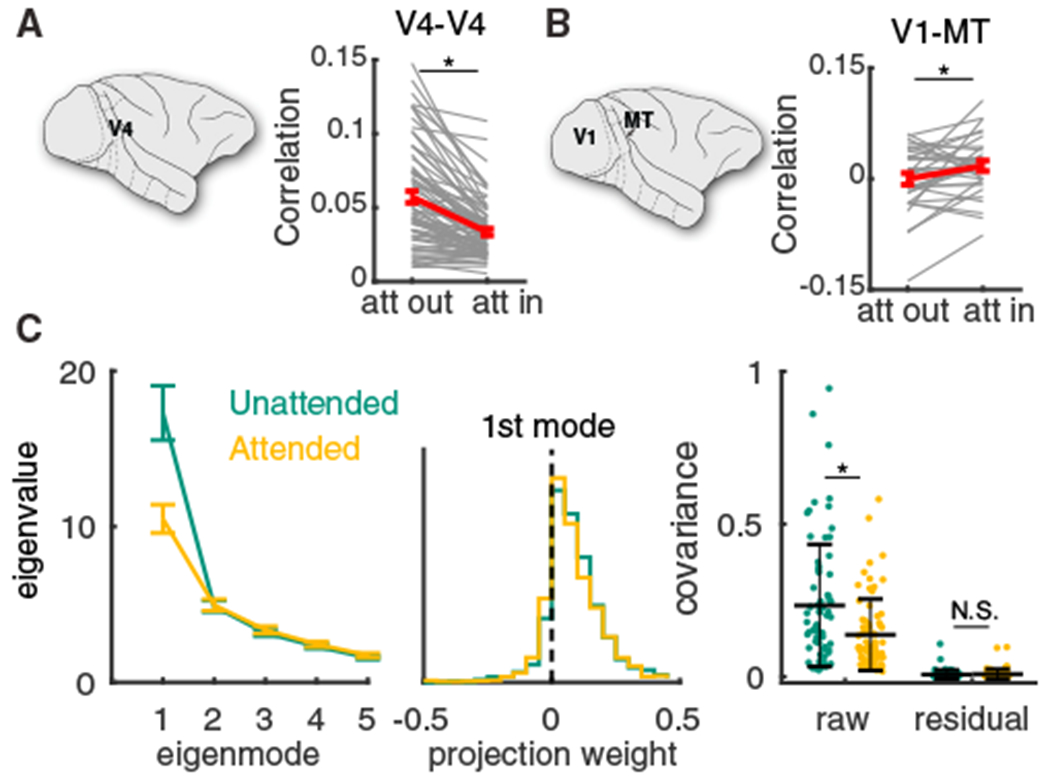
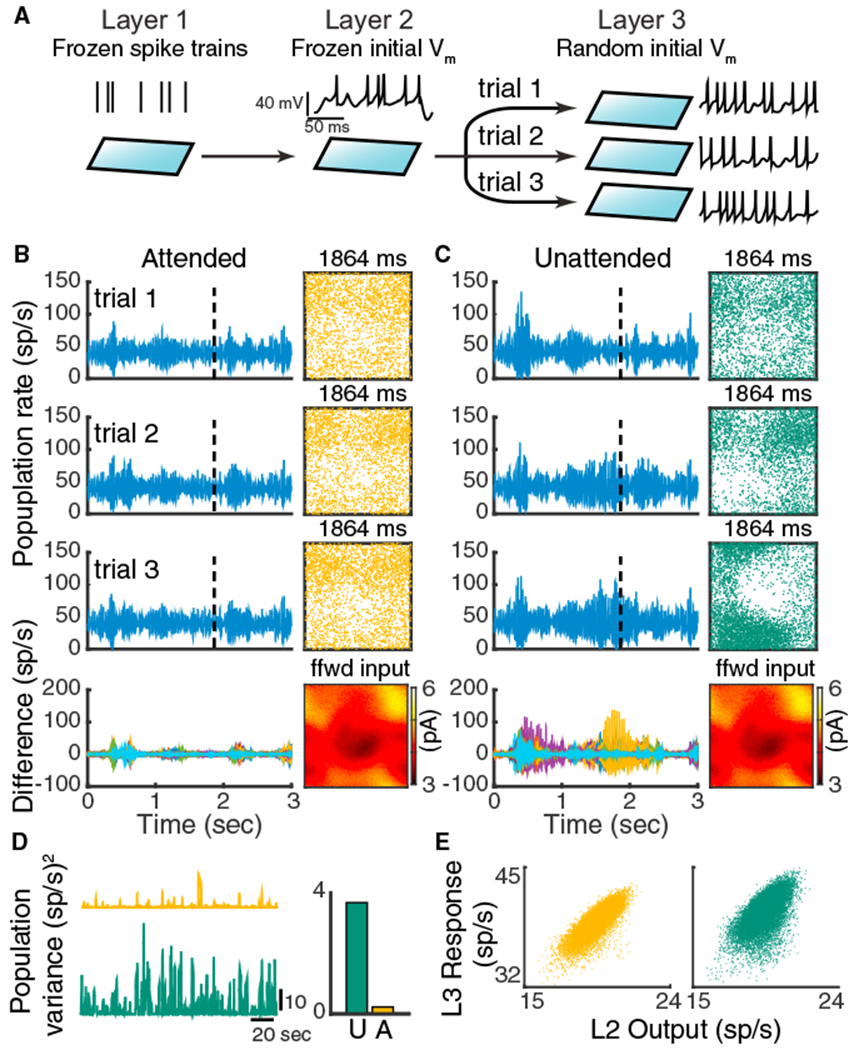
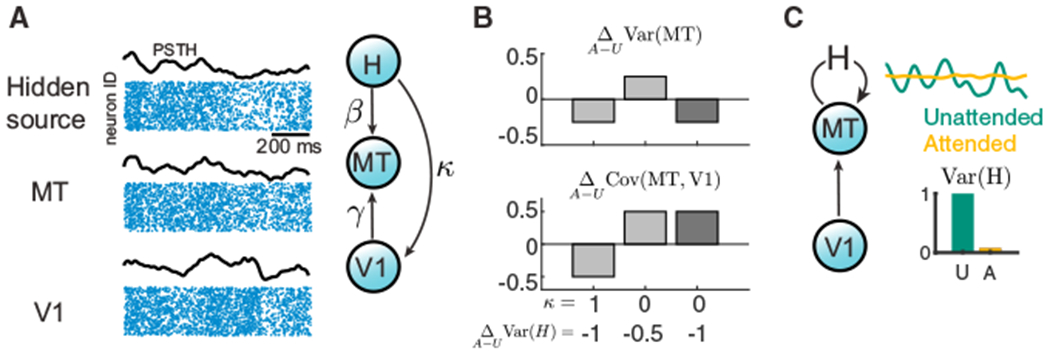
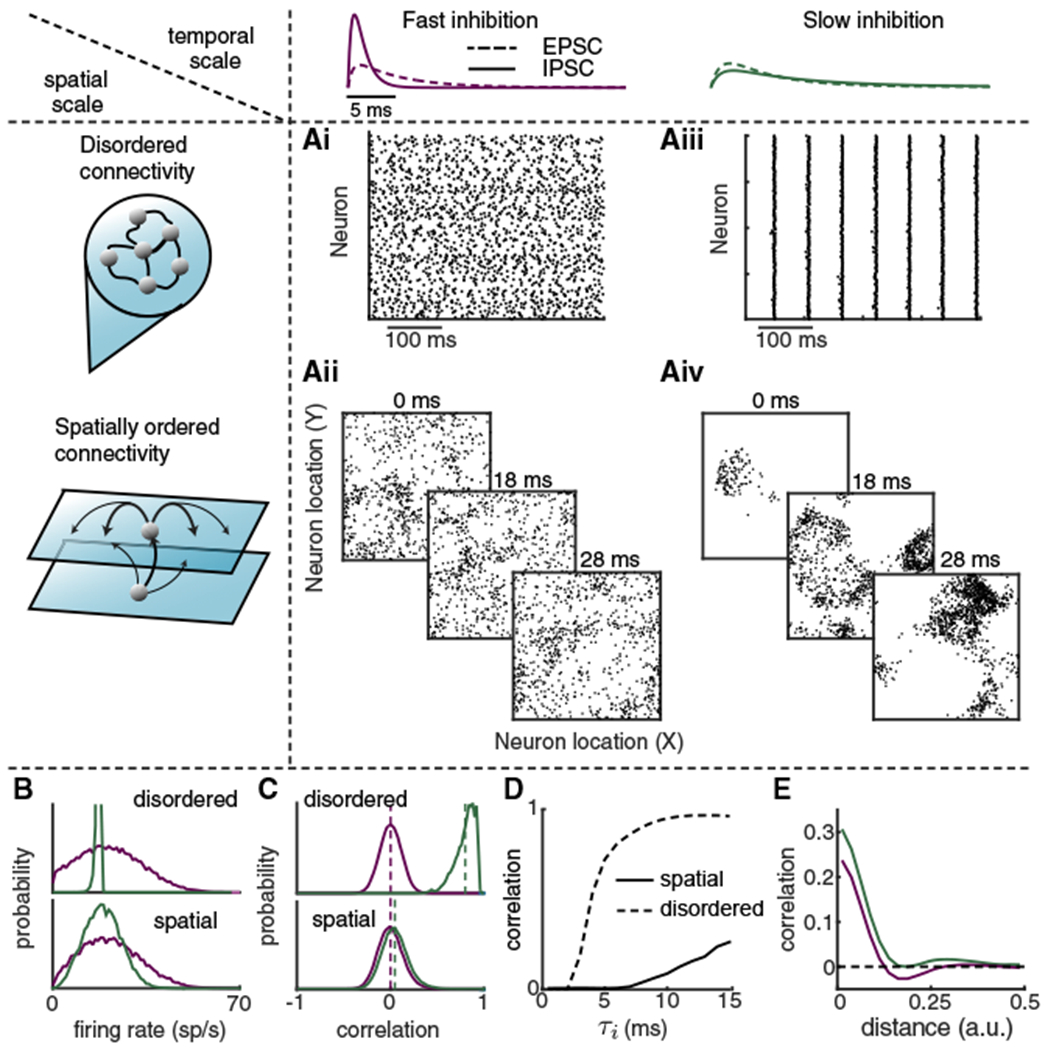
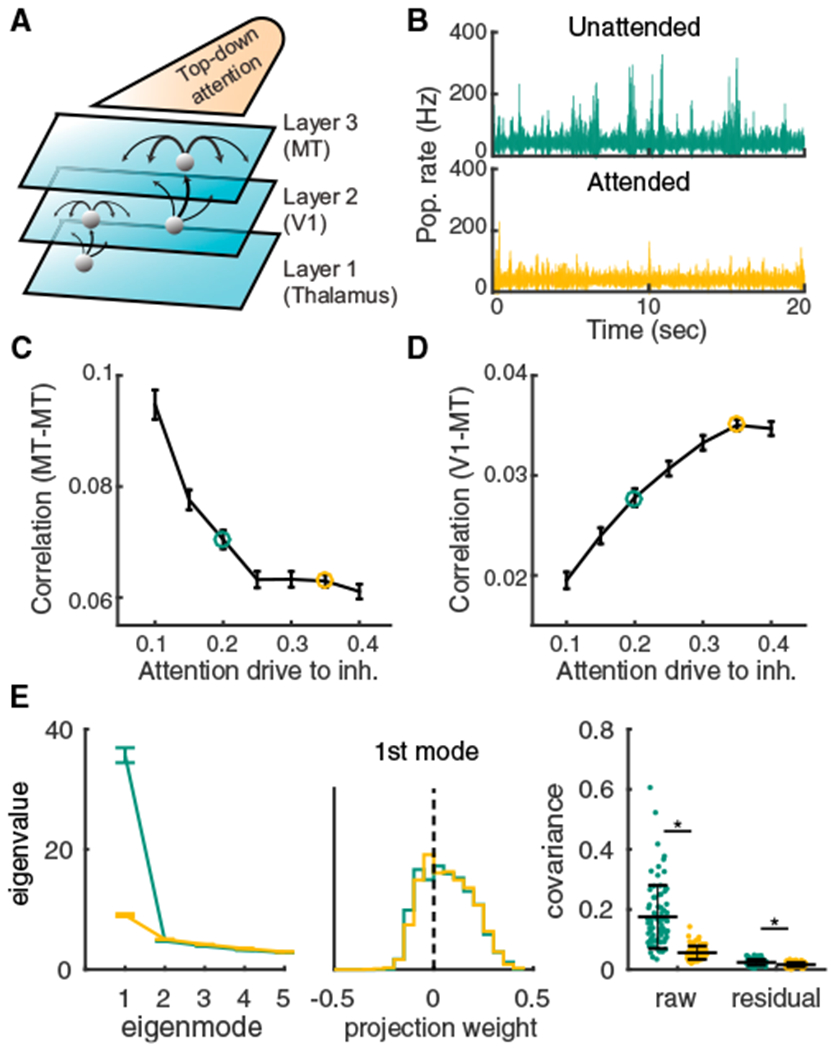
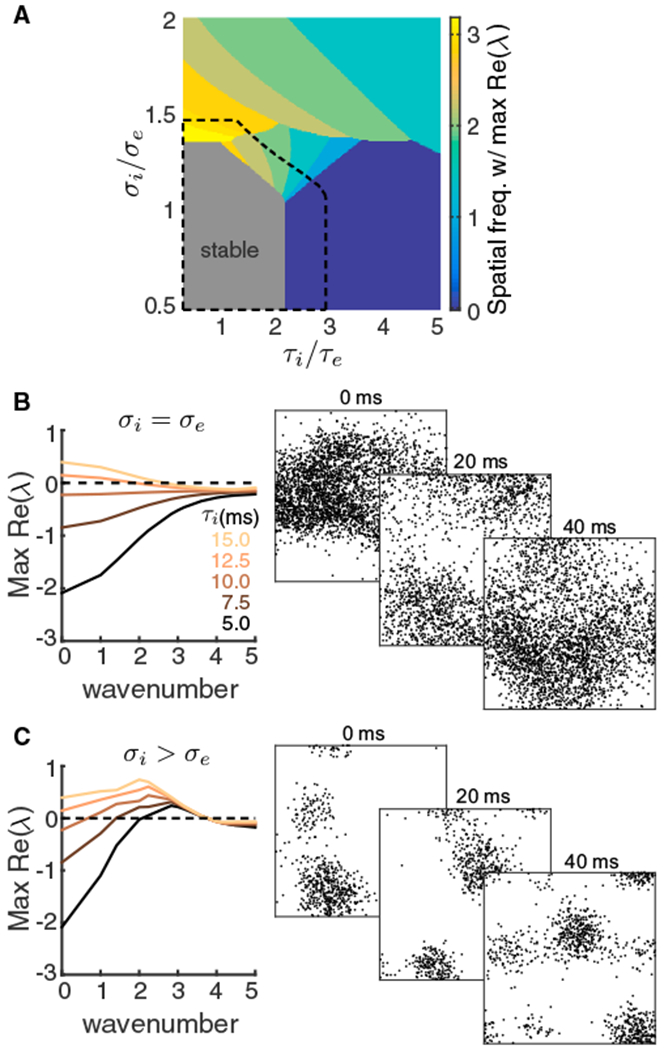
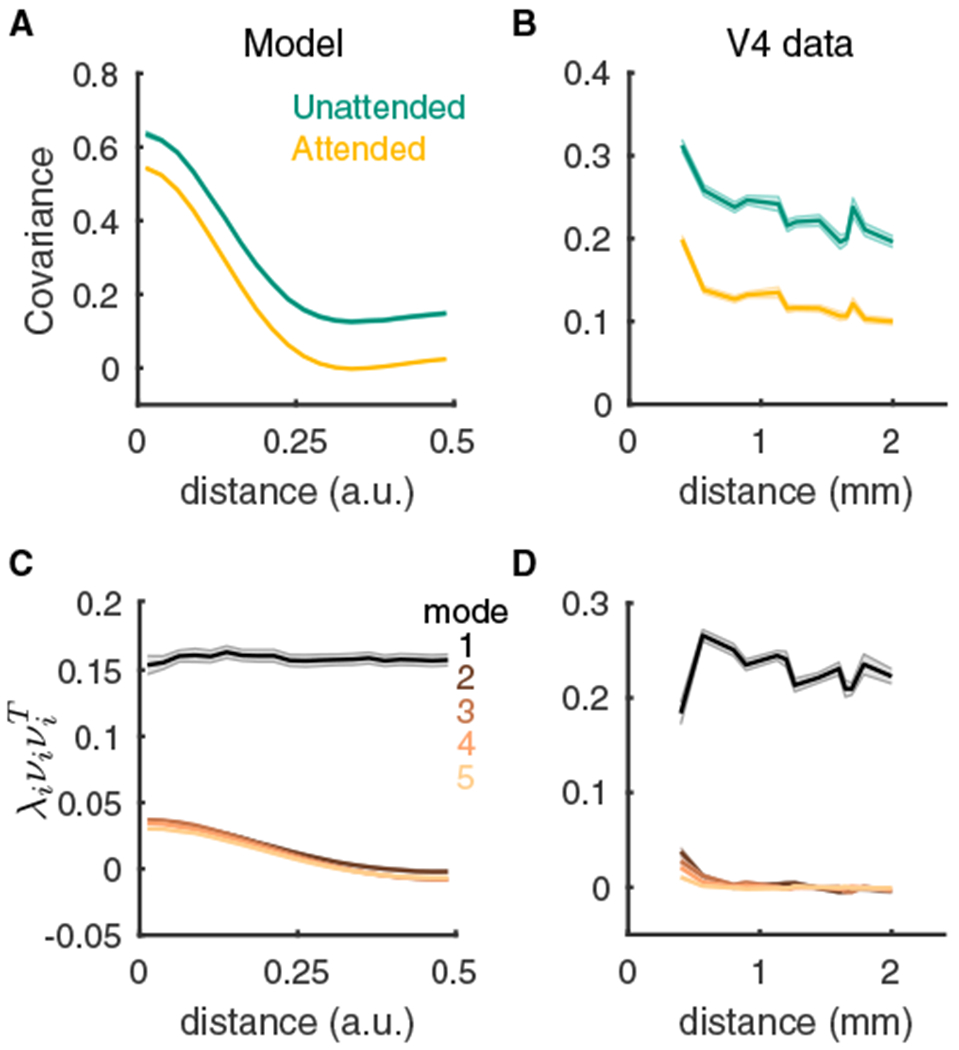
Trial-to-trial variability is a reflection of the circuitry and cellular physiology that make up a neuronal network. A pervasive yet puzzling feature of cortical circuits is that despite their complex wiring, population-wide shared spiking variability is low dimensional. Previous model cortical networks cannot explain this global variability, and rather assume it is from external sources. We show that if the spatial and temporal scales of inhibitory coupling match known physiology, networks of model spiking neurons internally generate low-dimensional shared variability that captures population activity recorded in vivo. Shifting spatial attention into the receptive field of visual neurons has been shown to differentially modulate shared variability within and between brain areas. A top-down modulation of inhibitory neurons in our network provides a parsimonious mechanism for this attentional modulation. Our work provides a critical link between observed cortical circuit structure and realistic shared neuronal variability and its modulation.
试验间的可变性反映了构成神经网络的电路和细胞生理学。皮质电路的一个普遍但令人费解的特征是,尽管它们的布线复杂,但总体的共享尖峰可变性是低维的。以前的模型皮质网络无法解释这种全局可变性,而是假设它来自外部来源。我们表明,如果抑制性耦合的空间和时间尺度与已知生理学相匹配,那么模型尖峰神经元网络内部会产生低维的共享可变性,从而捕获在体内记录的群体活动。将空间注意力转移到视觉神经元的感受野中已被证明可以在大脑区域内和区域之间差异调节共享可变性。我们网络中抑制性神经元的自上而下调制为这种注意力调制提供了一个简约的机制。我们的工作在观察到的皮质电路结构与现实的共享神经元可变性及其调制之间提供了关键联系。