Dias Tania R, Agarwal Ashok, Pushparaj Peter N, Ahmad Gulfam, Sharma Rakesh
American Center for Reproductive Medicine, Cleveland Clinic, Cleveland, OH, USA.
Universidade da Beira Interior, Covilhã, Portugal.
World J Mens Health. 2020 Apr;38(2):198-207. doi: 10.5534/wjmh.180099. Epub 2018 Dec 21.
Patients with non-seminoma testicular cancer (NSTC) cancer can be subfertile or infertile, and present reduced sperm quality, but the underlying mechanisms are unknown. The aim of this study was to compare the sperm proteome of patients with NSTC, who cryopreserved their sperm before starting cancer treatment, with that from healthy fertile men.
Semen volume, sperm motility and sperm concentration were evaluated before the cryopreservation of samples from patients with NSTC (n=15) and the control group (n=15). Sperm proteomic analysis was performed by liquid chromatography-tandem mass spectrometry and the differentially expressed proteins (DEPs) between the two groups were identified using bioinformatic tools.
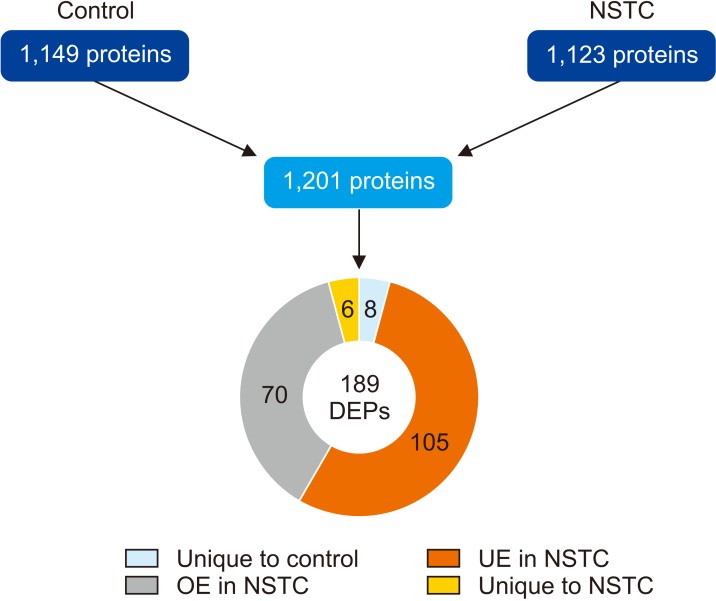
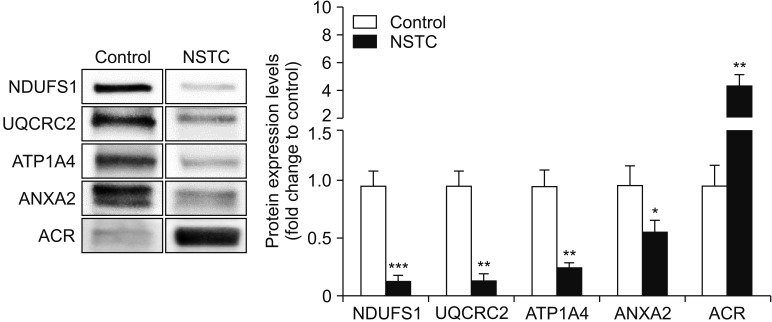
A total of 189 DEPs was identified in the dataset, from which five DEPs related to sperm function and fertilization were selected for validation by Western blot. We were able to validate the underexpression of the mitochondrial complex subunits NADH:Ubiquinone Oxidoreductase Core Subunit S1 (NDUFS1) and ubiquinol-cytochrome C reductase core protein 2 (UQCRC2), as well as the underexpression of the testis-specific sodium/potassium-transporting ATPase subunit alpha-4 (ATP1A4) in the NSTC group.
Our results indicate that sperm mitochondrial dysfunction may explain the observed decrease in sperm concentration, total sperm count and total motile count in NSTC patients. The identified DEPs may serve as potential biomarkers for the pathophysiology of subfertility/infertility in patients with NSTC. Our study also associates the reduced fertilizing ability of NSTC patients with the dysregulation of important sperm molecular mechanisms.
非精原细胞瘤性睾丸癌(NSTC)患者可能会出现生育力低下或不育,精子质量也会下降,但其潜在机制尚不清楚。本研究的目的是比较在开始癌症治疗前冷冻保存精子的NSTC患者与健康有生育能力男性的精子蛋白质组。
对NSTC患者(n = 15)和对照组(n = 15)的样本进行冷冻保存前,评估精液体积、精子活力和精子浓度。通过液相色谱 - 串联质谱进行精子蛋白质组分析,并使用生物信息学工具鉴定两组之间的差异表达蛋白(DEP)。
数据集中共鉴定出189个DEP,从中选择了5个与精子功能和受精相关的DEP通过蛋白质印迹法进行验证。我们能够验证NSTC组中线粒体复合物亚基烟酰胺腺嘌呤二核苷酸:泛醌氧化还原酶核心亚基S1(NDUFS1)和泛醇 - 细胞色素C还原酶核心蛋白2(UQCRC2)的表达下调,以及睾丸特异性钠/钾转运ATP酶亚基α - 4(ATP1A4)的表达下调。
我们的结果表明,精子线粒体功能障碍可能解释了NSTC患者中观察到的精子浓度、总精子数和总活动精子数的下降。鉴定出的DEP可能作为NSTC患者生育力低下/不育病理生理学的潜在生物标志物。我们的研究还将NSTC患者受精能力的降低与重要精子分子机制的失调联系起来。