Beery J T, Hugdahl M B, Doyle M P
Department of Food Microbiology and Toxicology, University of Wisconsin-Madison 53706.
Appl Environ Microbiol. 1988 Oct;54(10):2365-70. doi: 10.1128/aem.54.10.2365-2370.1988.
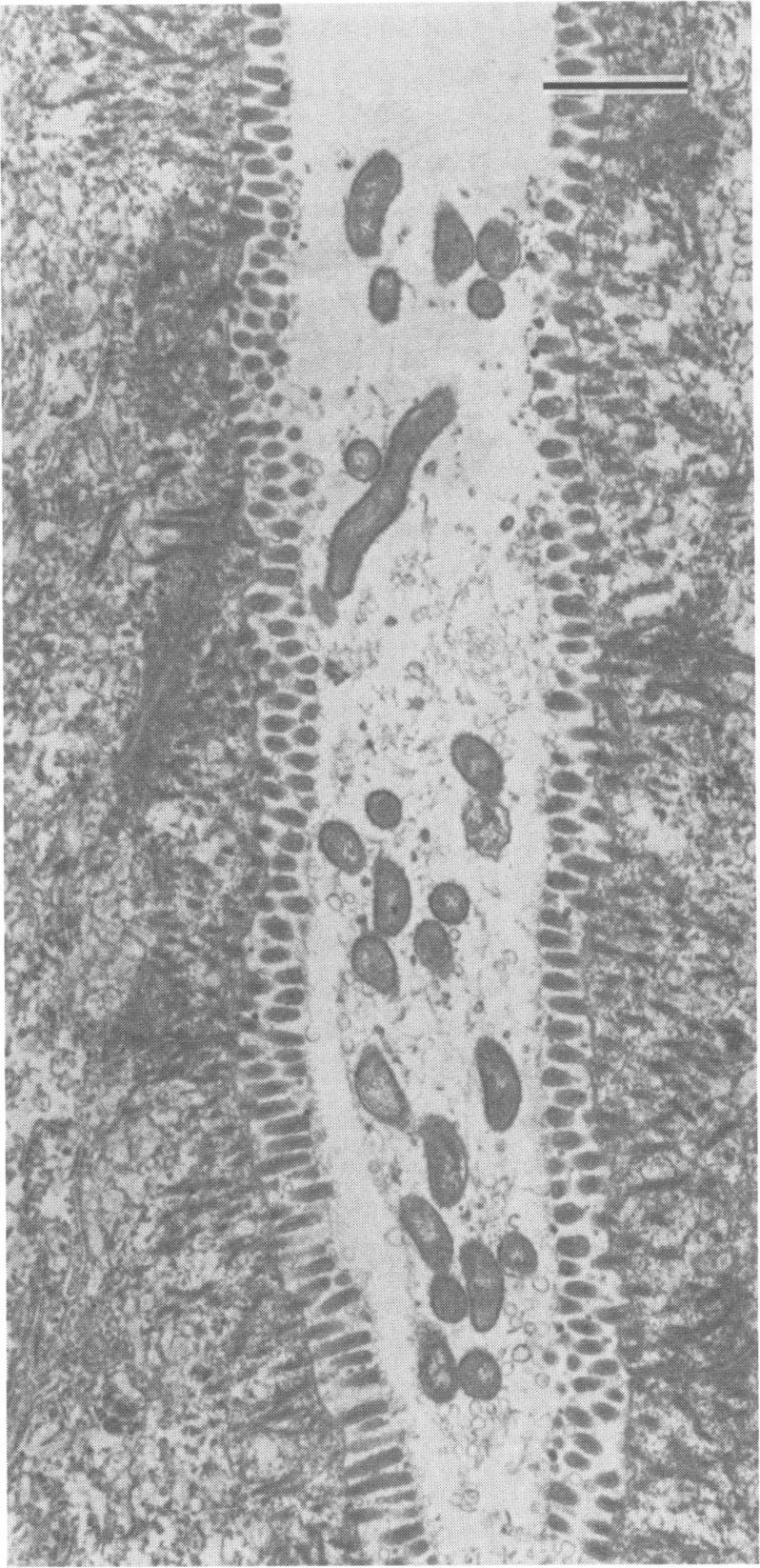
Bacterial enumeration and histologic examination of organs and tissues of 8-day-old chicks 7 days after peroral inoculation with Campylobacter jejuni revealed that the organism colonized primarily the lower gastrointestinal tract. The principal sites of localization were the ceca, large intestine, and cloaca, where densely packed cells of C. jejuni were observed in mucus within crypts. Examination of C. jejuni-colonized crypts by transmission electron microscopy revealed that the campylobacters freely pervaded the lumina of crypts without attachment to crypt microvilli. Understanding the mechanism of colonization may lead to approaches that will reduce the incidence of C. jejuni carriage by poultry.
对经口接种空肠弯曲菌7天后的8日龄雏鸡的器官和组织进行细菌计数及组织学检查,结果显示该菌主要定殖于下消化道。主要定殖部位为盲肠、大肠和泄殖腔,在这些部位的隐窝内黏液中观察到大量密集的空肠弯曲菌细胞。通过透射电子显微镜检查空肠弯曲菌定殖的隐窝发现,弯曲杆菌可自由穿透隐窝腔,而不附着于隐窝微绒毛。了解定殖机制可能会带来降低家禽空肠弯曲菌携带率的方法。