Wang Wei, Pan Qianli, He Fei, Akhunova Alina, Chao Shiaoman, Trick Harold, Akhunov Eduard
Department of Plant Pathology, Kansas State University, Manhattan, Kansas.
Integrated Genomics Facility, Kansas State University, Manhattan, Kansas.
CRISPR J. 2018 Feb 1;1(1):65-74. doi: 10.1089/crispr.2017.0010.
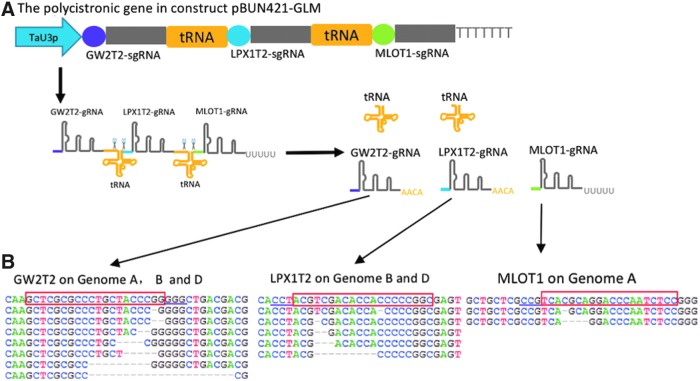
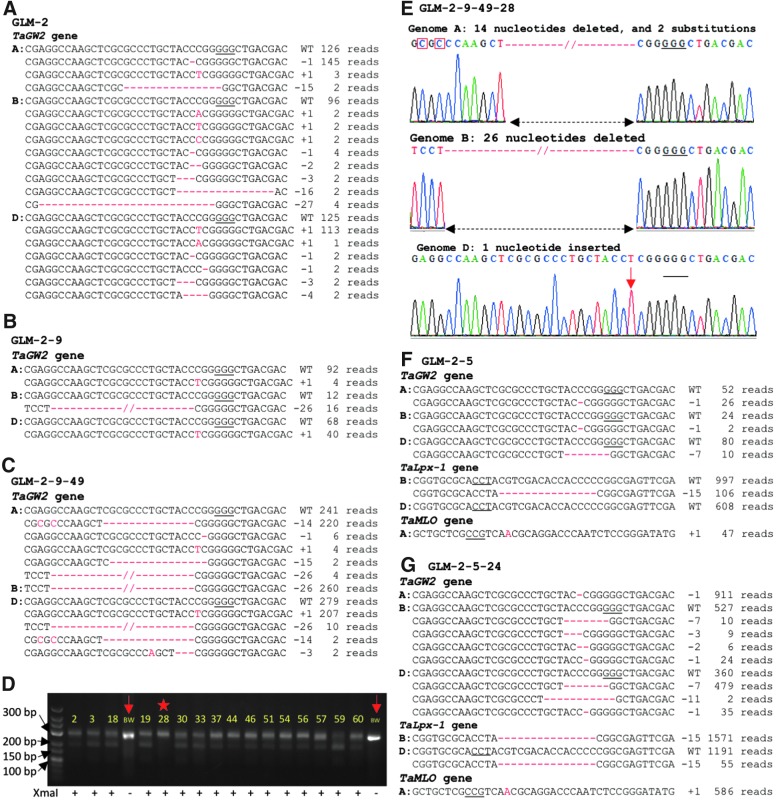
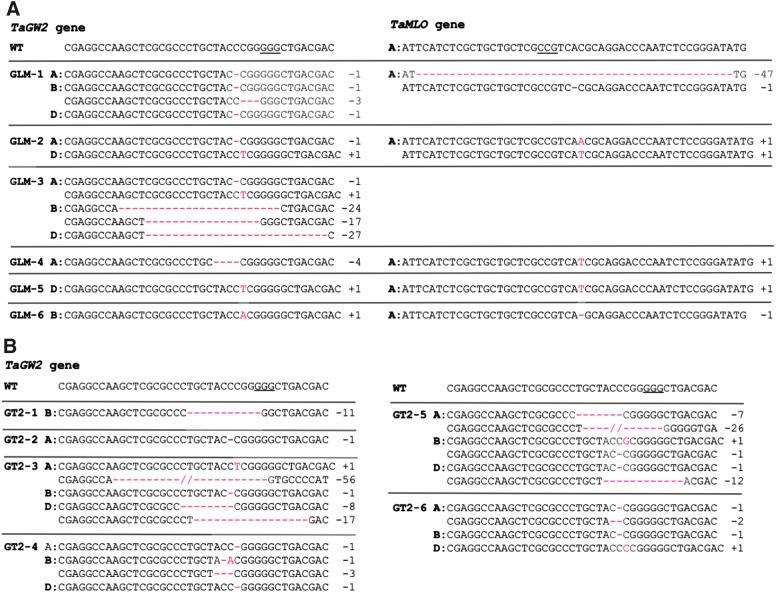
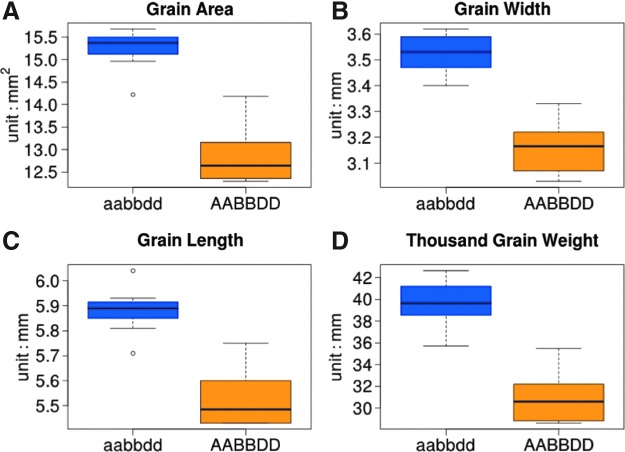
The CRISPR-Cas9-based multiplexed gene editing (MGE) provides a powerful method to modify multiple genomic regions simultaneously controlling different agronomic traits in crops. We applied the MGE construct built by combining the tandemly arrayed tRNA-gRNA units to generate heritable mutations in the , , and genes of hexaploid wheat. The knockout mutations generated by this construct in all three homoeologous copies of one of the target genes, , resulted in a substantial increase in seed size and thousand grain weight. We showed that the non-modified gRNA targets in the early generation plants can be edited by CRISPR-Cas9 in the following generations. Our results demonstrate that transgenerational gene editing activity can serve as the source of novel variation in the progeny of CRISPR-Cas9-expressing plants and suggest that the Cas9-inducible trait transfer for crop improvement can be achieved by crossing the plants expressing the gene editing constructs with the lines of interest.
基于CRISPR-Cas9的多重基因编辑(MGE)提供了一种强大的方法,可同时修饰多个基因组区域,从而控制作物的不同农艺性状。我们应用了通过串联排列的tRNA-gRNA单元构建的MGE构建体,在六倍体小麦的、和基因中产生可遗传的突变。该构建体在其中一个靶基因的所有三个同源拷贝中产生的敲除突变,导致种子大小和千粒重显著增加。我们表明,早期世代植物中未修饰的gRNA靶标可在后代中被CRISPR-Cas9编辑。我们的结果表明,跨代基因编辑活性可作为表达CRISPR-Cas9的植物后代新变异的来源,并表明通过将表达基因编辑构建体的植物与感兴趣的品系杂交,可以实现用于作物改良的Cas9诱导性状转移。