Department of Respiratory and Critical Care Medicine, National Key Clinical Specialty and.
Department of Respiratory and Critical Care Medicine, National Key Clinical Specialty and.
Am J Med Sci. 2019 Apr;357(4):289-295. doi: 10.1016/j.amjms.2018.11.012. Epub 2018 Nov 27.
Severe pneumonia is responsible for great mortality and morbidity worldwide, and early-applied effective anti-infective therapy can improve the prognosis of patients. However, identification of infectious agents in severe pneumonia remains a major challenge so far. In this study, the potential utility of transmission electron microscopy (TEM) in detecting nonbacterial pathogens in patients with severe pneumonia was retrospectively evaluated.
A total of 106 patients diagnosed with severe pneumonia at our hospital from September 2015 to December 2017 were included, and their baseline clinical characteristics were collected. Nonbacterial infectious agents detected by TEM in bronchoalveolar lavage fluid (BALF) and serological tests were summarized. The detection rates were further compared between TEM and serological tests.
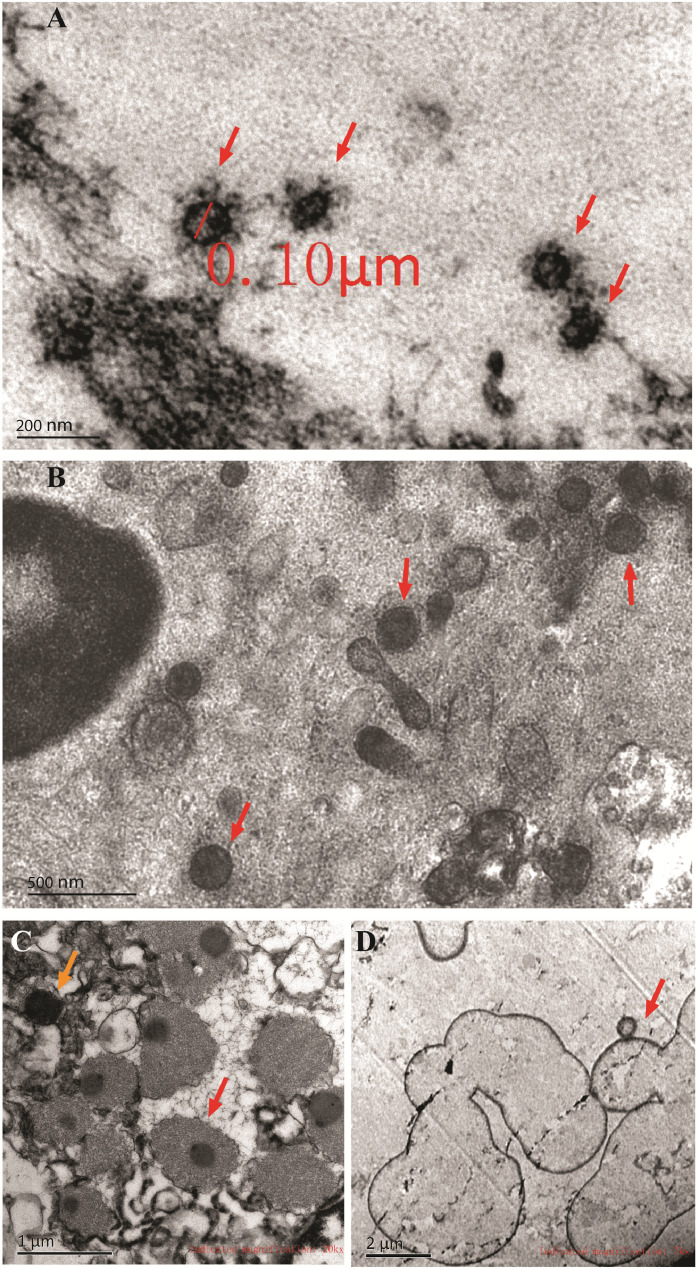
BALF examination under the transmission electron microscope revealed 24 viruses, 16 mycoplasmas, 18 chlamydia, 2 fungi and 74 bacteria in 99 samples, among which 61 samples were mixed infections. The combined use of serological tests and TEM significantly improved the detection rate of nonbacterial infectious agents in patients with severe pneumonia.
Our data support that implementation of TEM could improve the sensitivity for detecting viruses, atypical pathogens and mixed infections in BALF from patient of severe pneumonia. Therefore, TEM may be used as an auxiliary diagnostic method of other microbiological tests in severe pneumonia.
严重肺炎在全球范围内导致了较高的死亡率和发病率,早期应用有效的抗感染治疗可以改善患者的预后。然而,迄今为止,严重肺炎感染病原体的鉴定仍然是一个主要挑战。在这项研究中,我们回顾性评估了透射电子显微镜(TEM)在检测严重肺炎患者中非细菌性病原体的潜在应用价值。
共纳入我院 2015 年 9 月至 2017 年 12 月期间诊断为严重肺炎的 106 例患者,并收集了其基线临床特征。总结经支气管肺泡灌洗液(BALF)和血清学检查 TEM 检测到的非细菌性感染病原体。进一步比较 TEM 与血清学检查的检测率。
在 99 份 BALF 样本中,透射电镜检查发现 24 种病毒、16 种支原体、18 种衣原体、2 种真菌和 74 种细菌,其中 61 份样本为混合感染。联合使用血清学检查和 TEM 显著提高了严重肺炎患者中非细菌性感染病原体的检测率。
我们的数据支持实施 TEM 可以提高对严重肺炎患者 BALF 中病毒、非典型病原体和混合感染的检测敏感性。因此,TEM 可作为严重肺炎其他微生物学检查的辅助诊断方法。