• 文献检索
  • 文档翻译
  • 深度研究
  • 学术资讯
  • Suppr Zotero 插件Zotero 插件
  • 邀请有礼
  • 套餐&价格
  • 历史记录
应用&插件
Suppr Zotero 插件Zotero 插件浏览器插件Mac 客户端Windows 客户端微信小程序
定价
高级版会员购买积分包购买API积分包
服务
文献检索文档翻译深度研究API 文档MCP 服务
关于我们
关于 Suppr公司介绍联系我们用户协议隐私条款
关注我们

Suppr 超能文献

核心技术专利:CN118964589B侵权必究
粤ICP备2023148730 号-1Suppr @ 2026

文献检索

告别复杂PubMed语法,用中文像聊天一样搜索,搜遍4000万医学文献。AI智能推荐,让科研检索更轻松。

立即免费搜索

文件翻译

保留排版,准确专业,支持PDF/Word/PPT等文件格式,支持 12+语言互译。

免费翻译文档

深度研究

AI帮你快速写综述,25分钟生成高质量综述,智能提取关键信息,辅助科研写作。

立即免费体验

急性创伤性脑损伤的计算机断层扫描特征的自动量化。

Automatic Quantification of Computed Tomography Features in Acute Traumatic Brain Injury.

机构信息

1 Research and Development, icometrix, Leuven, Belgium.

2 Department of Radiology, Antwerp University Hospital and University of Antwerp, Antwerp, Belgium.

出版信息

J Neurotrauma. 2019 Jun;36(11):1794-1803. doi: 10.1089/neu.2018.6183. Epub 2019 Feb 1.

DOI:10.1089/neu.2018.6183
PMID:30648469
原文链接:https://pmc.ncbi.nlm.nih.gov/articles/PMC6551991/
Abstract

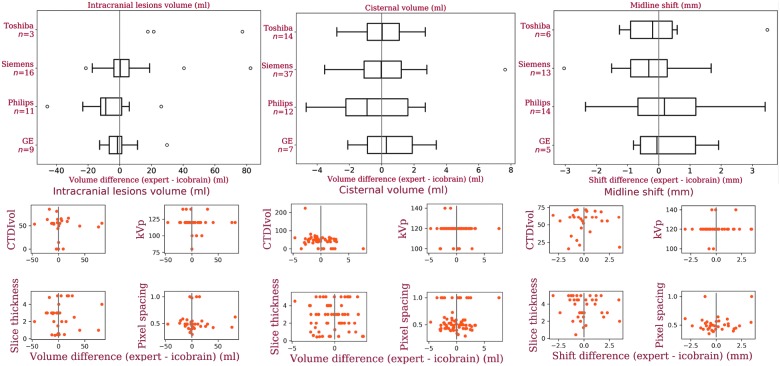
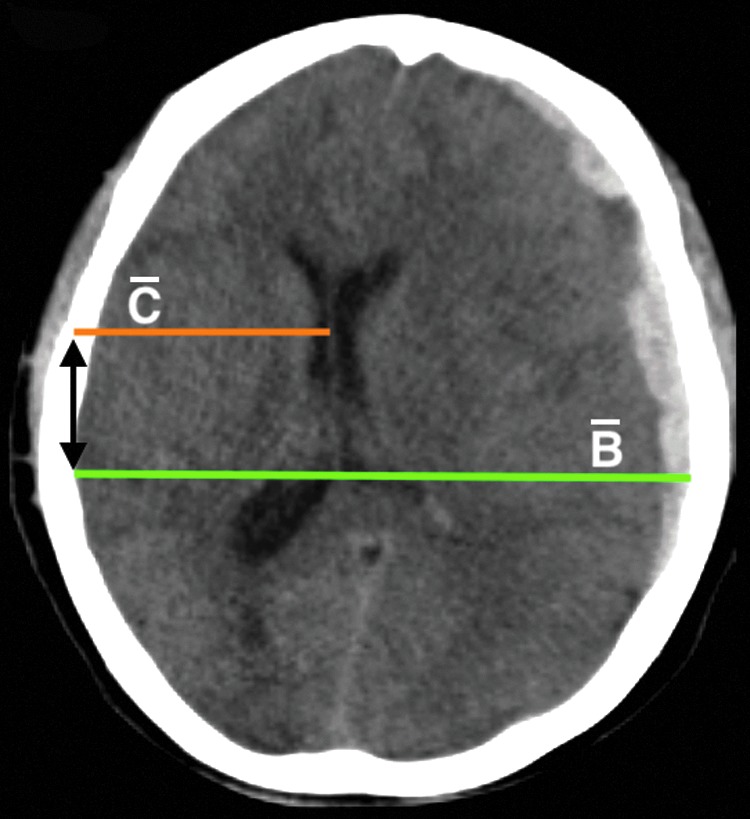
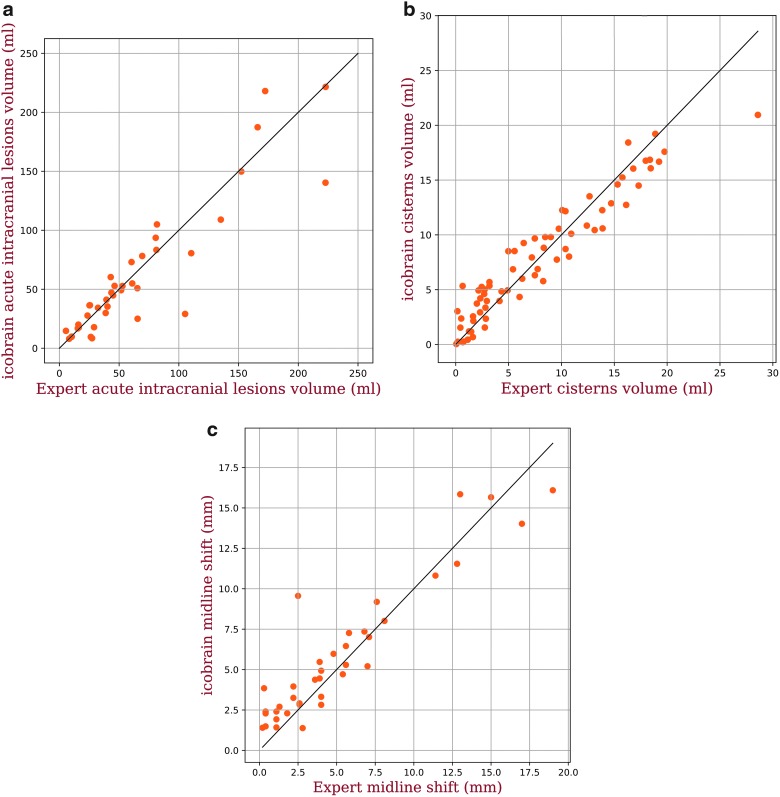
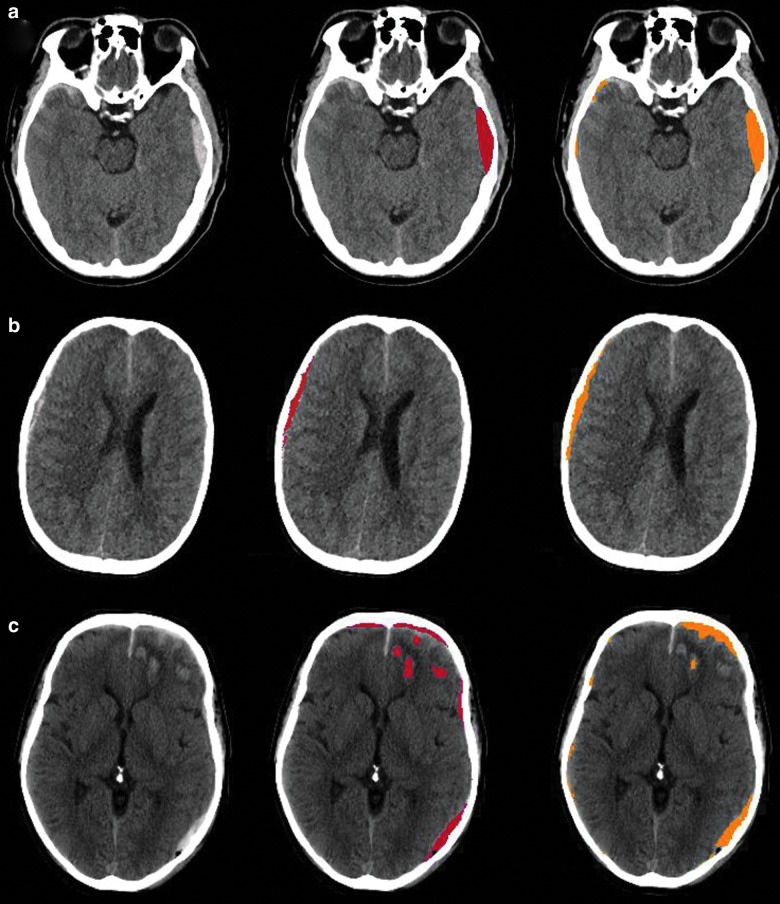
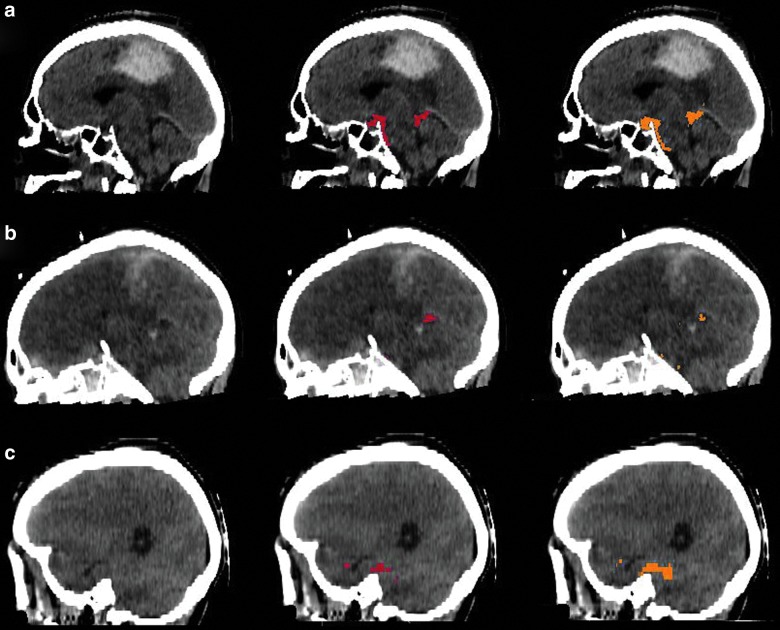
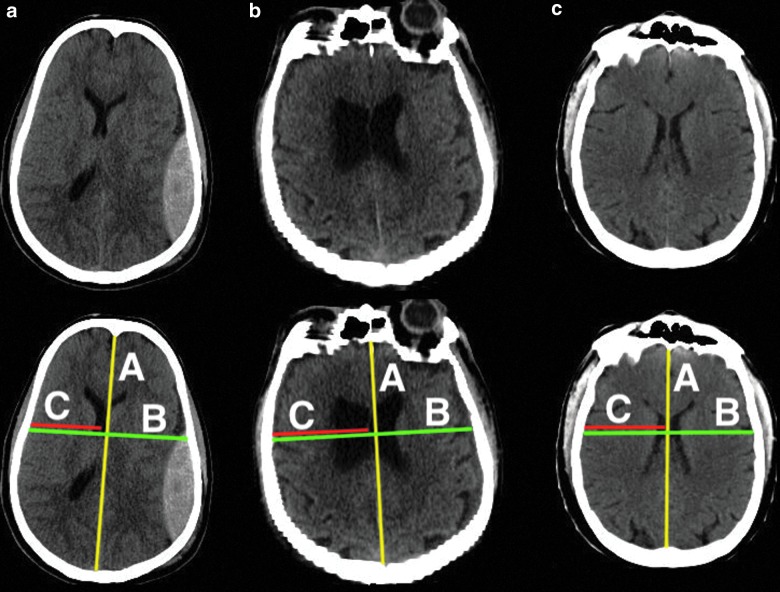
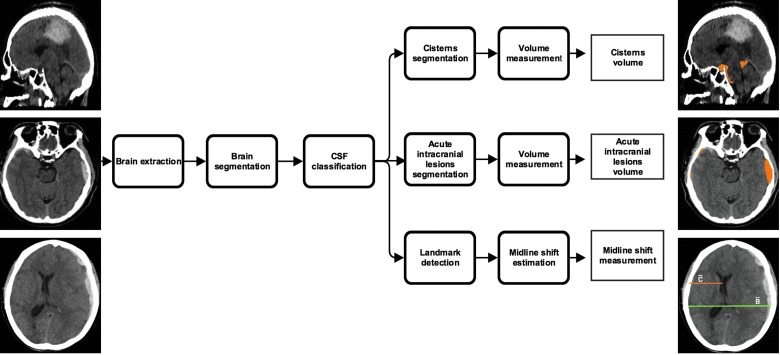
Traumatic brain injury is a complex and diverse medical condition with a high frequency of intracranial abnormalities. These can typically be visualized on a computed tomography (CT) scan, which provides important information for further patient management, such as the need for operative intervention. In order to quantify the extent of acute intracranial lesions and associated secondary injuries, such as midline shift and cisternal compression, visual assessment of CT images has limitations, including observer variability and lack of quantitative interpretation. Automated image analysis can quantify the extent of intracranial abnormalities and provide added value in routine clinical practice. In this article, we present icobrain, a fully automated method that reliably computes acute intracranial lesions volume based on deep learning, cistern volume, and midline shift on the noncontrast CT image of a patient. The accuracy of our method is evaluated on a subset of the multi-center data set from the CENTER-TBI (Collaborative European Neurotrauma Effectiveness Research in Traumatic Brain Injury) study for which expert annotations were used as a reference. Median volume differences between expert assessments and icobrain are 0.07 mL for acute intracranial lesions and -0.01 mL for cistern segmentation. Correlation between expert assessments and icobrain is 0.91 for volume of acute intracranial lesions and 0.94 for volume of the cisterns. For midline shift computations, median error is -0.22 mm, with a correlation of 0.93 with expert assessments.

摘要

创伤性脑损伤是一种复杂多样的医学病症,颅内异常的发生率很高。这些异常通常可以在计算机断层扫描(CT)上显示,为进一步的患者管理提供重要信息,例如是否需要手术干预。为了量化急性颅内病变的程度和相关的继发性损伤,如中线移位和脑池受压,CT 图像的视觉评估存在局限性,包括观察者的变异性和缺乏定量解释。自动图像分析可以量化颅内异常的程度,并在常规临床实践中提供附加价值。在本文中,我们介绍了 icobrain,这是一种完全基于深度学习的可靠计算患者非对比 CT 图像上急性颅内病变体积、脑池体积和中线移位的全自动方法。我们的方法在 CENTER-TBI(欧洲协作创伤性脑损伤有效性研究)研究的多中心数据集的一个子集上进行了评估,该数据集使用专家注释作为参考。急性颅内病变和脑池分割方面,专家评估和 icobrain 的中位数体积差异分别为 0.07 毫升和-0.01 毫升。急性颅内病变和脑池体积的专家评估和 icobrain 的相关性分别为 0.91 和 0.94。对于中线移位计算,中位误差为-0.22 毫米,与专家评估的相关性为 0.93。
https://cdn.ncbi.nlm.nih.gov/pmc/blobs/631e/6551991/5f1ceb2a8d57/fig-7.jpg
https://cdn.ncbi.nlm.nih.gov/pmc/blobs/631e/6551991/3c1447800fb8/fig-1.jpg
https://cdn.ncbi.nlm.nih.gov/pmc/blobs/631e/6551991/0c5981796b73/fig-2.jpg
https://cdn.ncbi.nlm.nih.gov/pmc/blobs/631e/6551991/7e2e70b5e384/fig-3.jpg
https://cdn.ncbi.nlm.nih.gov/pmc/blobs/631e/6551991/9d6b5f92e433/fig-4.jpg
https://cdn.ncbi.nlm.nih.gov/pmc/blobs/631e/6551991/d9d49986ae2d/fig-5.jpg
https://cdn.ncbi.nlm.nih.gov/pmc/blobs/631e/6551991/96ec5db47437/fig-6.jpg
https://cdn.ncbi.nlm.nih.gov/pmc/blobs/631e/6551991/5f1ceb2a8d57/fig-7.jpg
https://cdn.ncbi.nlm.nih.gov/pmc/blobs/631e/6551991/3c1447800fb8/fig-1.jpg
https://cdn.ncbi.nlm.nih.gov/pmc/blobs/631e/6551991/0c5981796b73/fig-2.jpg
https://cdn.ncbi.nlm.nih.gov/pmc/blobs/631e/6551991/7e2e70b5e384/fig-3.jpg
https://cdn.ncbi.nlm.nih.gov/pmc/blobs/631e/6551991/9d6b5f92e433/fig-4.jpg
https://cdn.ncbi.nlm.nih.gov/pmc/blobs/631e/6551991/d9d49986ae2d/fig-5.jpg
https://cdn.ncbi.nlm.nih.gov/pmc/blobs/631e/6551991/96ec5db47437/fig-6.jpg
https://cdn.ncbi.nlm.nih.gov/pmc/blobs/631e/6551991/5f1ceb2a8d57/fig-7.jpg

相似文献

1
Automatic Quantification of Computed Tomography Features in Acute Traumatic Brain Injury.急性创伤性脑损伤的计算机断层扫描特征的自动量化。
J Neurotrauma. 2019 Jun;36(11):1794-1803. doi: 10.1089/neu.2018.6183. Epub 2019 Feb 1.
2
Validation of a deep learning model for traumatic brain injury detection and NIRIS grading on non-contrast CT: a multi-reader study with promising results and opportunities for improvement.深度学习模型在非对比 CT 上检测创伤性脑损伤和 NIRIS 分级的验证:一项多读者研究,结果有前景,有改进的机会。
Neuroradiology. 2023 Nov;65(11):1605-1617. doi: 10.1007/s00234-023-03170-5. Epub 2023 Jun 3.
3
Central versus Local Radiological Reading of Acute Computed Tomography Characteristics in Multi-Center Traumatic Brain Injury Research.多中心创伤性脑损伤研究中急性计算机断层扫描特征的中央与局部放射学阅读。
J Neurotrauma. 2019 Apr 1;36(7):1080-1092. doi: 10.1089/neu.2018.6061. Epub 2018 Dec 11.
4
Multiclass semantic segmentation and quantification of traumatic brain injury lesions on head CT using deep learning: an algorithm development and multicentre validation study.基于深度学习的头部 CT 外伤性脑损伤病灶的多类语义分割和定量:一项算法开发和多中心验证研究。
Lancet Digit Health. 2020 Jun;2(6):e314-e322. doi: 10.1016/S2589-7500(20)30085-6. Epub 2020 May 14.
5
Neuroimaging Radiological Interpretation System for Acute Traumatic Brain Injury.神经影像学放射性损伤解读系统在急性创伤性脑损伤中的应用。
J Neurotrauma. 2018 Nov 15;35(22):2665-2672. doi: 10.1089/neu.2017.5311. Epub 2018 Jul 23.
6
Computer-aided assessment of head computed tomography (CT) studies in patients with suspected traumatic brain injury.疑似创伤性脑损伤患者头部计算机断层扫描(CT)研究的计算机辅助评估。
J Neurotrauma. 2008 Oct;25(10):1163-72. doi: 10.1089/neu.2008.0590.
7
Fully Automated Segmentation of Globes for Volume Quantification in CT Images of Orbits using Deep Learning.基于深度学习的眼眶 CT 图像中眼球容积定量的全自动分割。
AJNR Am J Neuroradiol. 2020 Jun;41(6):1061-1069. doi: 10.3174/ajnr.A6538. Epub 2020 May 21.
8
Midline Shift is Unrelated to Subjective Pupillary Reactivity Assessment on Admission in Moderate and Severe Traumatic Brain Injury.中线移位与中重度创伤性脑损伤患者入院时的主观瞳孔反应评估无关。
Neurocrit Care. 2018 Oct;29(2):203-213. doi: 10.1007/s12028-018-0526-8.
9
Deep learning from MRI-derived labels enables automatic brain tissue classification on human brain CT.基于 MRI 标记的深度学习可实现人脑 CT 上的自动脑组织分类。
Neuroimage. 2021 Dec 1;244:118606. doi: 10.1016/j.neuroimage.2021.118606. Epub 2021 Sep 25.
10
Automated identification and quantification of traumatic brain injury from CT scans: Are we there yet?从 CT 扫描中自动识别和定量创伤性脑损伤:我们做到了吗?
Medicine (Baltimore). 2022 Nov 25;101(47):e31848. doi: 10.1097/MD.0000000000031848.

引用本文的文献

1
Evaluation of CT and MRI Radiomics for an Early Assessment of Diffuse Axonal Injury in Patients with Traumatic Brain Injury Compared to Conventional Radiological Diagnosis.与传统放射学诊断相比,评估CT和MRI放射组学对创伤性脑损伤患者弥漫性轴索损伤的早期评估价值。
Clin Neuroradiol. 2025 Mar 7. doi: 10.1007/s00062-025-01507-6.
2
Neurofind: using deep learning to make individualised inferences in brain-based disorders.Neurofind:利用深度学习对脑部疾病进行个性化推断。
Transl Psychiatry. 2025 Feb 27;15(1):69. doi: 10.1038/s41398-025-03290-x.
3
Deep learning-based prediction of mortality using brain midline shift and clinical information.

本文引用的文献

1
Deep learning algorithms for detection of critical findings in head CT scans: a retrospective study.深度学习算法在头部 CT 扫描中关键发现检测的应用:一项回顾性研究。
Lancet. 2018 Dec 1;392(10162):2388-2396. doi: 10.1016/S0140-6736(18)31645-3. Epub 2018 Oct 11.
2
Brain Midline Shift Measurement and Its Automation: A Review of Techniques and Algorithms.脑中线移位测量及其自动化:技术与算法综述
Int J Biomed Imaging. 2018 Apr 12;2018:4303161. doi: 10.1155/2018/4303161. eCollection 2018.
3
Guidelines for the Management of Severe Traumatic Brain Injury, Fourth Edition.
基于深度学习利用脑中线移位和临床信息预测死亡率
Heliyon. 2025 Jan 8;11(2):e41271. doi: 10.1016/j.heliyon.2024.e41271. eCollection 2025 Jan 30.
4
TILTomorrow today: dynamic factors predicting changes in intracranial pressure treatment intensity after traumatic brain injury.今日至明日的创伤性脑损伤后颅内压治疗强度变化的动态预测因素。
Sci Rep. 2025 Jan 2;15(1):95. doi: 10.1038/s41598-024-83862-x.
5
Midbrain volume in brain herniation: A volumetric analysis in operative traumatic brain injury.脑疝中的中脑体积:外伤性脑损伤手术中的体积分析
Surg Neurol Int. 2024 Nov 29;15:437. doi: 10.25259/SNI_389_2024. eCollection 2024.
6
Automated Hematoma Detection and Outcome Prediction in Patients With Traumatic Brain Injury.颅脑创伤患者血肿的自动检测与预后预测。
CNS Neurosci Ther. 2024 Nov;30(11):e70119. doi: 10.1111/cns.70119.
7
Three dimensional convolutional neural network-based automated detection of midline shift in traumatic brain injury cases from head computed tomography scans.基于三维卷积神经网络的头部计算机断层扫描对创伤性脑损伤病例中线移位的自动检测
J Neurosci Rural Pract. 2024 Apr-Jun;15(2):293-299. doi: 10.25259/JNRP_490_2023. Epub 2024 Feb 29.
8
Development and validation of a nomogram for predicting mortality in patients with acute severe traumatic brain injury: A retrospective analysis.开发并验证预测急性严重创伤性脑损伤患者死亡率的列线图:一项回顾性分析。
Neurol Sci. 2024 Oct;45(10):4931-4956. doi: 10.1007/s10072-024-07572-y. Epub 2024 May 9.
9
Machine learning in action: Revolutionizing intracranial hematoma detection and patient transport decision-making.机器学习的实际应用:革新颅内血肿检测与患者转运决策
J Neurosci Rural Pract. 2024 Jan-Mar;15(1):62-68. doi: 10.25259/JNRP_93_2023. Epub 2023 Dec 16.
10
Automated volumetric evaluation of intracranial compartments and cerebrospinal fluid distribution on emergency trauma head CT scans to quantify mass effect.在急诊创伤性头部CT扫描上对颅内腔室和脑脊液分布进行自动容积评估,以量化占位效应。
Front Neurosci. 2024 Feb 19;18:1341734. doi: 10.3389/fnins.2024.1341734. eCollection 2024.
《重型颅脑损伤管理指南(第四版)》
Neurosurgery. 2017 Jan 1;80(1):6-15. doi: 10.1227/NEU.0000000000001432.
4
Automatic estimation of midline shift in patients with cerebral glioma based on enhanced voigt model and local symmetry.基于增强的沃伊特模型和局部对称性自动估计脑胶质瘤患者的中线移位
Australas Phys Eng Sci Med. 2015 Dec;38(4):627-41. doi: 10.1007/s13246-015-0372-3. Epub 2015 Aug 29.
5
Collaborative European NeuroTrauma Effectiveness Research in Traumatic Brain Injury (CENTER-TBI): a prospective longitudinal observational study.欧洲创伤性脑损伤协作神经创伤有效性研究(CENTER-TBI):一项前瞻性纵向观察性研究。
Neurosurgery. 2015 Jan;76(1):67-80. doi: 10.1227/NEU.0000000000000575.
6
Predicting outcome in traumatic brain injury: development of a novel computerized tomography classification system (Helsinki computerized tomography score).预测创伤性脑损伤的预后:一种新型计算机断层扫描分类系统(赫尔辛基计算机断层扫描评分)的开发。
Neurosurgery. 2014 Dec;75(6):632-46; discussion 646-7. doi: 10.1227/NEU.0000000000000533.
7
Symptomatology and functional outcome in mild traumatic brain injury: results from the prospective TRACK-TBI study.轻度创伤性脑损伤的症状和功能结果:来自前瞻性 TRACK-TBI 研究的结果。
J Neurotrauma. 2014 Jan 1;31(1):26-33. doi: 10.1089/neu.2013.2984. Epub 2013 Oct 31.
8
Review of automatic segmentation methods of multiple sclerosis white matter lesions on conventional magnetic resonance imaging.磁共振常规成像多发性硬化脑白质病变自动分割方法的研究进展。
Med Image Anal. 2013 Jan;17(1):1-18. doi: 10.1016/j.media.2012.09.004. Epub 2012 Sep 29.
9
Age-specific CT and MRI templates for spatial normalization.特定年龄的 CT 和 MRI 模板用于空间标准化。
Neuroimage. 2012 Jul 16;61(4):957-65. doi: 10.1016/j.neuroimage.2012.03.020. Epub 2012 Mar 13.
10
Quantitative CT improves outcome prediction in acute traumatic brain injury.定量 CT 可改善急性创伤性脑损伤的预后预测。
J Neurotrauma. 2012 Mar 20;29(5):735-46. doi: 10.1089/neu.2011.2008. Epub 2011 Dec 8.