Gharbavi Mahmoud, Amani Jafar, Kheiri-Manjili Hamidreza, Danafar Hossein, Sharafi Ali
School of Pharmacy, Zanjan University of Medical Sciences, Zanjan, Iran.
Applied Microbiology Research Center, Systems Biology and Poisonings Institute, Baqiyatallah University of Medical Sciences, Tehran, Iran.
Adv Pharmacol Sci. 2018 Dec 11;2018:6847971. doi: 10.1155/2018/6847971. eCollection 2018.
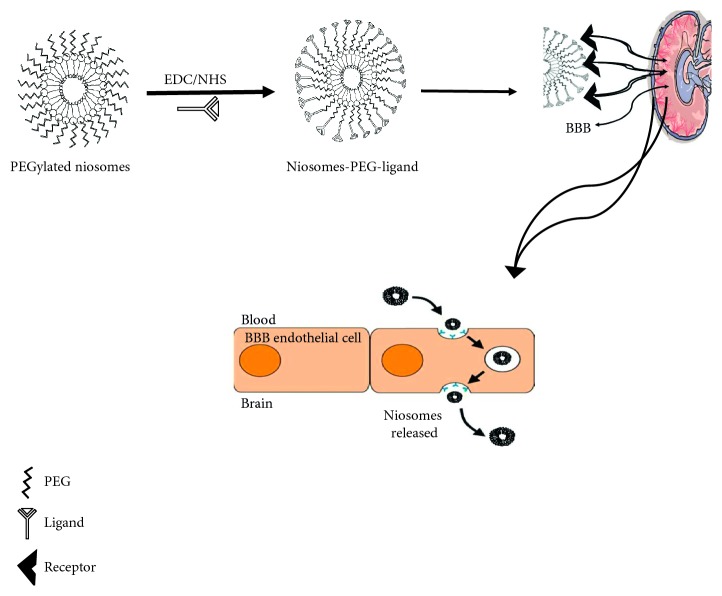
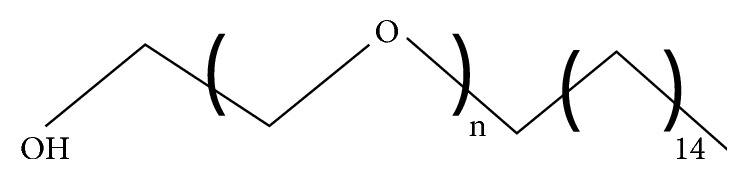
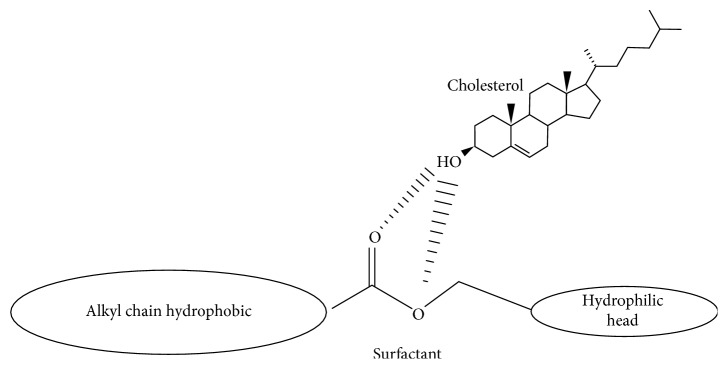
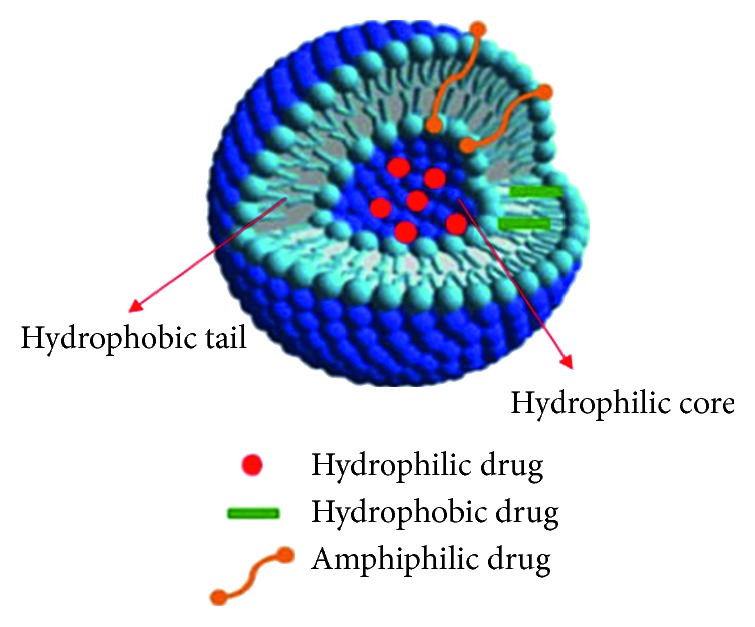
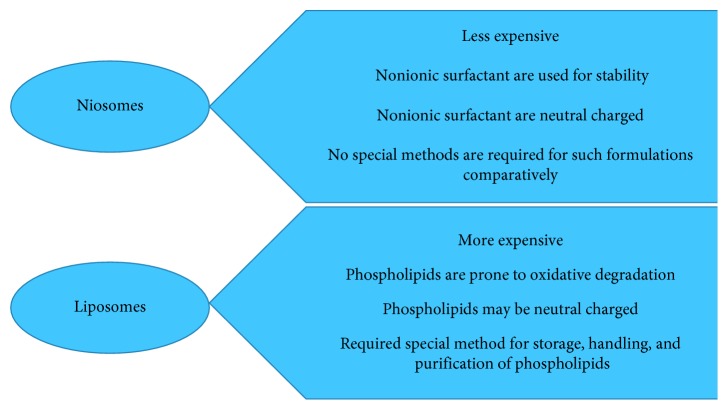
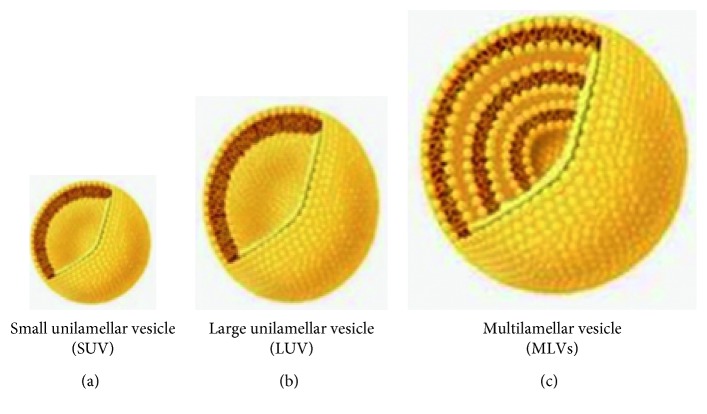
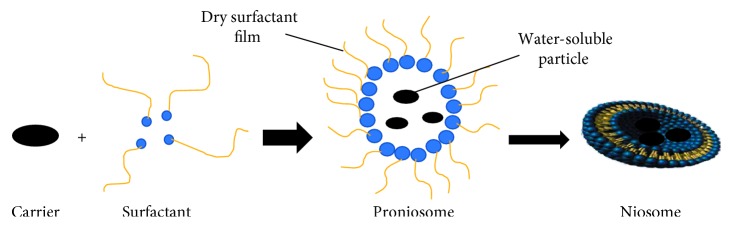
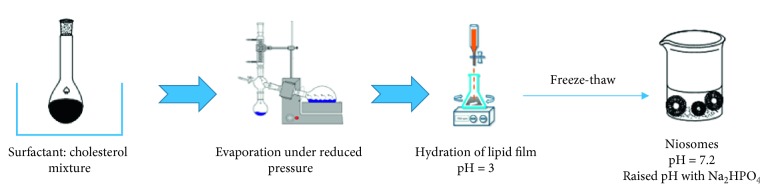
Niosomes (the nonionic surfactant vesicles), considered as novel drug delivery systems, can improve the solubility and stability of natural pharmaceutical molecules. They are established to provide targeting and controlled release of natural pharmaceutical compounds. Many factors can influence on niosome construction such as the preparation method, type and amount of surfactant, drug entrapment, temperature of lipids hydration, and the packing factor. The present review discusses about the most important features of niosomes such as their diverse structures, the different preparation approaches, characterization techniques, factors that affect their stability, their use by various routes of administration, their therapeutic applications in comparison with natural drugs, and specially the brain targeting with niosomes-ligand conjugation. It also provides recent data about the various types of ligand agents which make available active targeting drug delivery to the central neuron system. This system has an optimistic upcoming in pharmaceutical uses, mostly with the improving availability of innovative schemes to overcome blood-brain barrier and targeting the niosomes to the brain.
非离子表面活性剂囊泡(脂质体)被认为是新型药物递送系统,可提高天然药物分子的溶解度和稳定性。它们能够实现天然药物化合物的靶向递送和控释。许多因素会影响脂质体的构建,如制备方法、表面活性剂的类型和用量、药物包封、脂质水化温度以及堆积系数。本综述讨论了脂质体的最重要特征,如它们的多样结构、不同的制备方法、表征技术、影响其稳定性的因素、通过各种给药途径的应用、与天然药物相比的治疗应用,特别是脂质体 - 配体偶联的脑靶向作用。它还提供了有关各种配体试剂的最新数据,这些配体可实现向中枢神经系统的主动靶向药物递送。该系统在药物应用方面前景乐观,尤其是随着克服血脑屏障和使脂质体靶向大脑的创新方案的不断涌现。