Lyons Nicholas A, Jemberu Wudu T, Chaka Hassen, Salt Jeremy S, Rushton Jonathan
The Pirbright Institute, Ash Road, Pirbright, Woking, GU24 0NF, UK; European Commission for the Control of Foot-and-Mouth Disease (EuFMD), Food and Agriculture Organisation of the United Nations, Rome, Italy.
University of Gondar, Ethiopia.
Prev Vet Med. 2019 Feb 1;163:37-43. doi: 10.1016/j.prevetmed.2018.12.007. Epub 2018 Dec 15.
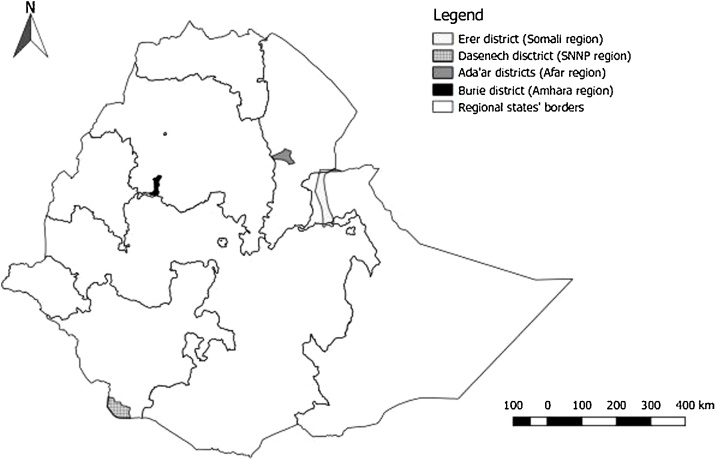
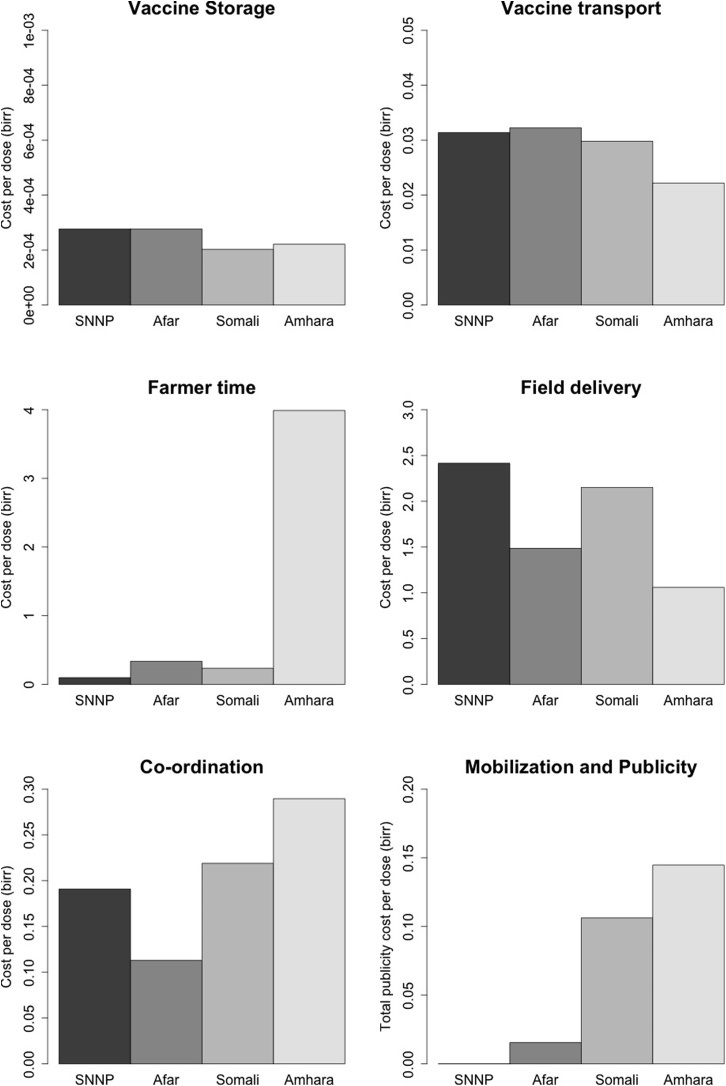
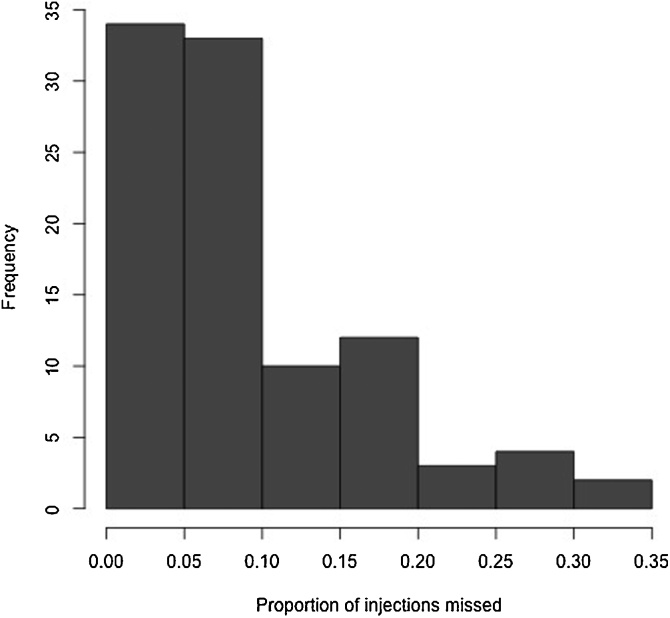
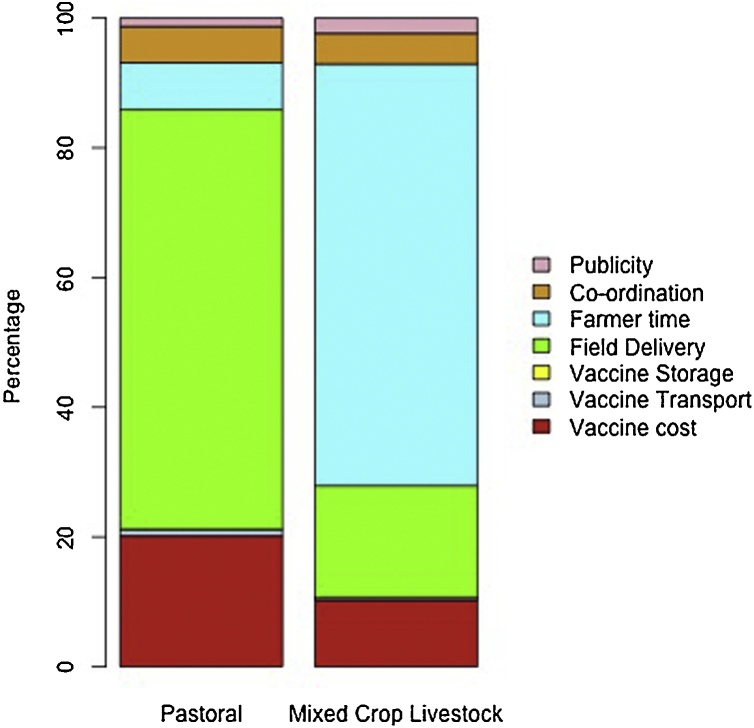
In 2015, the OIE and FAO launched a global eradication programme for Peste des Petits Ruminants (PPR). Vaccination is a major component of this strategy yet the costs of implementing a campaign are unknown or based on assumptions without field-based verification necessary for effective economic planning. This study used experiences of attending four PPR vaccination campaigns in Ethiopia to estimate various cost components in pastoral and mixed-crop livestock systems. These components included: cost of vaccine; vaccine transport from the producer to the local storage facility; storage of vaccine at the local facility; delivery and administration of vaccine in the field; opportunity cost of farmer's time to attend the vaccination; co-ordination of vaccination campaign; publicity and mobilisation costs; vaccine wastage from missed shots and vaccine discard. The overall cost of vaccination was approximately 6 Ethiopian birr (ETB) or US$0.2 per animal in the mixed-crop livestock system compared to approximately 3ETB or US$0.1 in pastoral areas. The relative importance of cost components varied in the two systems with farmer time being the largest contributor in the mixed-crop livestock system while field delivery was the main cost in pastoral areas. Notable vaccine wastage was observed particularly through missed shots that were typically between 0 and 10% but as high as 33%. At the national level, the output of the stochastic model showed the cost of vaccination to be highly variable particularly in the mixed-crop livestock system. These results highlight the importance of doing economic assessments of vaccination campaigns and issues that may be compromising efficiency of delivery and vaccine coverage. It is recommended that the framework be used for further economic evaluations of vaccination for PPR and other livestock diseases particularly when limited public or donor funds are being used, and that the approach be expanded to other countries and regions.
2015年,世界动物卫生组织(OIE)和联合国粮食及农业组织(FAO)发起了一项全球小反刍兽疫(PPR)根除计划。疫苗接种是该战略的一个主要组成部分,但开展一场疫苗接种运动的成本尚不清楚,或者是基于假设,缺乏有效经济规划所需的实地核查。本研究利用在埃塞俄比亚参与四次PPR疫苗接种运动的经验,估算了牧区和农牧混合系统中各项成本组成部分。这些组成部分包括:疫苗成本;疫苗从生产商运输到当地储存设施的成本;疫苗在当地设施的储存成本;疫苗在实地的交付和接种成本;农民参加疫苗接种的时间机会成本;疫苗接种运动的协调成本;宣传和动员成本;因漏种和疫苗废弃导致的疫苗浪费。农牧混合系统中疫苗接种的总成本约为每只动物6埃塞俄比亚比尔(ETB)或0.2美元,而牧区约为3埃塞俄比亚比尔或0.1美元。两个系统中成本组成部分的相对重要性各不相同,在农牧混合系统中农民时间是最大的成本贡献因素,而在牧区实地交付是主要成本。观察到明显的疫苗浪费,特别是通过漏种造成的浪费,通常在0%至10%之间,但高达33%。在国家层面,随机模型的结果显示疫苗接种成本变化很大,特别是在农牧混合系统中。这些结果凸显了对疫苗接种运动进行经济评估以及可能影响交付效率和疫苗覆盖率的问题的重要性。建议将该框架用于对PPR和其他家畜疾病疫苗接种的进一步经济评估,特别是在公共或捐助资金有限的情况下,并将该方法扩展到其他国家和地区。