Computational Epidemiology Laboratory, Institute for Scientific Interchange (ISI), Turin, Italy.
Physics Department and INFN, University of Turin, via P. Giuria 1, 10125, Turin, Italy.
Sci Rep. 2019 Jan 24;9(1):537. doi: 10.1038/s41598-018-36485-y.
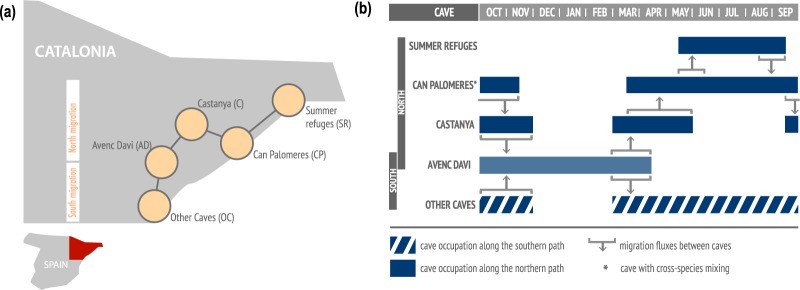
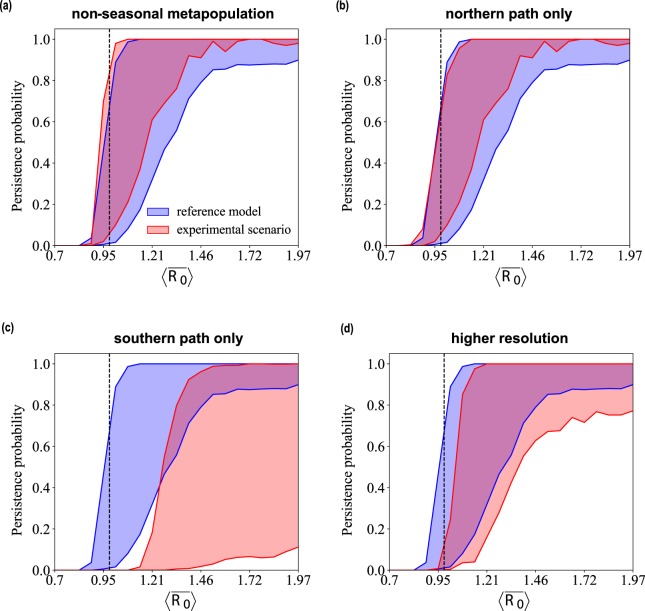
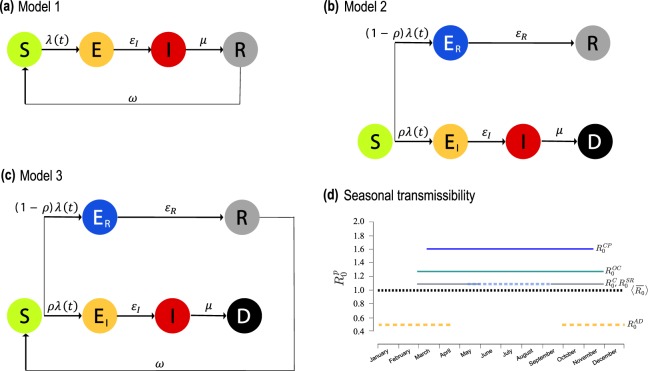
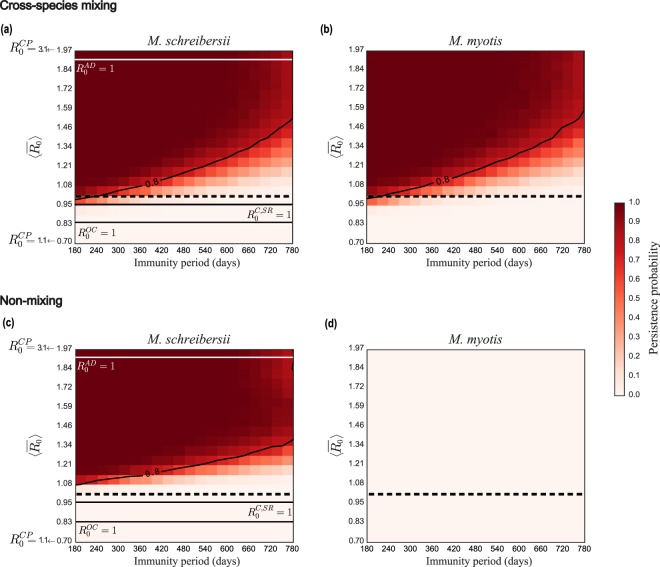
Bats are natural reservoirs of the largest proportion of viral zoonoses among mammals, thus understanding the conditions for pathogen persistence in bats is essential to reduce human risk. Focusing on the European Bat Lyssavirus subtype 1 (EBLV-1), causing rabies disease, we develop a data-driven spatially explicit metapopulation model to investigate EBLV-1 persistence in Myotis myotis and Miniopterus schreibersii bat species in Catalonia. We find that persistence relies on host spatial structure through the migratory nature of M. schreibersii, on cross-species mixing with M. myotis, and on survival of infected animals followed by temporary immunity. The virus would not persist in the single colony of M. myotis. Our study provides for the first time epidemiological estimates for EBLV-1 progression in M. schreibersii. Our approach can be readily adapted to other zoonoses of public health concern where long-range migration and habitat sharing may play an important role.
蝙蝠是哺乳动物中携带最大比例病毒人畜共患病的天然宿主,因此了解病原体在蝙蝠中持续存在的条件对于降低人类风险至关重要。本研究以引起狂犬病的欧洲蝙蝠 1 型李斯顿病毒(EBLV-1)为研究对象,开发了一个数据驱动的、具有空间显式的蝙蝠种群模型,以调查加泰罗尼亚的蝙蝠物种中蹄蝠和长尾蝙蝠中 EBLV-1 的持续存在情况。我们发现,EBLV-1 的持续存在依赖于宿主的空间结构,即长尾蝙蝠的迁徙性质、与蹄蝠的跨物种混合以及感染动物的存活和暂时免疫。病毒不会在蹄蝠的单个群体中持续存在。本研究首次提供了 EBLV-1 在长尾蝙蝠中进展的流行病学估计。我们的方法可以很容易地应用于其他公共卫生关注的人畜共患病,在这些疾病中,长距离迁徙和栖息地共享可能发挥重要作用。