Chidi-Ogbolu Nkechinyere, Baar Keith
Biomedical Engineering Graduate Group, University of California, Davis, Davis, CA, United States.
Department of Neurobiology, Physiology and Behavior, University of California, Davis, Davis, CA, United States.
Front Physiol. 2019 Jan 15;9:1834. doi: 10.3389/fphys.2018.01834. eCollection 2018.
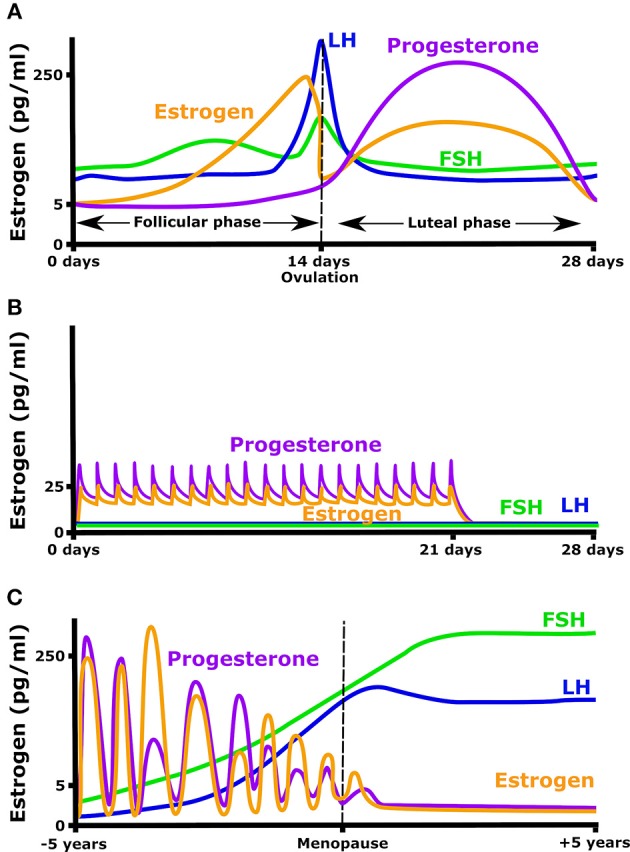
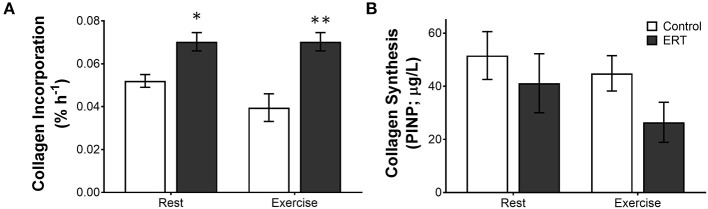
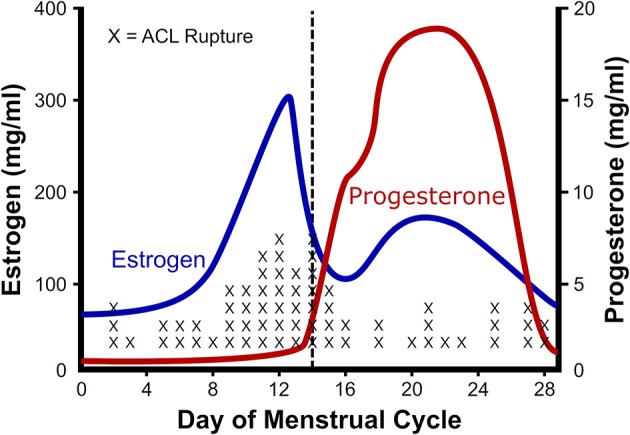
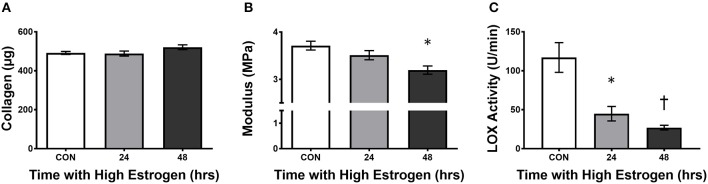
Estrogen has a dramatic effect on musculoskeletal function. Beyond the known relationship between estrogen and bone, it directly affects the structure and function of other musculoskeletal tissues such as muscle, tendon, and ligament. In these other musculoskeletal tissues, estrogen improves muscle mass and strength, and increases the collagen content of connective tissues. However, unlike bone and muscle where estrogen improves function, in tendons and ligaments estrogen decreases stiffness, and this directly affects performance and injury rates. High estrogen levels can decrease power and performance and make women more prone for catastrophic ligament injury. The goal of the current work is to review the research that forms the basis of our understanding how estrogen affects muscle, tendon, and ligament and how hormonal manipulation can be used to optimize performance and promote female participation in an active lifestyle at any age.
雌激素对肌肉骨骼功能有显著影响。除了雌激素与骨骼之间已知的关系外,它还直接影响其他肌肉骨骼组织的结构和功能,如肌肉、肌腱和韧带。在这些其他肌肉骨骼组织中,雌激素可增加肌肉质量和力量,并增加结缔组织的胶原蛋白含量。然而,与雌激素改善功能的骨骼和肌肉不同,在肌腱和韧带中,雌激素会降低硬度,这直接影响运动表现和损伤率。高雌激素水平会降低力量和运动表现,并使女性更容易发生灾难性的韧带损伤。当前这项工作的目标是回顾相关研究,这些研究构成了我们对雌激素如何影响肌肉、肌腱和韧带的理解基础,以及如何利用激素调节来优化运动表现,并促进女性在任何年龄都能积极参与生活方式。