Polymer and Biomaterials Chemistry Laboratories, School of Chemistry and Biosciences, University of Bradford, Bradford BD7 1DP, UK.
School of Clinical Dentistry, University of Sheffield, Sheffield S10 2TA, UK.
Acta Biomater. 2019 Mar 15;87:197-206. doi: 10.1016/j.actbio.2019.01.066. Epub 2019 Jan 31.
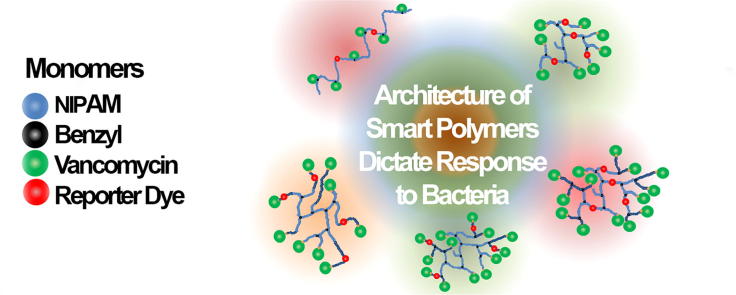
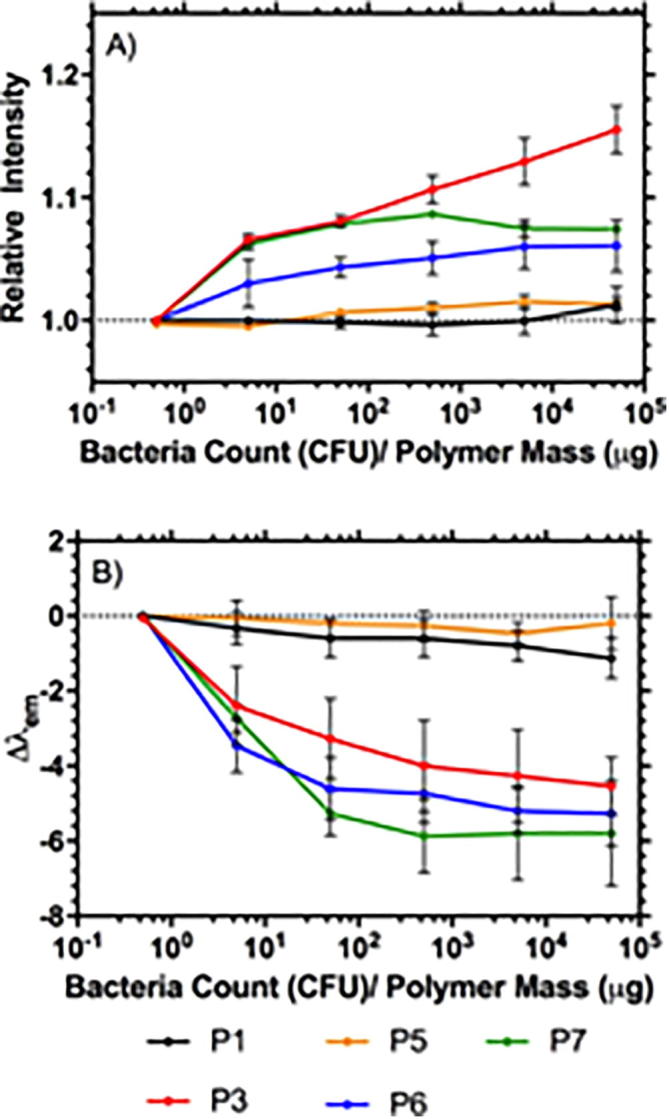
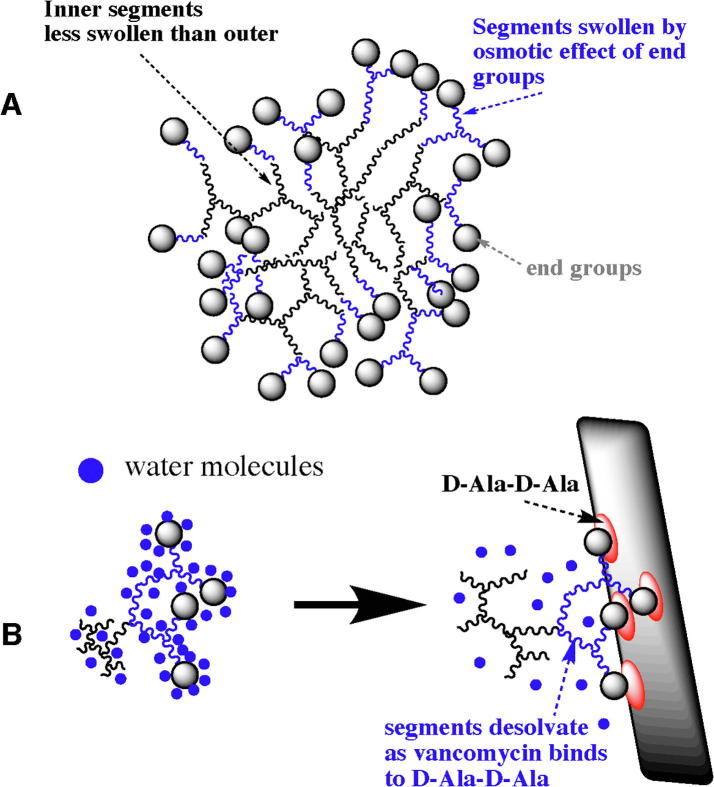
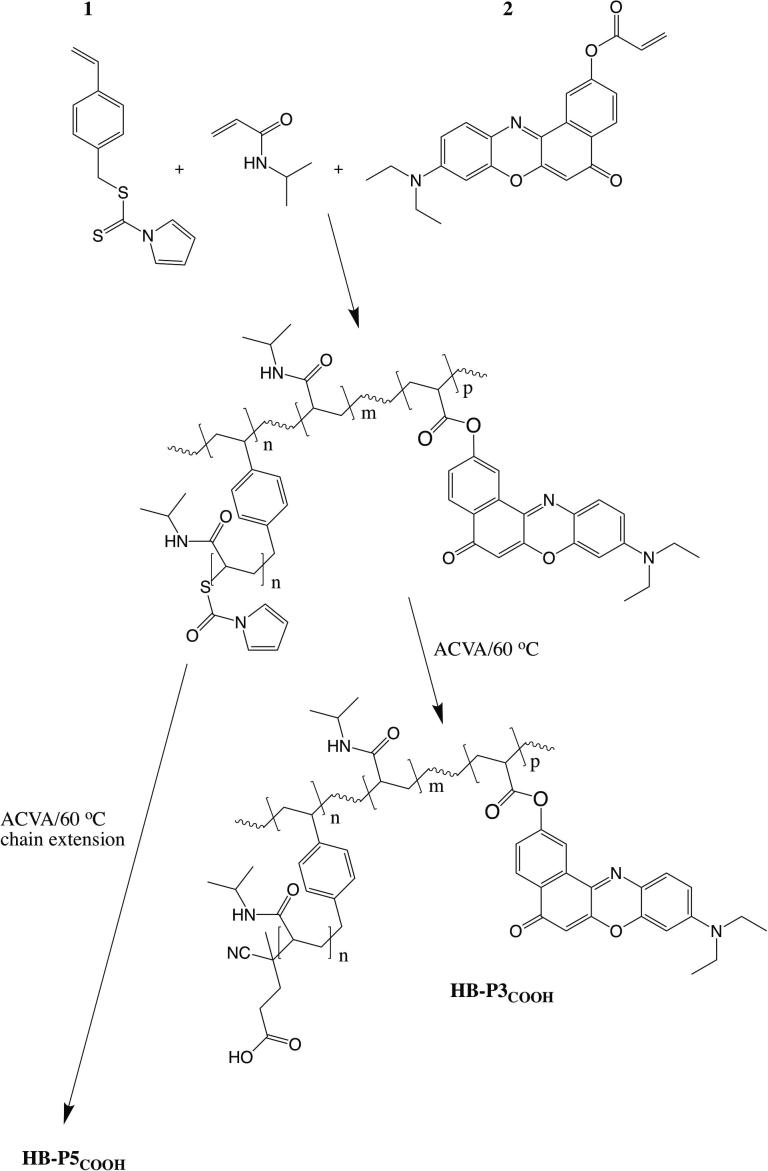
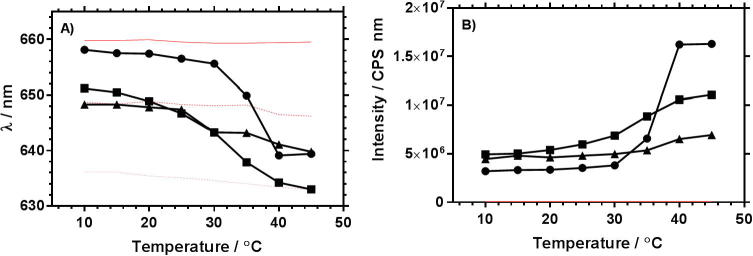
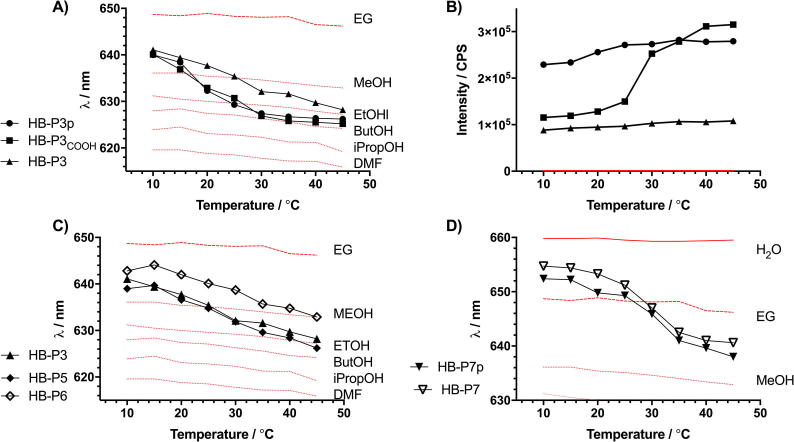
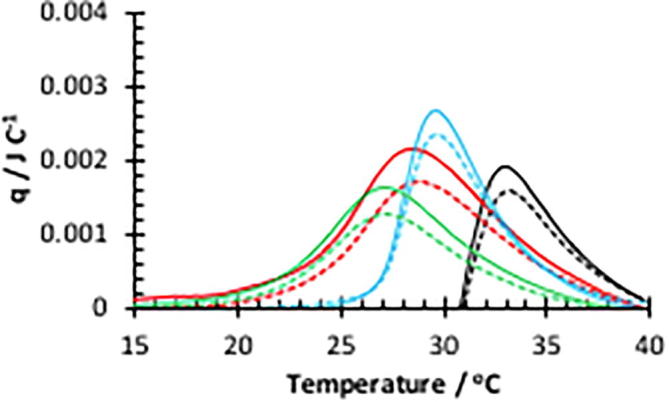
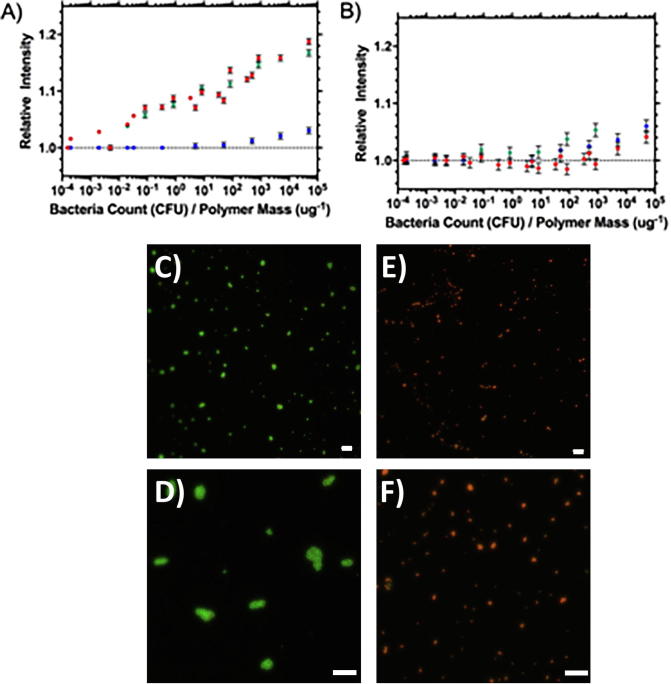
This study shows how highly branched poly(N-isopropyl acrylamide) (HB-PNIPAM) with a chain pendant solvatochromic dye (Nile red) could provide a fluorescence signal, as end groups bind to bacteria and chain segments become desolvated, indicating the presence of bacteria. Vancomycin was attached to chain ends of HB-PNIPAM or as pendant groups on linear polymers each containing Nile red. Location of the dye was varied between placement in the core of the branched polymer coil or the outer domains. Both calorimetric and fluorescence data showed that branched polymers responded to binding of both the peptide target (D-Ala-D-Aa) and bacteria in a different manner than analogous linear polymers; binding and response was more extensive in the branched variant. The fluorescence data showed that only segments located in the outer domains of branched polymers responded to binding of Gram-positive bacteria with little response when linear analogous polymer or branched polymer with the dye in the inner core was exposed to Staphylococcus aureus.
这项研究表明,带有链悬挂溶剂染料(尼罗红)的高度支化聚(N-异丙基丙烯酰胺)(HB-PNIPAM)如何提供荧光信号,因为末端基团与细菌结合并且链段去溶剂化,表明存在细菌。万古霉素连接到 HB-PNIPAM 的链末端或线性聚合物上的悬挂基团,每个聚合物都含有尼罗红。染料的位置在支化聚合物线圈的核心或外部区域之间变化。量热法和荧光数据均表明,支化聚合物对肽靶标(D-Ala-D-Aa)和细菌的结合的响应方式与类似的线性聚合物不同;支化变体的结合和响应更为广泛。荧光数据表明,只有位于支化聚合物的外部区域的片段对革兰氏阳性菌的结合有响应,而当类似的线性聚合物或带有内部核心染料的支化聚合物暴露于金黄色葡萄球菌时,响应很小。