College of Life and Environmental Sciences, Biosciences, University of Exeter, Penryn Campus, Penryn, Cornwall, United Kingdom.
Department of Biointeractions and Crop Protection, Rothamsted Research, Harpenden, United Kingdom.
PLoS Genet. 2019 Feb 4;15(2):e1007903. doi: 10.1371/journal.pgen.1007903. eCollection 2019 Feb.
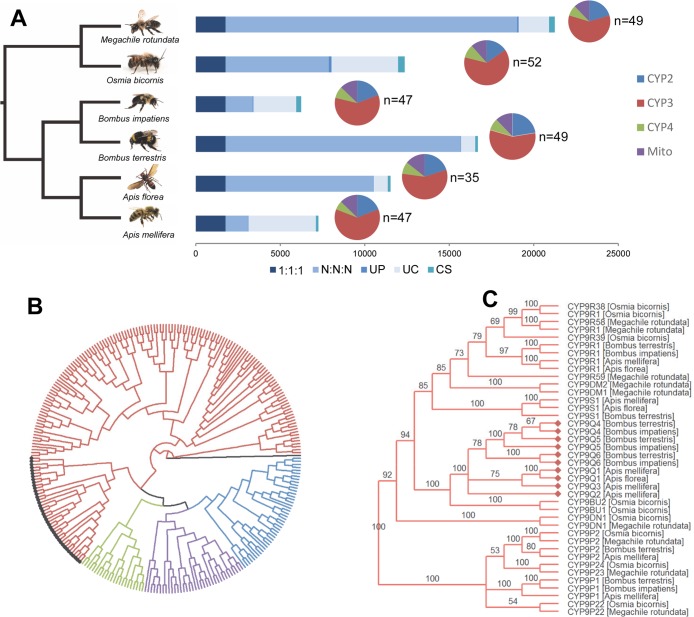
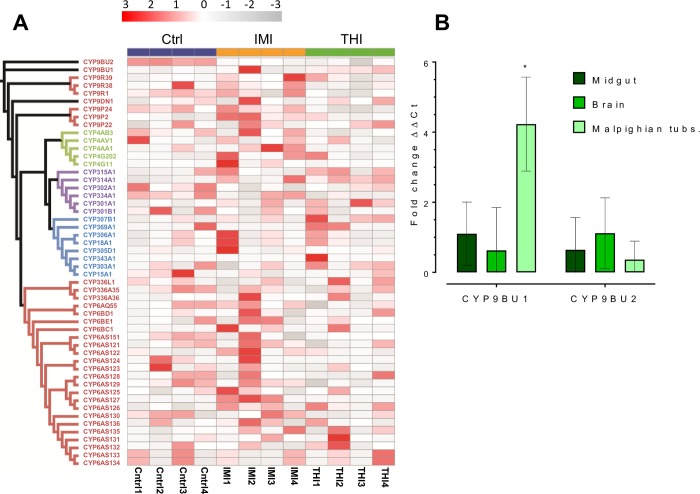
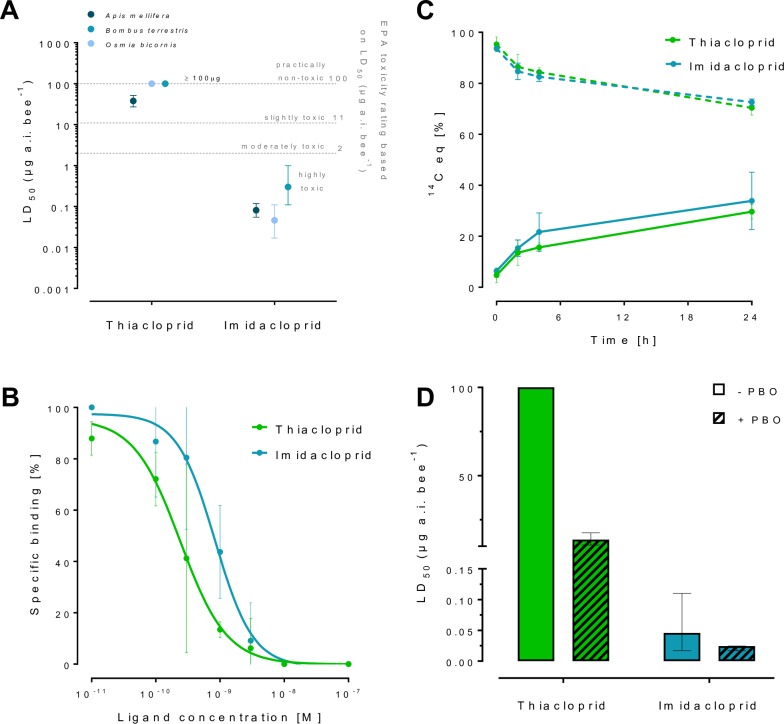
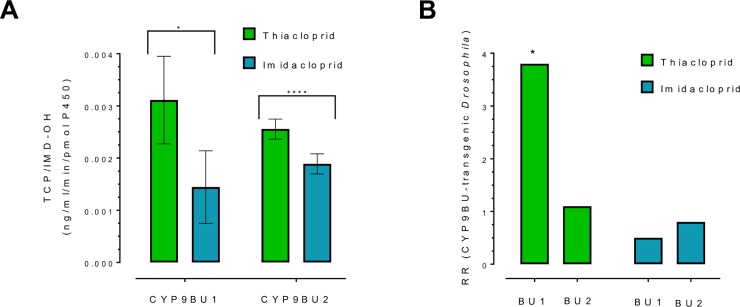
The impact of pesticides on the health of bee pollinators is determined in part by the capacity of bee detoxification systems to convert these compounds to less toxic forms. For example, recent work has shown that cytochrome P450s of the CYP9Q subfamily are critically important in defining the sensitivity of honey bees and bumblebees to pesticides, including neonicotinoid insecticides. However, it is currently unclear if solitary bees have functional equivalents of these enzymes with potentially serious implications in relation to their capacity to metabolise certain insecticides. To address this question, we sequenced the genome of the red mason bee, Osmia bicornis, the most abundant and economically important solitary bee species in Central Europe. We show that O. bicornis lacks the CYP9Q subfamily of P450s but, despite this, exhibits low acute toxicity to the N-cyanoamidine neonicotinoid thiacloprid. Functional studies revealed that variation in the sensitivity of O. bicornis to N-cyanoamidine and N-nitroguanidine neonicotinoids does not reside in differences in their affinity for the nicotinic acetylcholine receptor or speed of cuticular penetration. Rather, a P450 within the CYP9BU subfamily, with recent shared ancestry to the Apidae CYP9Q subfamily, metabolises thiacloprid in vitro and confers tolerance in vivo. Our data reveal conserved detoxification pathways in model solitary and eusocial bees despite key differences in the evolution of specific pesticide-metabolising enzymes in the two species groups. The discovery that P450 enzymes of solitary bees can act as metabolic defence systems against certain pesticides can be leveraged to avoid negative pesticide impacts on these important pollinators.
杀虫剂对蜜蜂传粉媒介健康的影响部分取决于蜜蜂解毒系统将这些化合物转化为毒性较低形式的能力。例如,最近的研究表明,CYP9Q 亚家族的细胞色素 P450 在定义蜜蜂和熊蜂对杀虫剂(包括新烟碱类杀虫剂)的敏感性方面至关重要。然而,目前尚不清楚独居蜜蜂是否具有这些酶的功能等效物,如果存在,这可能对它们代谢某些杀虫剂的能力产生严重影响。为了解决这个问题,我们对欧洲中部最丰富和经济上最重要的独居蜜蜂物种红壁泥蜂(Osmia bicornis)进行了基因组测序。我们表明,O. bicornis 缺乏 CYP9Q 亚家族的 P450,但尽管如此,它对 N-氰基脒新烟碱类杀虫剂噻虫啉表现出低急性毒性。功能研究表明,O. bicornis 对 N-氰基脒和 N-硝基亚基胍新烟碱类杀虫剂敏感性的差异不在于它们与烟碱型乙酰胆碱受体的亲和力或角质层穿透速度的差异。相反,CYP9BU 亚家族内的一种 P450 与 Apidae CYP9Q 亚家族具有最近的共同祖先,可在体外代谢噻虫啉,并在体内赋予耐受性。我们的数据揭示了模型独居和社会性蜜蜂中保守的解毒途径,尽管这两个物种群体中特定杀虫剂代谢酶的进化存在关键差异。发现独居蜜蜂的 P450 酶可以作为针对某些杀虫剂的代谢防御系统,这可以用来避免这些重要传粉媒介受到杀虫剂的负面影响。