Barbuscia Anna, Myrskylä Mikko, Goisis Alice
LSE Social Policy Department, MPIDR, United Kingdom.
Department of Social Research, Helsinki University, Finland.
SSM Popul Health. 2019 Jan 14;7:100355. doi: 10.1016/j.ssmph.2019.100355. eCollection 2019 Apr.
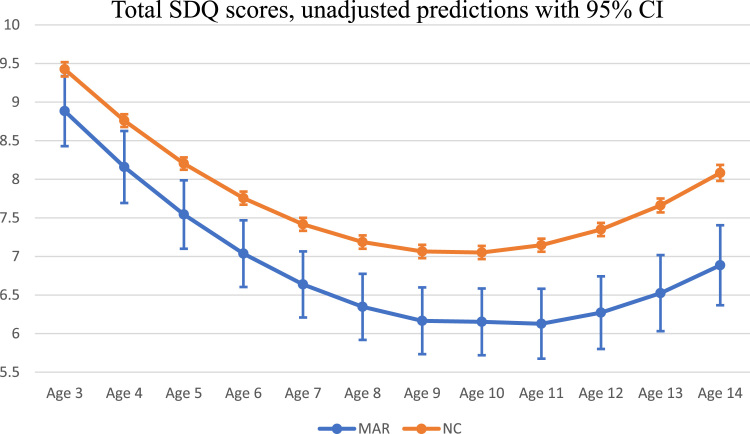
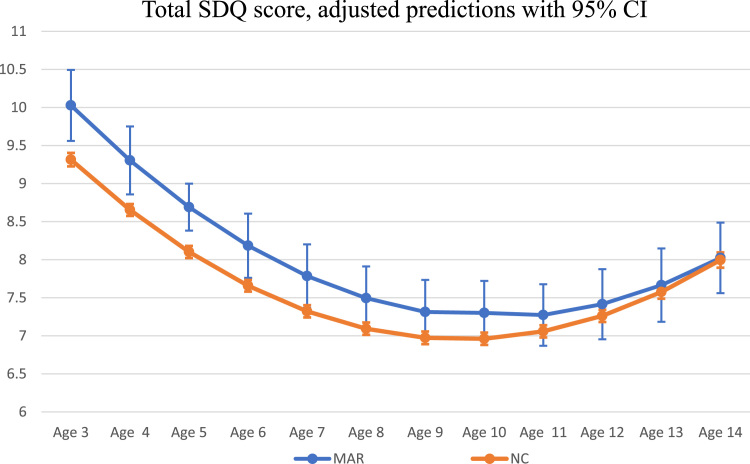
The increasing number of children conceived through medically assisted reproduction (MAR, including IVF/ICSI, intrauterine insemination and ovulation induction) has led to concerns about the potential negative effects of fertility treatments on children's psychosocial health. Some studies suggest that MAR children might be at higher risk of developing psychosocial problems when they enter adolescence. However, very few studies have examined the development of MAR children after childhood. Moreover, even though parental socio-economic characteristics are known to be highly correlated with children's psychosocial development, most existing studies on the outcomes of MAR children did not take into account the selective characteristics of the couples who accessed fertility treatments. Using data from waves 1-6 of the UK Millennium Cohort Study, we compare the psychosocial health, as measured by the Strengths and Difficulties Questionnaire, of MAR children to that of naturally-conceived (NC) children, up to and including the age of 14. We control for a wide range of time-constant child and parental characteristics that might confound the association between MAR and the psychosocial health of children. Results from multilevel random intercept models that do not account for parental characteristics show that MAR children have a lower incidence of psychosocial problems than NC children. In models that control for parental characteristics, MAR children are found to have a higher incidence of psychosocial problems than NC children at age three, which suggests that high parental resource levels both explain the advantage of MAR children in unadjusted models, and mask the potentially adverse effects of MAR at young ages. However, in the fully adjusted models in which MAR children have more psychosocial problems at young age, the differences with respect to NC children decrease with age and become statistically and substantively negligible by end of follow-up at age 14. This result suggests that the use of MAR does not increase children's risk of having psychosocial problems at the onset of adolescence.
通过医学辅助生殖技术(MAR,包括体外受精/卵胞浆内单精子注射、宫内人工授精和促排卵)受孕的儿童数量不断增加,这引发了人们对生育治疗对儿童心理社会健康潜在负面影响的担忧。一些研究表明,接受医学辅助生殖技术的儿童进入青春期后可能面临更高的心理社会问题风险。然而,很少有研究考察过接受医学辅助生殖技术的儿童在童年之后的发展情况。此外,尽管已知父母的社会经济特征与儿童的心理社会发展高度相关,但大多数关于接受医学辅助生殖技术儿童结局的现有研究并未考虑接受生育治疗的夫妇的选择性特征。利用英国千禧队列研究第1 - 6轮的数据,我们将接受医学辅助生殖技术儿童与自然受孕(NC)儿童在14岁及以下(包括14岁)的心理社会健康状况进行了比较,心理社会健康状况通过优势与困难问卷进行衡量。我们控制了一系列可能混淆医学辅助生殖技术与儿童心理社会健康之间关联的、随时间不变的儿童和父母特征。未考虑父母特征的多层次随机截距模型结果显示,接受医学辅助生殖技术的儿童出现心理社会问题的发生率低于自然受孕儿童。在控制了父母特征的模型中,发现接受医学辅助生殖技术的儿童在3岁时出现心理社会问题的发生率高于自然受孕儿童,这表明高父母资源水平既解释了接受医学辅助生殖技术儿童在未调整模型中的优势,又掩盖了医学辅助生殖技术在幼儿期的潜在不利影响。然而,在完全调整后的模型中,接受医学辅助生殖技术的儿童在幼年时有更多心理社会问题,但与自然受孕儿童的差异随年龄增长而减小,到14岁随访结束时在统计学和实质上都可忽略不计。这一结果表明,使用医学辅助生殖技术不会增加儿童在青春期开始时出现心理社会问题的风险。