Program in Nanoscience and Technology, Graduate School of Convergence Science and Technology, Seoul National University, Seoul, Republic of Korea.
Department of Chemical and Biomolecular Engineering, Yonsei University, Seoul, Republic of Korea.
Stem Cell Res Ther. 2019 Feb 7;10(1):51. doi: 10.1186/s13287-018-1130-8.
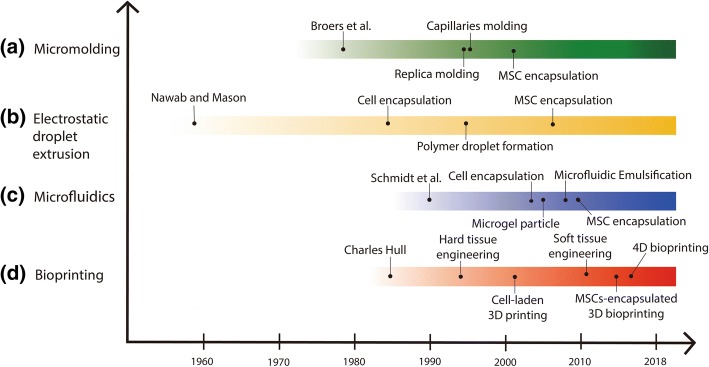
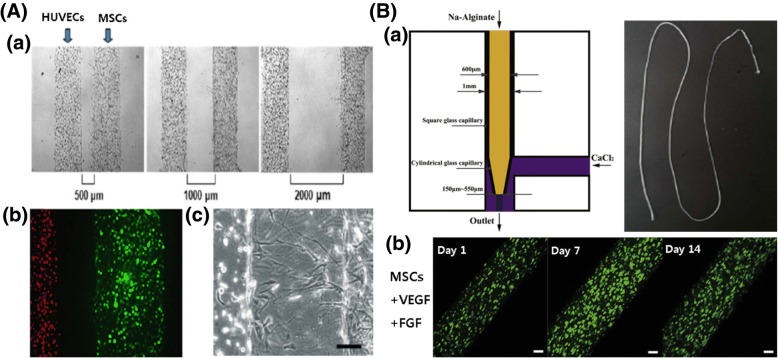
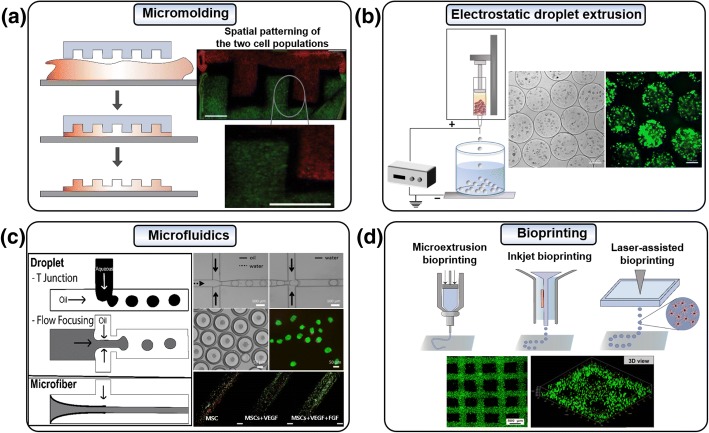
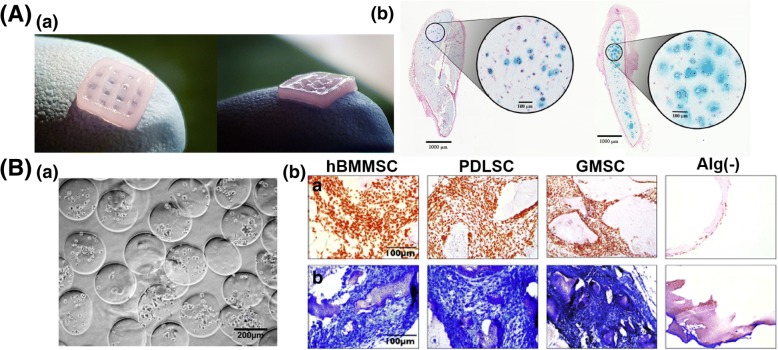
Mesenchymal stem cell (MSC) encapsulation technique has long been emerged in tissue engineering as it plays an important role in implantation of stem cells to regenerate a damaged tissue. MSC encapsulation provides a mimic of a three-dimensional (3D) in vivo environment to maintain cell viability and to induce the stem cell differentiation which regulates MSC fate into multi-lineages. Moreover, the 3D matrix surrounding MSCs protects them from the human innate immune system and allows the diffusion of biomolecules such as oxygen, cytokines, and growth factors. Therefore, many technologies are being developed to create MSC encapsulation platforms with diverse materials, shapes, and sizes. The conditions of the platform are determined by the targeted tissue and translation method. This review introduces several details of MSC encapsulation technologies such as micromolding, electrostatic droplet extrusion, microfluidics, and bioprinting and their application for tissue regeneration. Lastly, some of the challenges and future direction of MSC encapsulation technologies as a cell therapy-based tissue regeneration method will be discussed.
间充质干细胞(MSC)包封技术在组织工程中已经出现了很长时间,因为它在植入干细胞以再生受损组织方面起着重要作用。MSC 包封提供了类似于三维(3D)体内环境的模拟,以维持细胞活力并诱导干细胞分化,从而调节 MSC 向多谱系的命运。此外,包围 MSC 的 3D 基质可以保护它们免受人体固有免疫系统的侵害,并允许生物分子(如氧气、细胞因子和生长因子)的扩散。因此,许多技术正在被开发出来,以使用各种材料、形状和大小来创建 MSC 包封平台。平台的条件取决于目标组织和转化方法。本综述介绍了几种 MSC 包封技术的细节,如微成型、静电液滴挤出、微流控和生物打印及其在组织再生中的应用。最后,将讨论 MSC 包封技术作为基于细胞治疗的组织再生方法的一些挑战和未来方向。