Song Shuzheng, Yu Yingyan
Department of Surgery, Ruijin Hospital, Shanghai Jiao Tong University School of Medicine, Shanghai Key Laboratory for Gastric Neoplasms, Shanghai, China.
Front Oncol. 2019 Jan 23;9:15. doi: 10.3389/fonc.2019.00015. eCollection 2019.
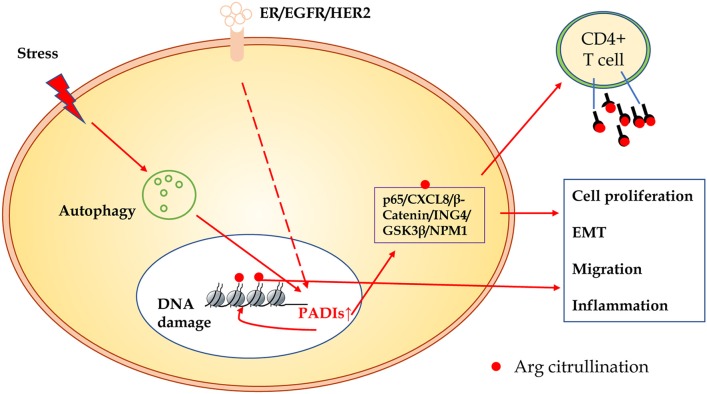
The citrullination modification (Cit) of proteins has received increasing attention in recent years. This kind of protein modification was first discovered in autoimmune diseases such as rheumatoid arthritis. The citrullination modification process is catalyzed by the peptidyl arginine deiminases (PADIs) family. A well-known citrullination of histone involves the key mechanism of neutrophil extracellular traps (NETs) of inflammation in the peripheral blood. Further studies revealed that citrullination modification of proteins also involves in carcinogenesis in human being. Citrullinated proteins disturbed the stability of proteins and caused DNA damages. There is increasing evidence that citrullinated proteins can be used as potential targets for cancer diagnosis or treatment. This review introduces the concept of citrullination modification of proteins, substrate proteins, examining methods and biological significances.
近年来,蛋白质的瓜氨酸化修饰(Cit)受到了越来越多的关注。这种蛋白质修饰最早在类风湿关节炎等自身免疫性疾病中被发现。瓜氨酸化修饰过程由肽基精氨酸脱亚氨酶(PADIs)家族催化。一个著名的组蛋白瓜氨酸化涉及外周血中炎症的中性粒细胞胞外陷阱(NETs)的关键机制。进一步的研究表明,蛋白质的瓜氨酸化修饰也与人的致癌作用有关。瓜氨酸化的蛋白质扰乱了蛋白质的稳定性并导致DNA损伤。越来越多的证据表明,瓜氨酸化的蛋白质可作为癌症诊断或治疗的潜在靶点。本综述介绍了蛋白质瓜氨酸化修饰的概念、底物蛋白、检测方法及生物学意义。