School of Engineering, University of Warwick, Coventry, UK.
Intensive Care Medicine, Guy's and St Thomas' NHS Foundation Trust and Division of Asthma Allergy and Lung Biology, King's College London, London, UK.
Respir Res. 2019 Feb 11;20(1):29. doi: 10.1186/s12931-019-0990-5.
Recent analyses of patient data in acute respiratory distress syndrome (ARDS) showed that a lower ventilator driving pressure was associated with reduced relative risk of mortality. These findings await full validation in prospective clinical trials.
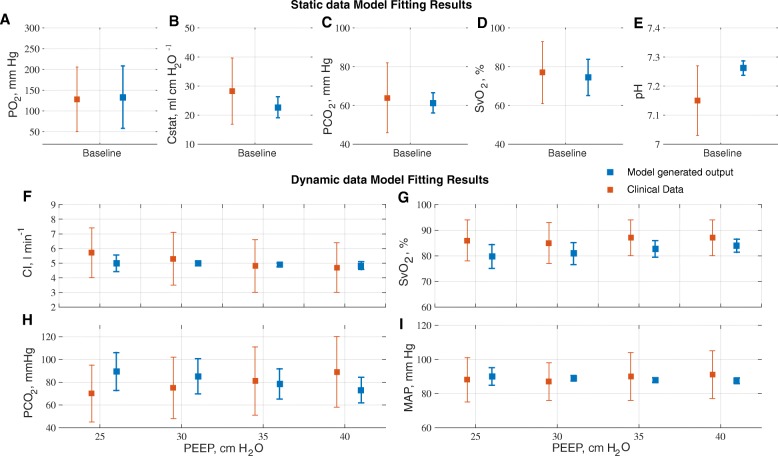
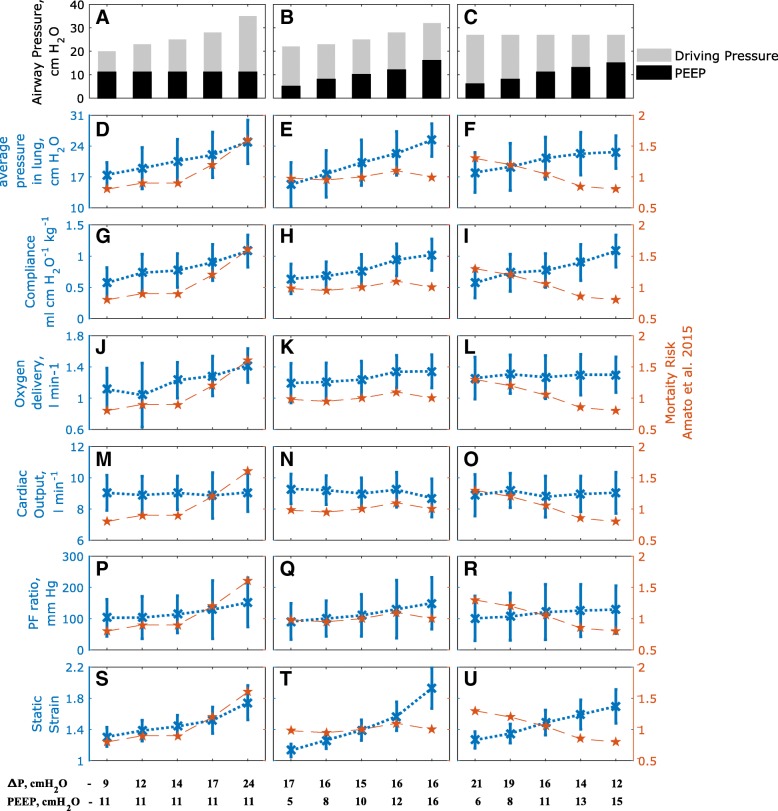
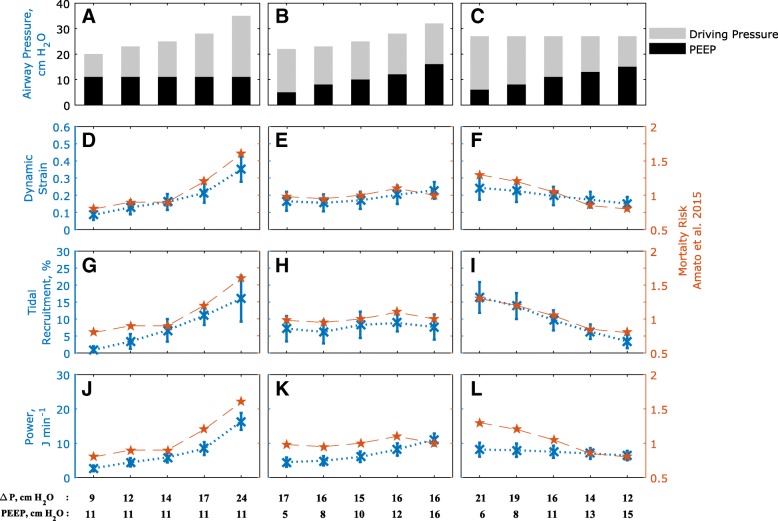
To investigate the association between driving pressures and ventilator induced lung injury (VILI), we calibrated a high fidelity computational simulator of cardiopulmonary pathophysiology against a clinical dataset, capturing the responses to changes in mechanical ventilation of 25 adult ARDS patients. Each of these in silico patients was subjected to the same range of values of driving pressure and positive end expiratory pressure (PEEP) used in the previous analyses of clinical trial data. The resulting effects on several physiological variables and proposed indices of VILI were computed and compared with data relating ventilator settings with relative risk of death.
Three VILI indices: dynamic strain, mechanical power and tidal recruitment, showed a strong correlation with the reported relative risk of death across all ranges of driving pressures and PEEP. Other variables, such as alveolar pressure, oxygen delivery and lung compliance, correlated poorly with the data on relative risk of death.
Our results suggest a credible mechanistic explanation for the proposed association between driving pressure and relative risk of death. While dynamic strain and tidal recruitment are difficult to measure routinely in patients, the easily computed VILI indicator known as mechanical power also showed a strong correlation with mortality risk, highlighting its potential usefulness in designing more protective ventilation strategies for this patient group.
最近对急性呼吸窘迫综合征(ARDS)患者数据的分析表明,较低的呼吸机驱动压与降低死亡率的相对风险相关。这些发现有待前瞻性临床试验的充分验证。
为了研究驱动压力与呼吸机相关性肺损伤(VILI)之间的关系,我们对心肺生理学的高保真计算模拟器进行了校准,使其与临床数据集相匹配,从而捕捉到 25 名成人 ARDS 患者对机械通气变化的反应。这些模拟患者中的每一位都经历了与先前临床试验数据分析中相同范围的驱动压力和呼气末正压(PEEP)值。计算了对几种生理变量和 VILI 指标的影响,并将其与与呼吸机设置相关的死亡率相对风险数据进行了比较。
三个 VILI 指标:动态应变、机械功率和潮气量募集,在所有驱动压力和 PEEP 范围内与报告的死亡率相对风险均显示出很强的相关性。其他变量,如肺泡压力、氧输送和肺顺应性,与死亡率数据相关性较差。
我们的结果为驱动压力与死亡率相对风险之间的关联提供了一个可信的机制解释。虽然动态应变和潮气量募集在患者中很难常规测量,但易于计算的 VILI 指标——机械功率也与死亡率风险显示出很强的相关性,突出了其在为这组患者设计更具保护作用的通气策略方面的潜在用途。