Cronin Owen, Barton Wiley, Moran Carthage, Sheehan Donal, Whiston Ronan, Nugent Helena, McCarthy Yvonne, Molloy Catherine B, O'Sullivan Orla, Cotter Paul D, Molloy Michael G, Shanahan Fergus
Department of Medicine, National University of Ireland, University College Cork, Cork University Hospital, Wilton, T12 DC4A, Cork, Ireland.
APC Microbiome Ireland, National University of Ireland, Cork, T12 YT20, Ireland.
BMC Gastroenterol. 2019 Feb 12;19(1):29. doi: 10.1186/s12876-019-0952-x.
Overweight and metabolic problems now add to the burden of illness in patients with Inflammatory Bowel Disease. We aimed to determine if a program of aerobic and resistance exercise could safely achieve body composition changes in patients with Inflammatory Bowel Disease.
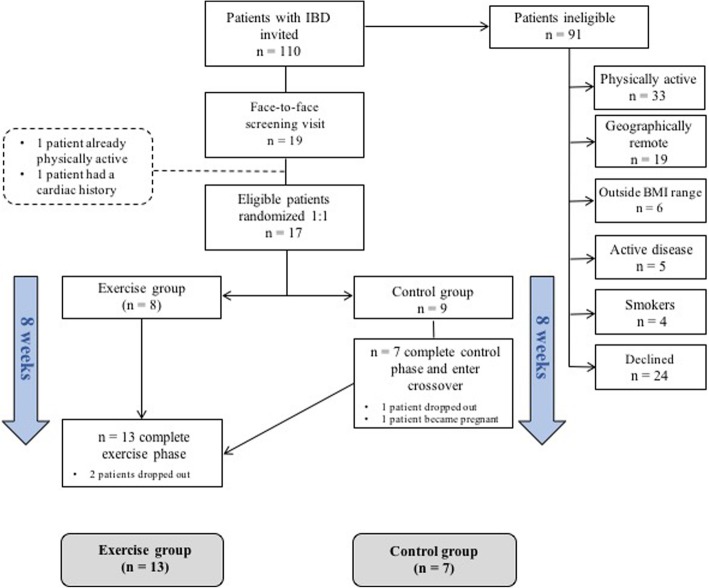
A randomized, cross-over trial of eight weeks combined aerobic and resistance training on body composition assessed by Dual Energy X-ray Absorptiometry was performed. Patients in clinical remission and physically inactive with a mean age of 25 ± 6.5 years and Body Mass Index of 28.9 ± 3.8 were recruited from a dedicated Inflammatory Bowel Disease clinic. Serum cytokines were quantified, and microbiota assessed using metagenomic sequencing.
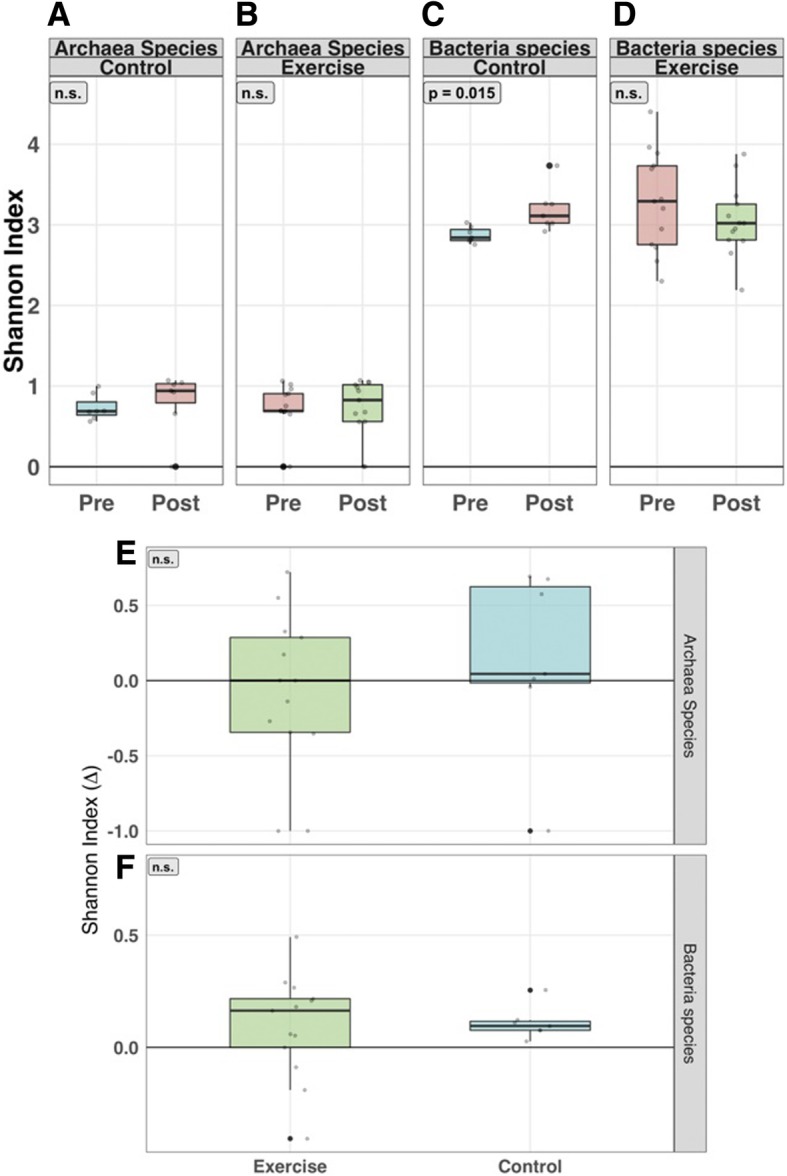
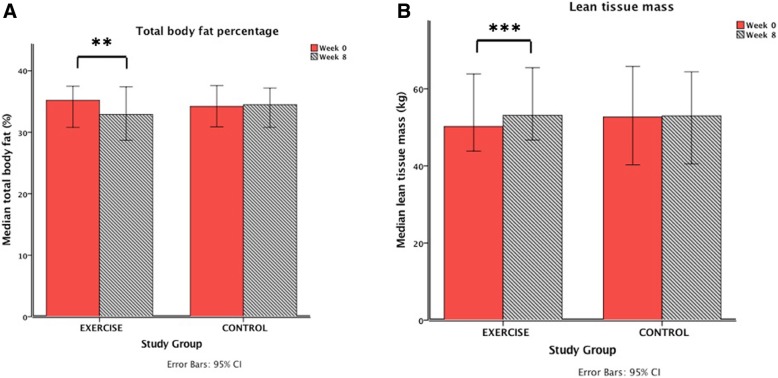
Improved physical fitness was demonstrated in the exercise group by increases in median estimated VO (Baseline: 43.41mls/kg/min; post-intervention: 46.01mls/kg/min; p = 0.03). Improvement in body composition was achieved by the intervention group (n = 13) with a median decrease of 2.1% body fat compared with a non-exercising group (n = 7) (0.1% increase; p = 0.022). Lean tissue mass increased by a median of 1.59 kg and fat mass decreased by a median of 1.52 kg in the exercising group. No patients experienced a deterioration in disease activity scores during the exercise intervention. No clinically significant alterations in the α- and β-diversity of gut microbiota and associated metabolic pathways were evident.
Moderate-intensity combined aerobic and resistance training is safe in physically unfit patients with quiescent Inflammatory Bowel Disease and can quickly achieve favourable body compositional changes without adverse effects.
The study was registered at ClinicalTrials.gov; Trial number: NCT02463916 .
超重和代谢问题如今增加了炎症性肠病患者的疾病负担。我们旨在确定有氧和抗阻运动计划能否安全地使炎症性肠病患者的身体成分发生变化。
进行了一项为期八周的随机交叉试验,该试验采用双能X线吸收法评估有氧和抗阻联合训练对身体成分的影响。从一家专门的炎症性肠病诊所招募了临床缓解且身体活动不足的患者,他们的平均年龄为25±6.5岁,体重指数为28.9±3.8。对血清细胞因子进行定量分析,并使用宏基因组测序评估微生物群。
运动组的体能有所改善,中位估计摄氧量增加(基线:43.41毫升/千克/分钟;干预后:46.01毫升/千克/分钟;p = 0.03)。干预组(n = 13)的身体成分得到改善,与非运动组(n = 7)相比,体脂中位数下降了2.1%(非运动组增加了0.1%;p = 0.022)。运动组的瘦体重中位数增加了1.59千克,脂肪量中位数减少了1.52千克。在运动干预期间,没有患者的疾病活动评分恶化。肠道微生物群的α和β多样性以及相关代谢途径没有明显的临床显著改变。
对于身体状况不佳的静止期炎症性肠病患者,中等强度的有氧和抗阻联合训练是安全的,并且可以快速实现有利的身体成分变化,而无不良影响。
该研究已在ClinicalTrials.gov注册;试验编号:NCT02463916 。