Wang Xuemei, Shu Wei, Du Jian, Du Maolin, Wang Peiyu, Xue Mingming, Zheng Huiqiu, Jiang Yufeng, Yin Shaohua, Liang Danyan, Wang Ruiqi, Hou Lina
Department of Nutrition and Food Hygiene, School of Public Health, Peking University Health Science Center, Beijing, 100191, China.
Department of Health Statistics, School of Public Health, Inner Mongolia Medical University, Hohhot, 010110, China.
BMC Endocr Disord. 2019 Feb 13;19(1):21. doi: 10.1186/s12902-019-0347-6.
As an insulin-dependent disease, type 1 diabetes requires paying close attention to the glycemic control. Studies have shown that mobile health (mHealth) can improve the management of chronic diseases. However, the effectiveness of mHealth in controlling the glycemic control remains uncertain. The objective of this study was to carry out a systematic review and meta-analysis using the available literature reporting findings on mHealth interventions, which may improve the management of type 1 diabetes.
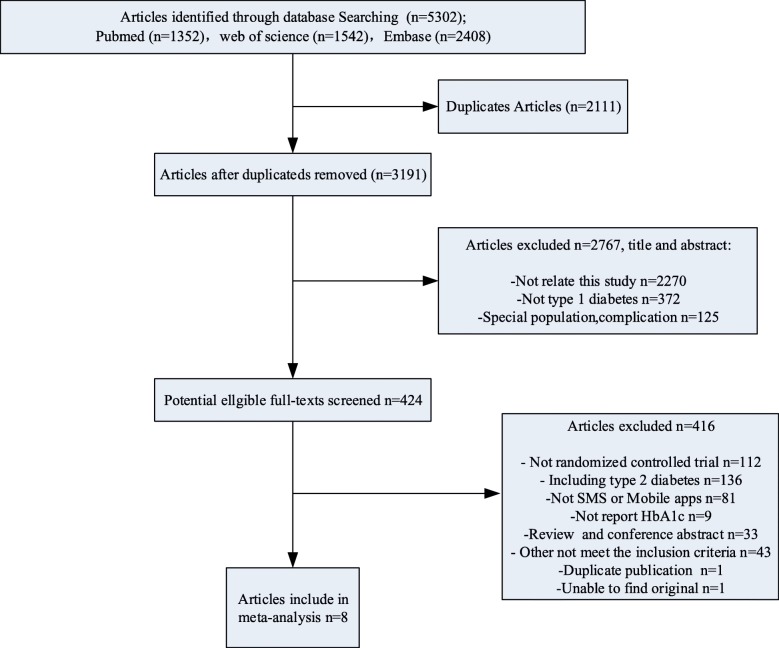
We performed a systematic literature review of all studies in the PubMed, Web of Science, and EMbase databases that used mHealth (including mobile phones) in diabetes care and reported glycated hemoglobin (HbA1c) values as a measure of glycemic control. The fixed effects model was used for this meta-analysis.
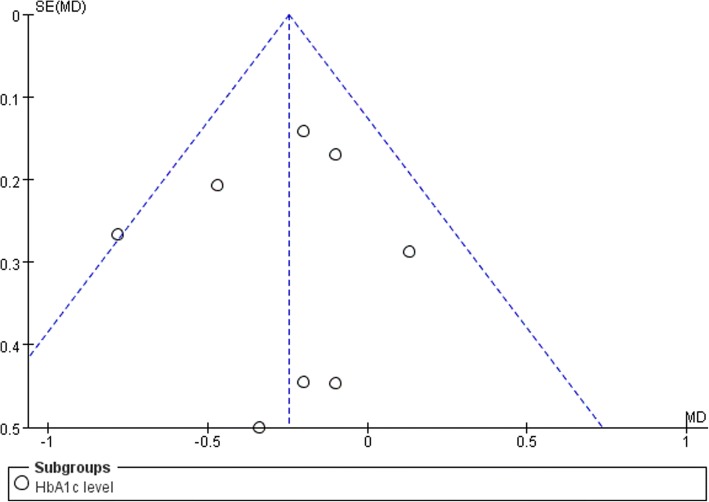
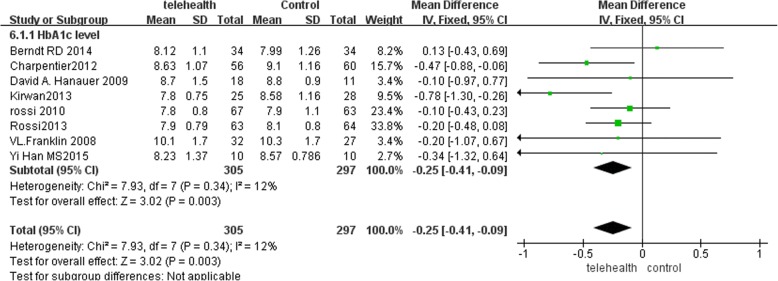
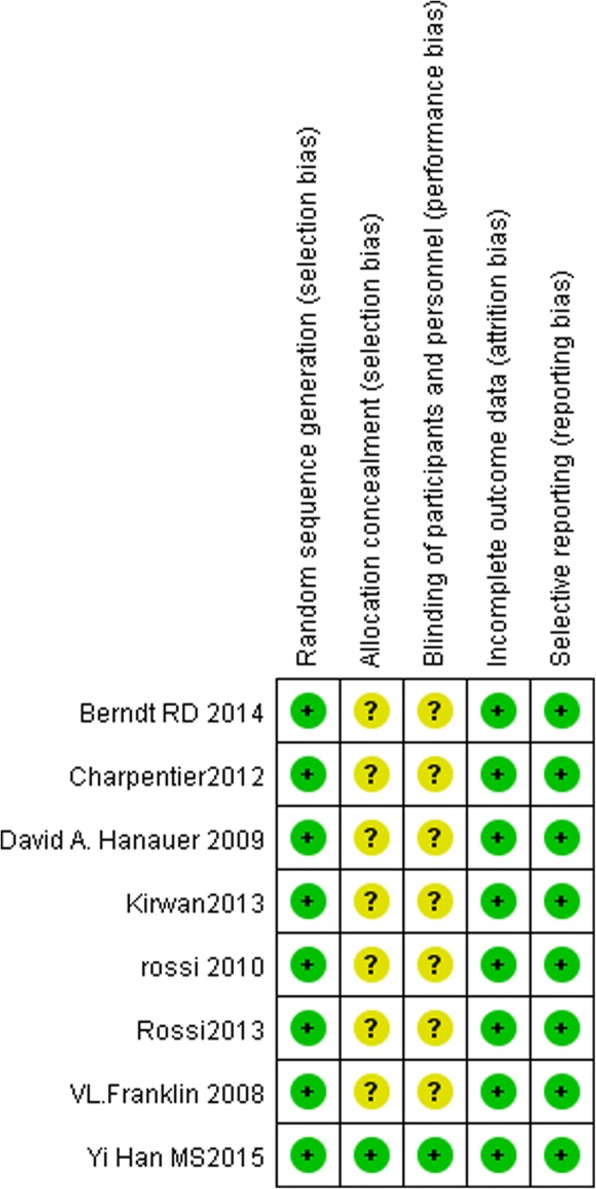
This study analyzed eight studies, which involved a total of 602 participants. In the meta-analysis, the fixed effects model showed a statistically significant decrease in the mean of HbA1c in the intervention group: - 0.25 (95% confidence interval: - 0.41, - 0.09; P = 0.003, I = 12%). Subgroup analyses indicated that the patient's age, the type of intervention, and the duration of the intervention influenced blood glucose control. Funnel plots showed no publication bias.
Mobile health interventions may be effective among patients with type 1 diabetes. A significant reduction in HbA1c levels was associated with adult age, the use of a mobile application, and the long-term duration of the intervention.
1型糖尿病作为一种胰岛素依赖型疾病,需要密切关注血糖控制。研究表明,移动健康(mHealth)可以改善慢性病管理。然而,mHealth在控制血糖方面的有效性仍不确定。本研究的目的是利用现有文献对mHealth干预措施的研究结果进行系统评价和荟萃分析,这些干预措施可能改善1型糖尿病的管理。
我们对PubMed、科学网和EMbase数据库中所有在糖尿病护理中使用mHealth(包括手机)并报告糖化血红蛋白(HbA1c)值作为血糖控制指标的研究进行了系统的文献综述。本荟萃分析采用固定效应模型。
本研究分析了8项研究,共涉及602名参与者。在荟萃分析中,固定效应模型显示干预组HbA1c均值有统计学意义的下降:-0.25(95%置信区间:-0.41,-0.09;P = 0.003,I = 12%)。亚组分析表明,患者年龄、干预类型和干预持续时间会影响血糖控制。漏斗图显示无发表偏倚。
移动健康干预措施可能对1型糖尿病患者有效。HbA1c水平的显著降低与成年、使用移动应用程序以及干预的长期持续时间有关。