Modeling in Health Research Center, Institute for Futures Studies in Health, Kerman University of Medical Sciences, Kerman, Iran.
Non-Communicable Diseases Research Center, Endocrinology and Metabolism Population Sciences Institute, Tehran University of Medical Sciences, Tehran, Iran.
PLoS One. 2019 Feb 14;14(2):e0211622. doi: 10.1371/journal.pone.0211622. eCollection 2019.
Following the epidemiologic and demographic transition, non-communicable disease mortality is the leading cause of death in Iran. Projecting mortality trend can provide valuable tools for policy makers and planners. In this article, we have estimated the trend of non-communicable disease mortality during 2001-2015 and have projected it until 2030 at national and subnational levels in Iran.
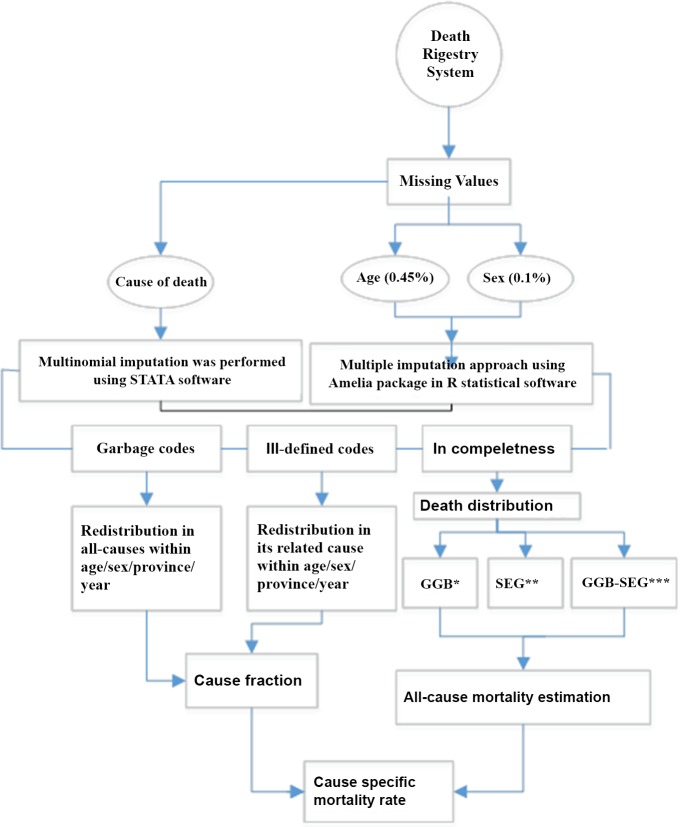
The data employed was gathered from the Iranian death registration system and using the Spatio-temporal model, the trends of 4 major categories of non-communicable diseases (cancers, cardiovascular diseases, asthma and COPD, and diabetes) by 2030 were projected at the national and subnational levels.
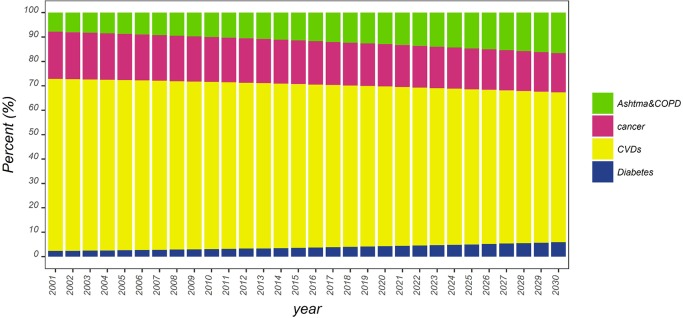
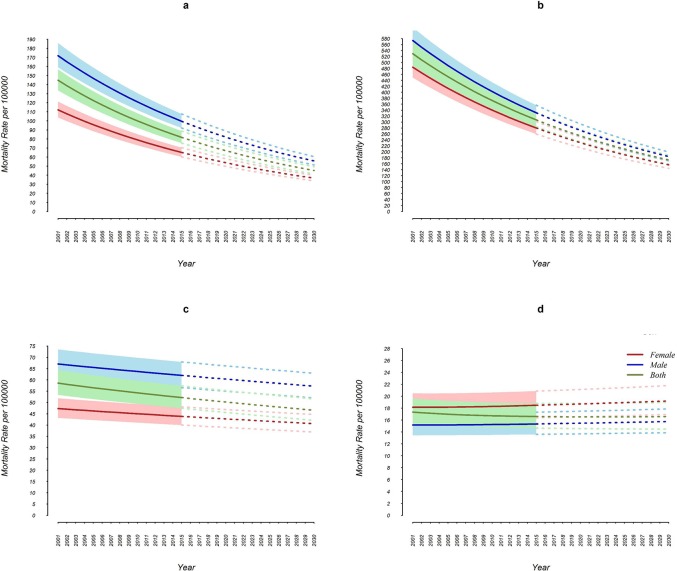
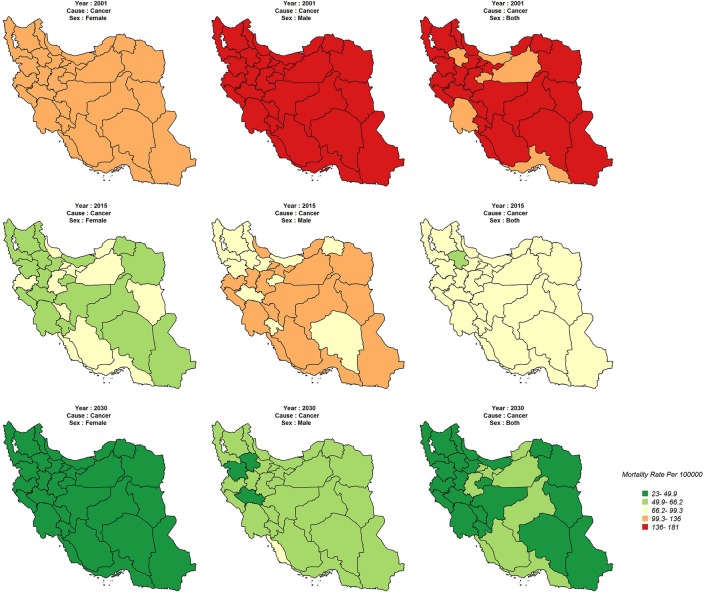
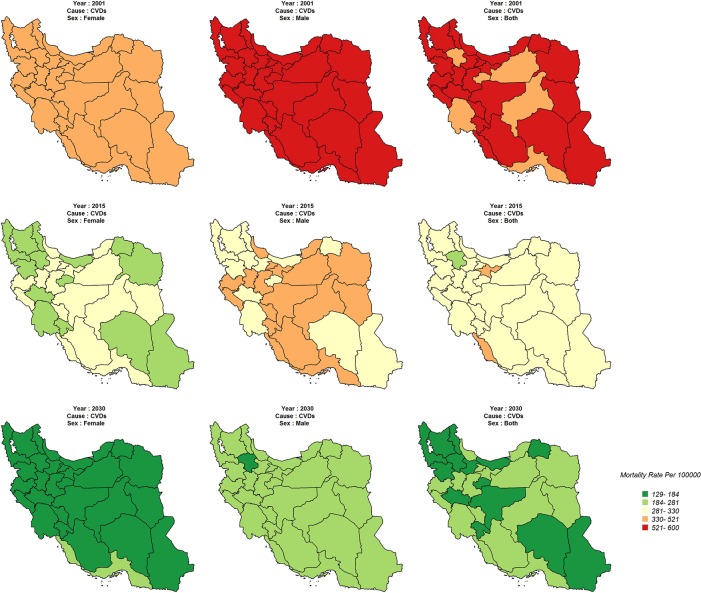
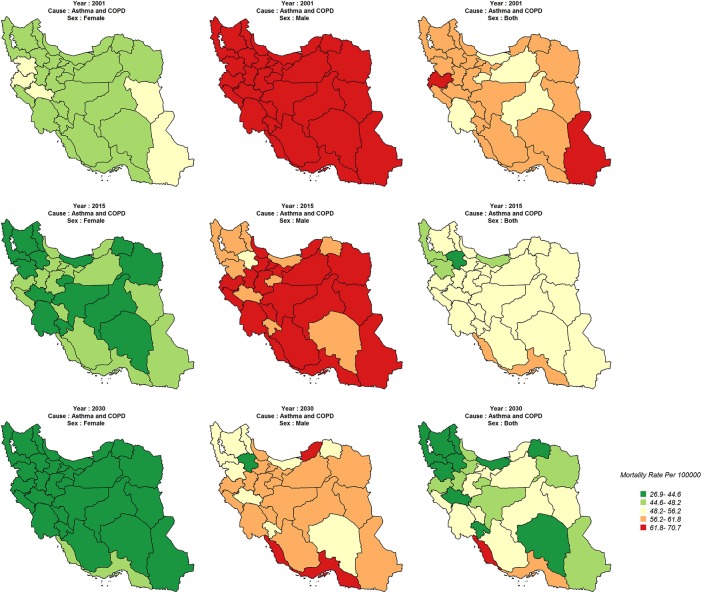
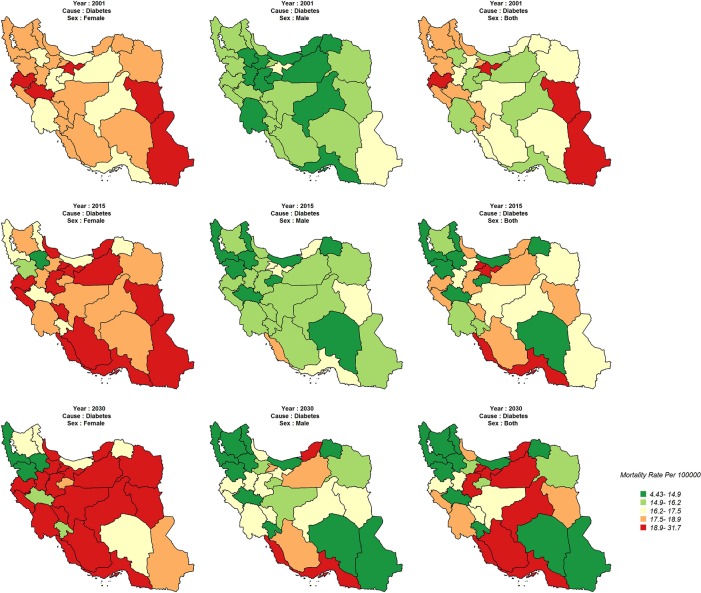
The results indicated that age standardized mortality rate for cancers, CVDs, and Asthma and COPD will continue to decrease in both sexes (cancers: from 81.8 in 2015 to 45.2 in 2030, CVDs: 307.3 to 173.0, and Asthma and COPD: from 52.1 to 46.6); however, in terms of diabetes, there is a steady trend in both sexes at national level (from 16.6 to 16.5). Age standardized mortality rates for cancers and CVDs, in males and females, were high in all provinces in 2001. The variation between the provinces is clearer in 2015, and it is expected to significantly decrease in all provinces by 2030.
Generally, the age standardized mortality rate from NCDs will decrease by 2030. Of course, given the experience of the past two decades in Iran, believing that the mortality rate will decrease may not be an easy notion to understand. However hard to believe, this decrease may be the result of better management of risk factors and early detection of patients due to more comprehensive care in all segments of society, as well as improved literacy and awareness across the country.
随着流行病学和人口结构的转变,非传染性疾病死亡率已成为伊朗的主要死亡原因。对死亡率趋势进行预测可为政策制定者和规划者提供有价值的工具。在本文中,我们估计了 2001 年至 2015 年期间非传染性疾病死亡率的趋势,并在国家和次国家层面上预测了到 2030 年的趋势。
使用来自伊朗死亡登记系统的数据,采用时空模型,预测了全国和次国家层面上四类主要非传染性疾病(癌症、心血管疾病、哮喘和 COPD 以及糖尿病)的趋势。
结果表明,男女两性的癌症、心血管疾病和哮喘和 COPD 的年龄标准化死亡率将继续下降(癌症:从 2015 年的 81.8 下降到 2030 年的 45.2,心血管疾病:从 307.3 下降到 173.0,哮喘和 COPD:从 52.1 下降到 46.6);然而,就糖尿病而言,全国层面上男女两性的死亡率呈稳定趋势(从 16.6 下降到 16.5)。2001 年,所有省份的男性和女性癌症和心血管疾病的年龄标准化死亡率都很高。2015 年,各省之间的差异更加明显,到 2030 年,所有省份的死亡率预计都会显著下降。
总的来说,到 2030 年,非传染性疾病的年龄标准化死亡率将会下降。当然,考虑到伊朗过去二十年的经验,认为死亡率将会下降可能不容易理解。尽管难以置信,但这种下降可能是由于社会各阶层更全面的护理,以及全国范围内文化程度和意识的提高,导致更好地管理了风险因素和早期发现患者。