Department of Microbial Infection and Immunity, The Ohio State University, Columbus, Ohio, 43210, USA.
Department of Mechanical and Aerospace Engineering, The Ohio State University, Columbus, Ohio, 43210, USA.
Sci Rep. 2019 Feb 14;9(1):2008. doi: 10.1038/s41598-018-37891-y.
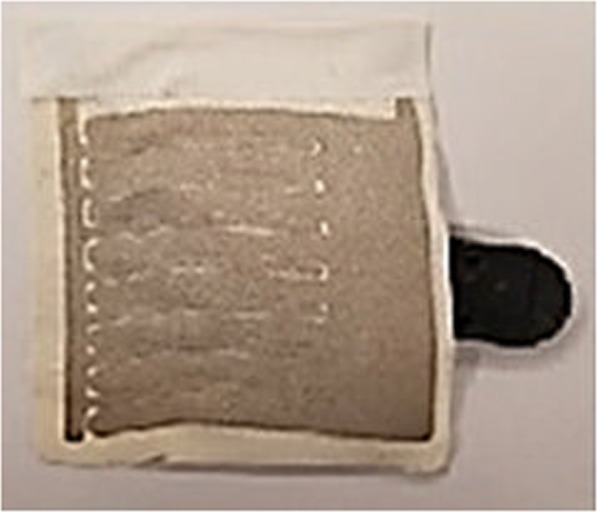
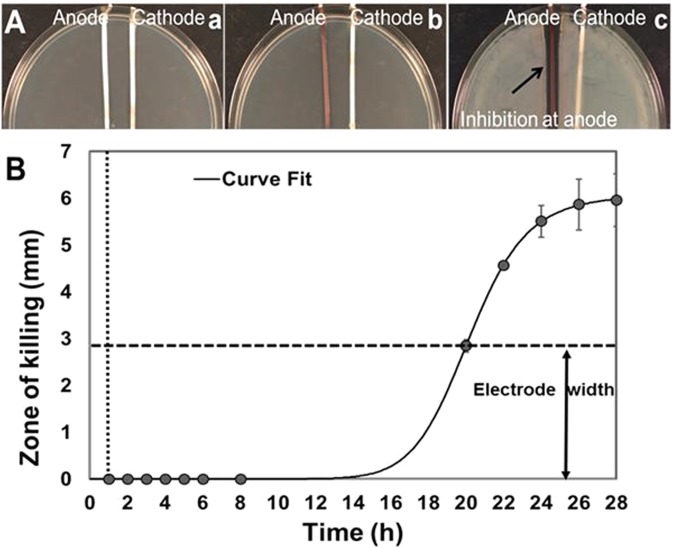
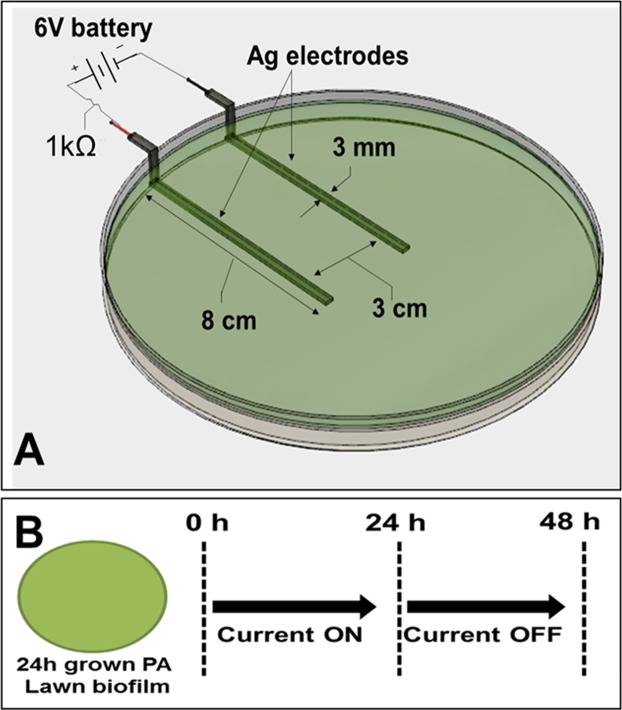
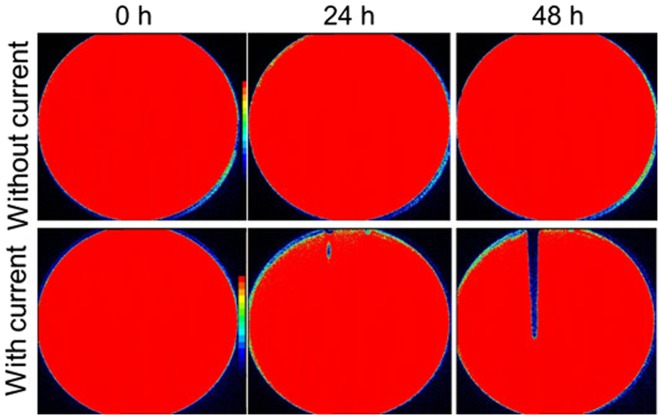
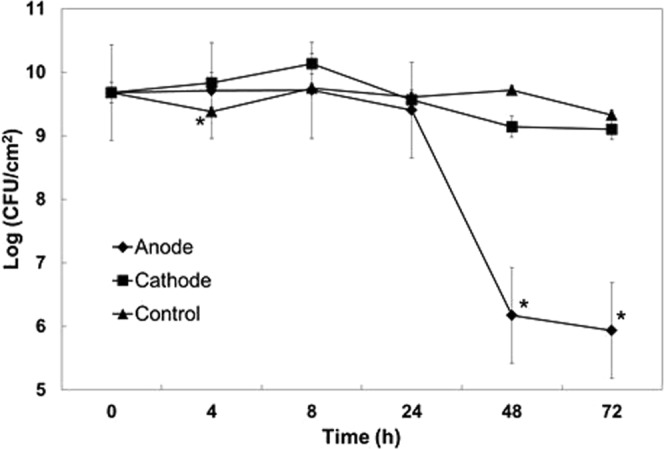
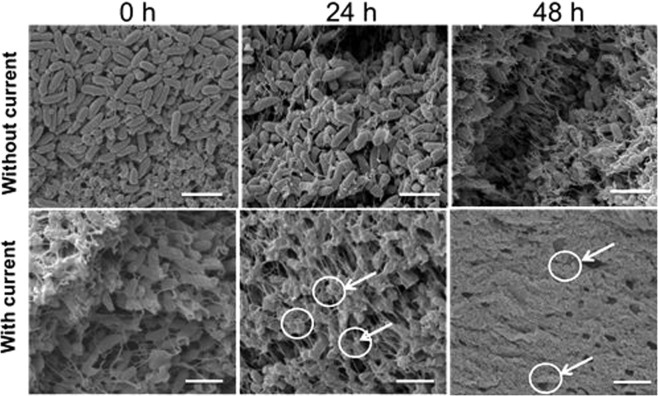
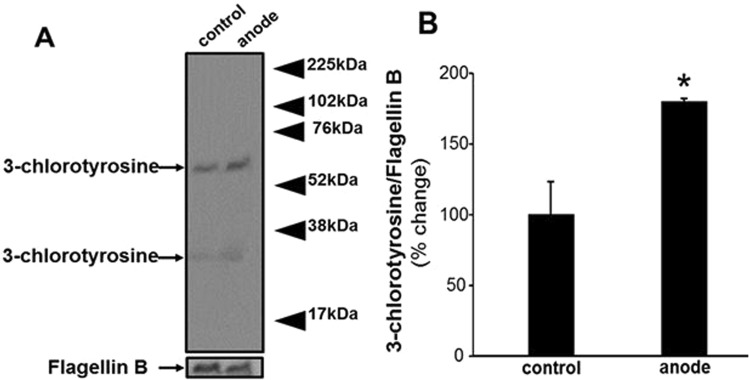
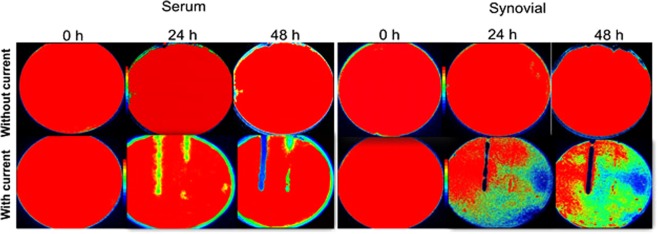
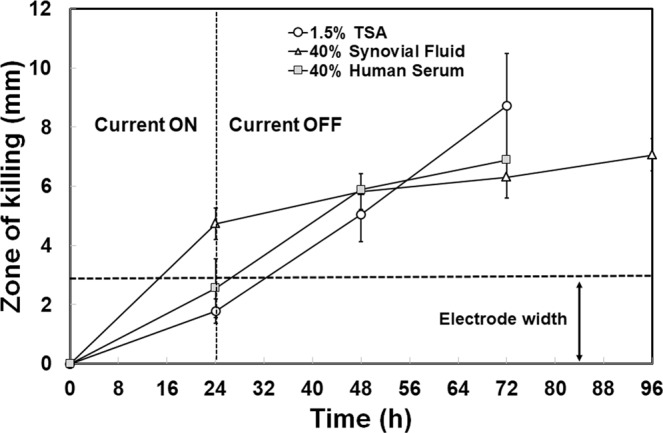
Electroceutical wound dressings, especially those involving current flow with silver based electrodes, show promise for treating biofilm infections. However, their mechanism of action is poorly understood. We have developed an in vitro agar based model using a bioluminescent strain of Pseudomonas aeruginosa to measure loss of activity and killing when direct current was applied. Silver electrodes were overlaid with agar and lawn biofilms grown for 24 h. A 6 V battery with 1 kΩ ballast resistor was used to treat the biofilms for 1 h or 24 h. Loss of bioluminescence and a 4-log reduction in viable cells was achieved over the anode. Scanning electron microscopy showed damaged cells and disrupted biofilm architecture. The antimicrobial activity continued to spread from the anode for at least 2 days, even after turning off the current. Based on possible electrochemical ractions of silver electrodes in chlorine containing medium; pH measurements of the medium post treatment; the time delay between initiation of treatment and observed bactericidal effects; and the presence of chlorotyrosine in the cell lysates, hypochlorous acid is hypothesized to be the chemical agent responsible for the observed (destruction/killing/eradication) of these biofilm forming bacteria. Similar killing was obtained with gels containing only bovine synovial fluid or human serum. These results suggest that our in vitro model could serve as a platform for fundamental studies to explore the effects of electrochemical treatment on biofilms, complementing clinical studies with electroceutical dressings.
电疗伤口敷料,特别是那些涉及到带银基电极的电流流动的敷料,在治疗生物膜感染方面显示出了希望。然而,其作用机制尚不清楚。我们已经开发了一种基于琼脂的体外模型,使用发光的铜绿假单胞菌菌株来测量直流应用时活性损失和杀菌效果。将银电极覆盖在琼脂和培养 24 小时的菌毯上。使用 6V 电池和 1kΩ 负载电阻器处理生物膜 1 小时或 24 小时。在阳极处,生物发光损失和活细胞减少了 4 个对数级。扫描电子显微镜显示细胞受损和生物膜结构破坏。即使关闭电流,抗菌活性仍能从阳极持续扩散至少 2 天。基于含氯介质中银电极的可能电化学反应;处理后介质的 pH 值测量;治疗开始和观察到杀菌效果之间的时间延迟;以及细胞裂解物中存在氯酪氨酸,推测次氯酸是导致观察到(破坏/杀灭/消除)这些生物膜形成细菌的化学物质。仅含有牛滑膜液或人血清的凝胶也能获得类似的杀菌效果。这些结果表明,我们的体外模型可以作为研究电化学处理对生物膜影响的基础研究平台,补充电疗敷料的临床研究。