Pliauga Vytautas, Lukonaitiene Inga, Kamandulis Sigitas, Skurvydas Albertas, Sakalauskas Rytis, Scanlan Aaron T, Stanislovaitiene Jurate, Conte Daniele
Department of Coaching Science, Lithuanian Sports University, Kaunas, Lithuania.
Department of Education Science, Kaunas University of Technology, Kaunas, Lithuania.
Biol Sport. 2018 Dec;35(4):373-382. doi: 10.5114/biolsport.2018.78058. Epub 2018 Aug 31.
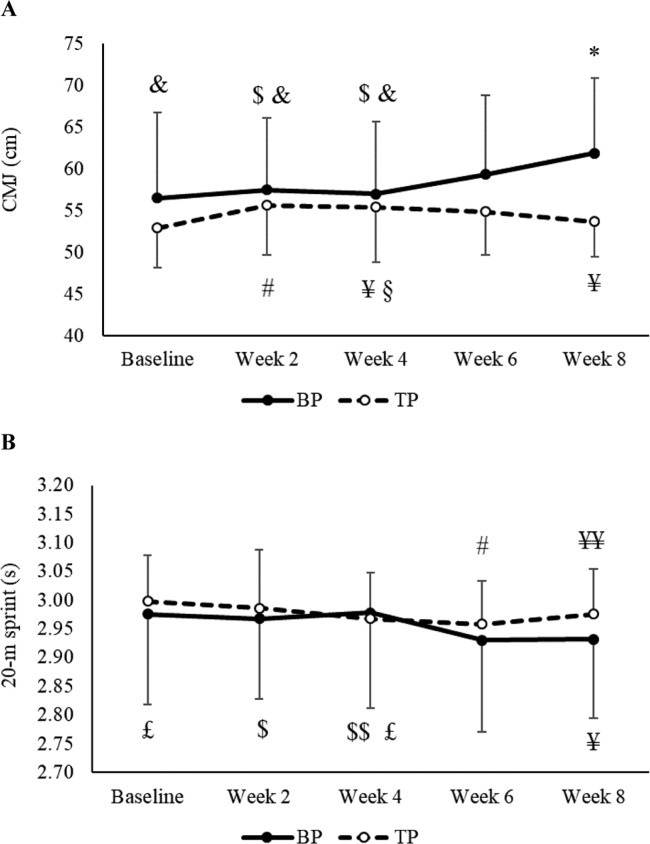
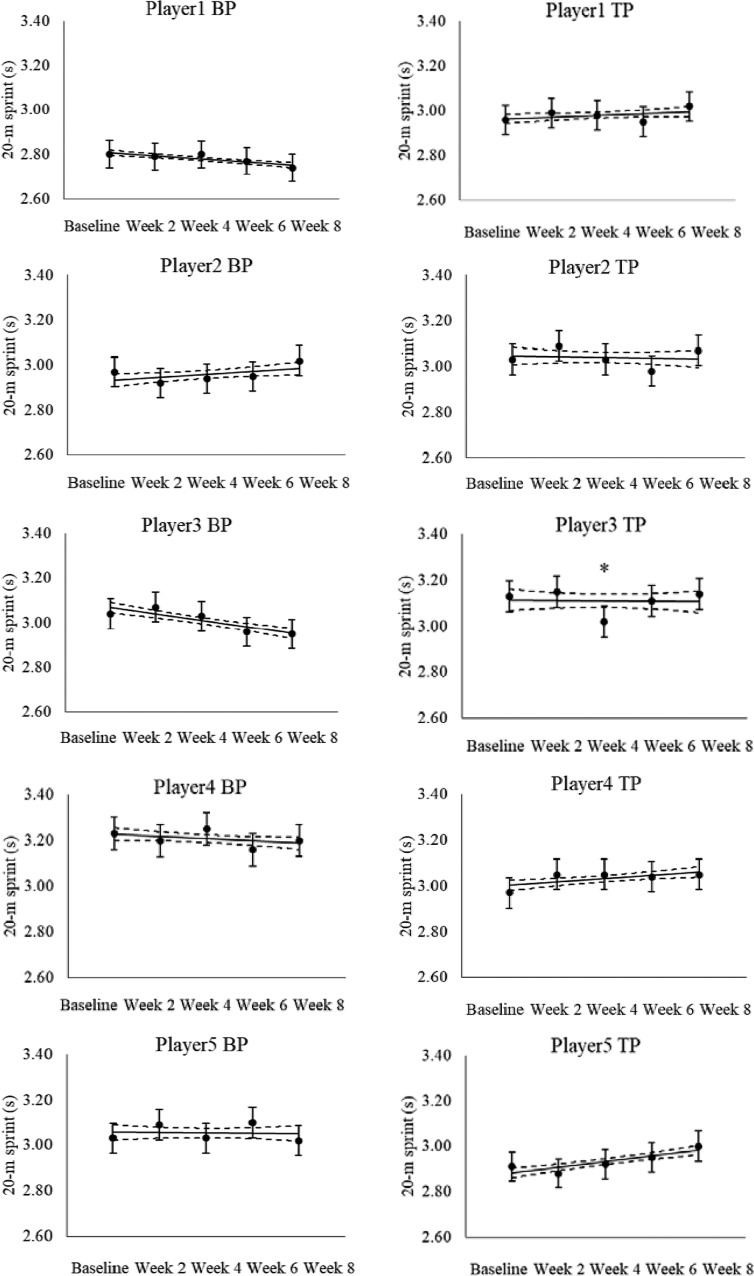
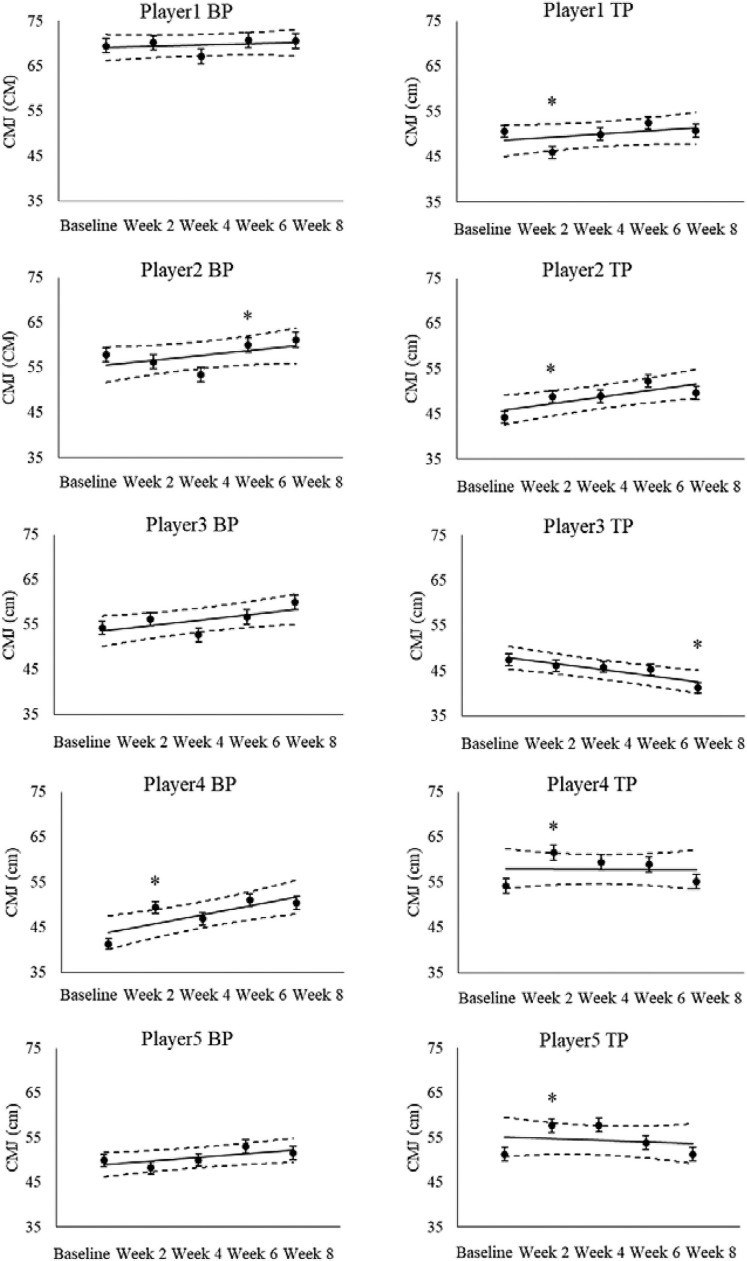
This study investigated the effect of block periodization (BP) and traditional periodization (TP) approaches on jumping and sprinting performance in collegiate basketball players during an 8-week pre-season period. Ten collegiate male basketball players (mean±SD; age: 21.5±1.7 years; body mass: 83.5±8.9 kg; stature: 192.5±5.4 cm) from the same team were equally assigned to a training group (BP or TP). BP and TP were designed with different numbers of power sessions (BP=8; TP=16) and recovery days (BP=14; TP=8). Counter-movement jump (CMJ) and 20-m sprint performance was measured prior to training commencement (baseline) and every 2 weeks thereafter (week 2, week 4, week 6 and week 8). Within-group, between-group and individual changes were assessed using magnitude-based statistics. Substantially higher () CMJ scores were evident in week 8 compared to baseline, week 2 and week 4 with BP training. Substantially higher CMJ values were only observed in week 2 () compared to baseline, with TP training. Sprint data showed differences in week 6 compared to baseline in both TP and BP, with no substantial differences in week 8. The only performance difference between TP and BP training was in CMJ in week 8 (). Individual analysis showed that only three athletes demonstrated a negative predicted score (i.e. lower sprinting time) in BP, while all players following the TP model demonstrated positive predicted scores. BP training showed substantially higher jumping performance compared to TP, while no improvement in sprinting performance was observed in either training approach. Basketball coaches should consider using BP training rather than TP to train players' jumping abilities.
本研究调查了在为期8周的季前赛期间,分组周期训练(BP)和传统周期训练(TP)方法对大学篮球运动员跳跃和短跑成绩的影响。来自同一球队的10名大学男子篮球运动员(均值±标准差;年龄:21.5±1.7岁;体重:83.5±8.9千克;身高:192.5±5.4厘米)被平均分配到一个训练组(BP或TP)。BP和TP的设计具有不同的力量训练次数(BP = 8;TP = 16)和恢复天数(BP = 14;TP = 8)。在训练开始前(基线)以及此后每2周(第2周、第4周、第6周和第8周)测量反向移动跳跃(CMJ)和20米短跑成绩。使用基于量级的统计方法评估组内、组间和个体变化。与基线、第2周和第4周相比,在第8周时,BP训练的CMJ得分显著更高()。与基线相比,TP训练仅在第2周()观察到CMJ值显著更高。短跑数据显示,与基线相比,TP和BP在第6周均有差异,在第8周无显著差异。TP和BP训练之间唯一的成绩差异在于第8周的CMJ()。个体分析表明,BP组中只有三名运动员表现出负预测得分(即短跑时间更短),而采用TP模式的所有运动员均表现出正预测得分。与TP相比,BP训练的跳跃成绩显著更高,而两种训练方法在短跑成绩方面均未观察到改善。篮球教练应考虑使用BP训练而非TP来训练运动员的跳跃能力。