Cognitive Psychology Unit, Institute of Psychology, Leiden University, Leiden, The Netherlands.
Department of Psychology, University of Cambridge, Cambridge, United Kingdom.
Sci Rep. 2019 Feb 19;9(1):2272. doi: 10.1038/s41598-019-39468-9.
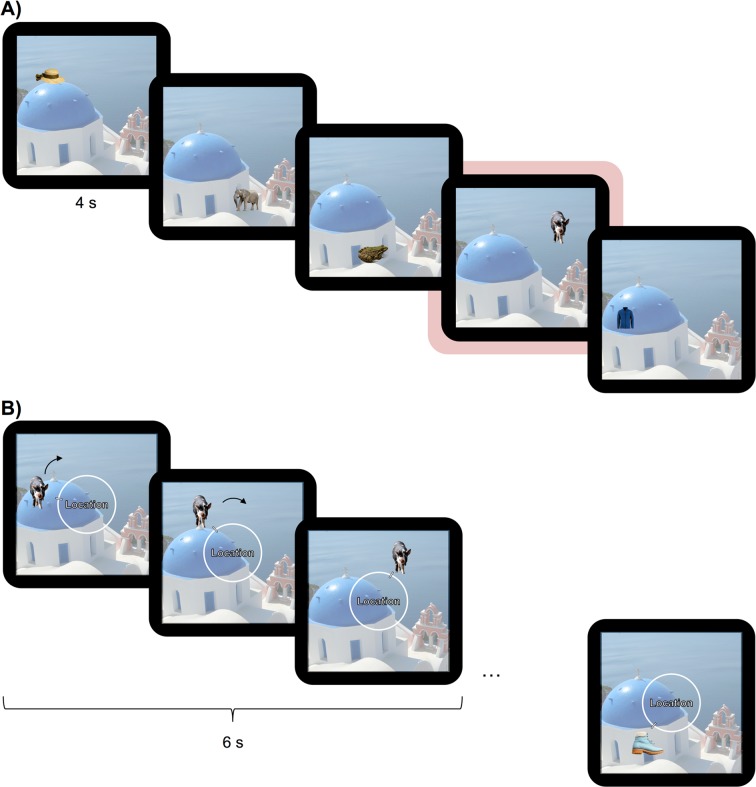
Schemas are knowledge structures that allow us to make efficient judgments about the world without the cost of memorizing every detail of previous experiences. It has long been known that schemas can enhance long-term memory for related information. The usefulness of schemas, however, critically depends on their adaptability: how flexibly a schema can be updated according to changing environmental conditions. Prior consolidation of a schema supports new learning of schema-consistent information. Yet, the effect of consolidation on inconsistent information, and how schemas may be subsequently updated, are not well understood. It is difficult to track the dynamic updating of knowledge structures with traditional memory measures. Here, using a continuous-report paradigm, we were able to show that schematization increases incrementally with consolidation and that the strength with which schemas are initially established predicts schema-guided responding in a later test. Critically, schema updating in response to inconsistent information was more pronounced in a group which was given time to consolidate compared to a group that was not given time to consolidate. Importantly, the later group reverted back to the no longer relevant schema, indicating that systematic bias towards old information, rather than increased forgetting, underlies reduced memory for schema-inconsistent information.
模式是知识结构,使我们能够在不花费记忆以前经验的每个细节的情况下,对世界做出有效的判断。长期以来,人们都知道模式可以增强与相关信息的长期记忆。然而,模式的有用性取决于其适应性:模式可以根据不断变化的环境条件灵活更新的程度。模式的预先巩固支持与模式一致的新信息的学习。然而,巩固对不一致信息的影响,以及模式随后如何更新,尚不清楚。用传统的记忆测量方法很难跟踪知识结构的动态更新。在这里,我们使用连续报告范式,表明模式化随着巩固而逐渐增加,并且最初建立模式的强度预测了在后续测试中的模式引导反应。至关重要的是,与没有时间巩固的组相比,有时间巩固的组对不一致信息的模式更新更为明显。重要的是,后一组恢复到不再相关的模式,这表明,系统地偏向于旧信息,而不是增加遗忘,是导致对模式不一致信息的记忆减少的基础。