Risk Assessment Division, Environmental Health Research Department, National Institute of Environmental Research, Incheon, Republic of Korea.
Environmental Measurement & Analysis Center, National Institute of Environmental Research, Incheon, Republic of Korea.
Environ Toxicol. 2019 May;34(5):561-572. doi: 10.1002/tox.22722. Epub 2019 Feb 20.
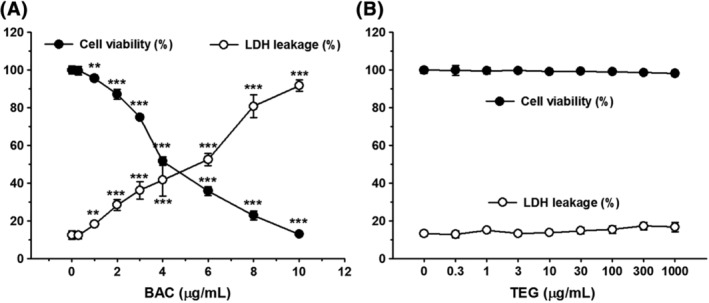
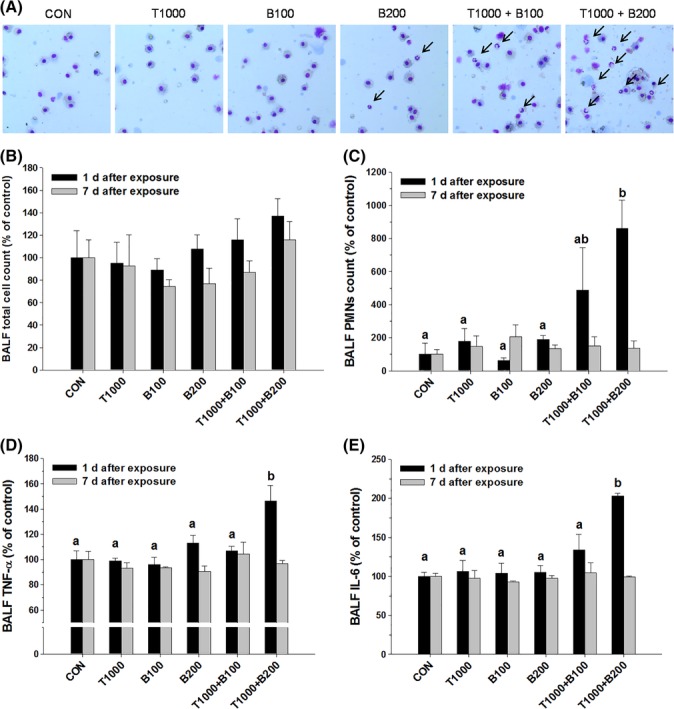
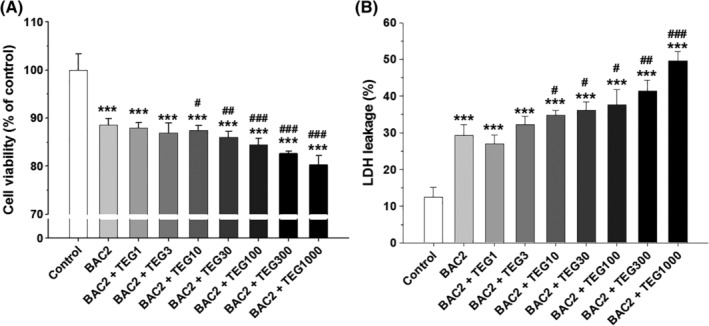
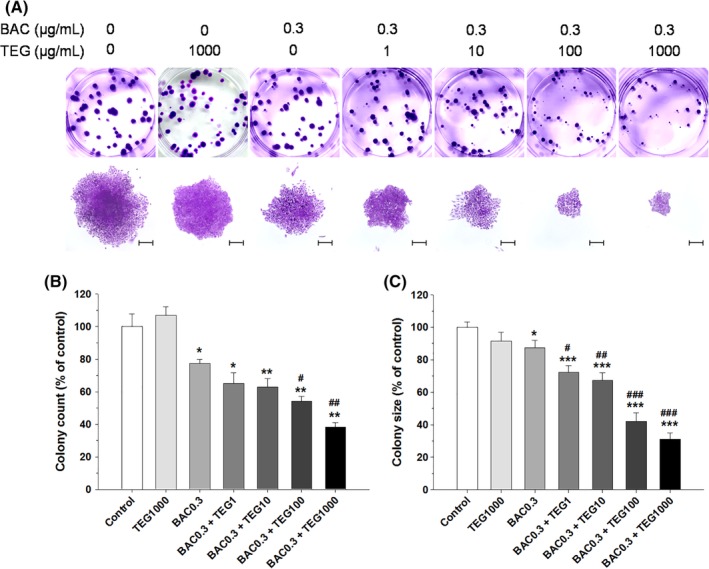
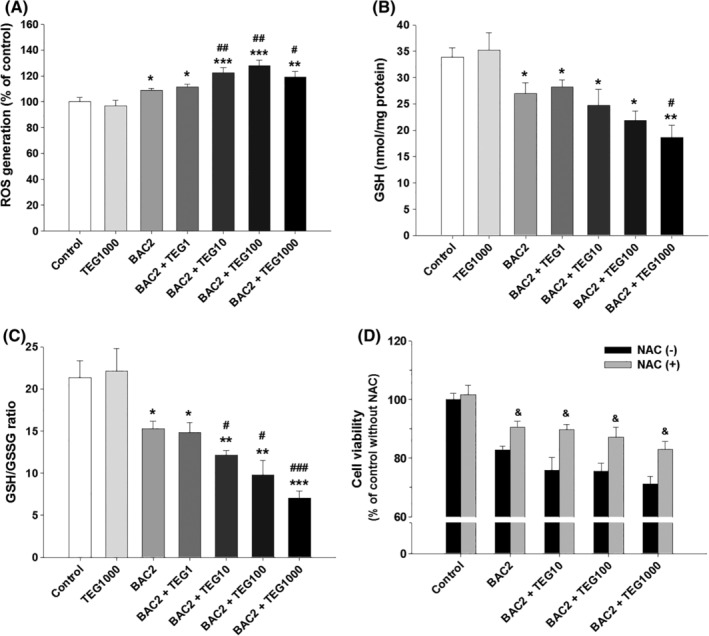
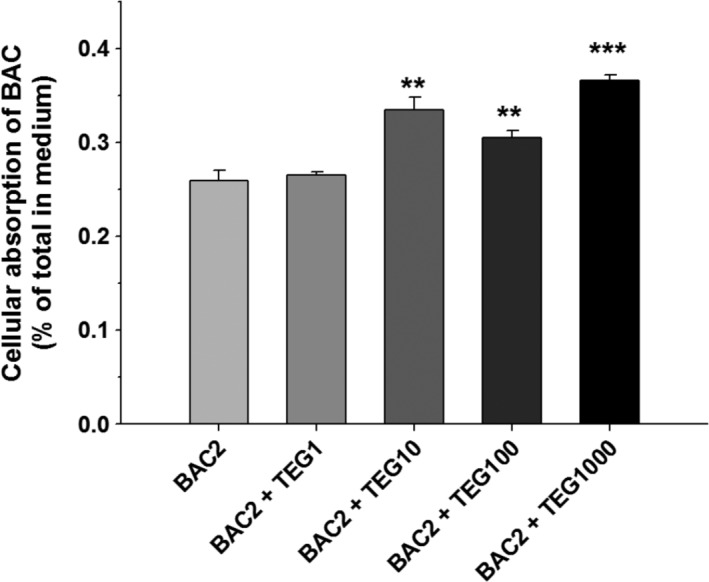
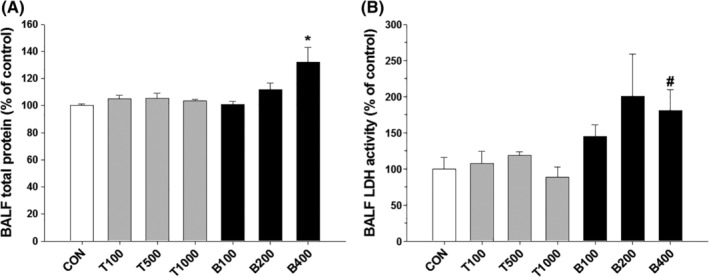
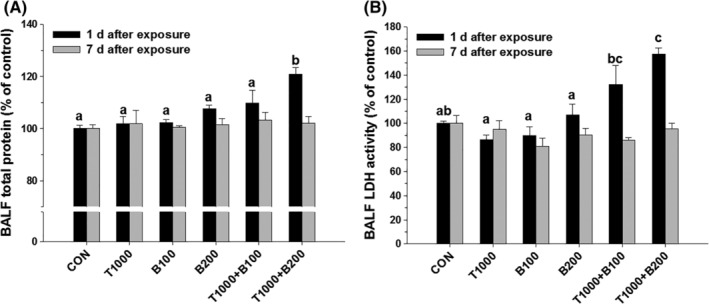
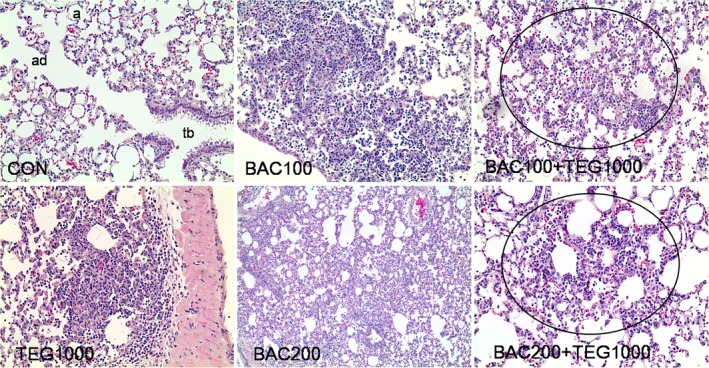
Benzalkonium chloride (BAC) is a widely used disinfectant/preservative, and respiratory exposure to this compound has been reported to be highly toxic. Spray-form household products have been known to contain BAC together with triethylene glycol (TEG) in their solutions. The purpose of this study was to estimate the toxicity of BAC and TEG mixtures to pulmonary organs using in vitro and in vivo experiments. Human alveolar epithelial (A549) cells incubated with BAC (1-10 μg/mL) for 24 hours showed significant cytotoxicity, while TEG (up to 1000 μg/mL) did not affect cell viability. However, TEG in combination with BAC aggravated cell damage and inhibited colony formation as compared to BAC alone. TEG also exacerbated BAC-promoted production of reactive oxygen species (ROS) and reduction of glutathione (GSH) level in A549 cells. However, pretreatment of the cells with N-acetylcysteine (NAC) alleviated the cytotoxicity, indicating oxidative stress could be a mechanism of the toxicity. Quantification of intracellular BAC by LC/MS/MS showed that cellular distribution/absorption of BAC was enhanced in A549 cells when it was exposed together with TEG. Intratracheal instillation of BAC (400 μg/kg) in rats was toxic to the pulmonary tissues while that of TEG (up to 1000 μg/kg) did not show any harmful effect. A combination of nontoxic doses of BAC (200 μg/kg) and TEG (1000 μg/kg) promoted significant lung injury in rats, as shown by increased protein content and lactate dehydrogenase (LDH) activity in bronchoalveolar lavage fluids (BALF). Moreover, BAC/TEG mixture recruited inflammatory cells, polymorphonuclear leukocytes (PMNs), in terminal bronchioles and elevated cytokine levels, tumor necrosis factor α (TNF-α), and interleukin 6 (IL-6) in BALF. These results suggest that TEG can potentiate BAC-induced pulmonary toxicity and inflammation, and thus respiratory exposure to the air mist from spray-form products containing this chemical combination is potentially harmful to humans.
苯扎氯铵(BAC)是一种广泛使用的消毒剂/防腐剂,据报道,呼吸接触这种化合物具有高度毒性。喷雾形式的家用产品已知在其溶液中含有 BAC 与三乙二醇(TEG)。本研究的目的是使用体外和体内实验来估计 BAC 和 TEG 混合物对肺器官的毒性。与人肺泡上皮(A549)细胞孵育 24 小时的 BAC(1-10μg/ml)显示出明显的细胞毒性,而 TEG(高达 1000μg/ml)不影响细胞活力。然而,与 BAC 单独相比,TEG 与 BAC 的组合加剧了细胞损伤并抑制了集落形成。TEG 还加剧了 BAC 促进的活性氧(ROS)的产生和 A549 细胞中谷胱甘肽(GSH)水平的降低。然而,用 N-乙酰半胱氨酸(NAC)预处理细胞可减轻细胞毒性,表明氧化应激可能是毒性的一种机制。通过 LC/MS/MS 对细胞内 BAC 的定量显示,当 A549 细胞暴露于 TEG 时,BAC 的细胞分布/吸收增强。BAC(400μg/kg)在大鼠中的气管内滴注对肺组织有毒性,而 TEG(高达 1000μg/kg)则没有显示出任何有害作用。非毒性剂量的 BAC(200μg/kg)和 TEG(1000μg/kg)的组合在大鼠中促进了明显的肺损伤,如支气管肺泡灌洗液(BALF)中的蛋白质含量和乳酸脱氢酶(LDH)活性增加所示。此外,BAC/TEG 混合物在终末细支气管中募集炎症细胞、多形核白细胞(PMN),并升高 BALF 中的细胞因子水平,肿瘤坏死因子α(TNF-α)和白细胞介素 6(IL-6)。这些结果表明,TEG 可以增强 BAC 引起的肺毒性和炎症,因此呼吸接触含有这种化学组合的喷雾形式产品中的空气雾对人类可能是有害的。