1 The University of Vermont, Burlington, VT, USA.
Am J Mens Health. 2019 Jan-Feb;13(1):1557988319832120. doi: 10.1177/1557988319832120.
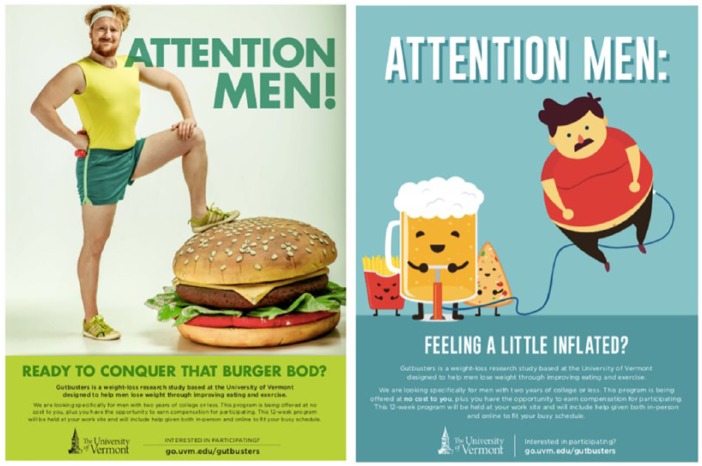
Obese men are at an increased risk of chronic disease and are far less likely than women to attempt weight loss. There is a need to successfully recruit men to weight loss clinical trials. Overweight and obese men were recruited to a 6-month, randomized, controlled weight loss trial. Initial recruitment efforts were aimed at men in the workplace with less than or equal to 2 years of college education. After unsatisfactory interest from men and businesses alike, recruitment strategy shifted to enroll men outside the workplace with any educational background. Recruitment methods included word of mouth, email and website advertisements, printed posters in local businesses and doctors' offices, Facebook ads, and a 1-week newspaper ad campaign. Initial interest and enrollment was negligible with only 35 men enrolled in the first 7 months. The launch of a 1-week newspaper advertisement was the most useful recruitment technique and 102 overweight/obese men were successfully enrolled. Study retention remained high throughout the Gutbusters program, indicating targeted, effective recruitment, and not weight loss interest, may be the largest barrier to trial participation for overweight and obese men.
肥胖男性患慢性病的风险增加,而且他们比女性更不愿意尝试减肥。因此,有必要成功招募男性参与减肥临床试验。研究人员招募了超重和肥胖男性参与一项为期 6 个月的随机对照减肥试验。最初的招募工作针对的是职场中受教育程度低于或等于 2 年的男性。然而,由于男性和企业对此兴趣不大,招募策略转变为招募职场外任何教育背景的男性。招募方法包括口碑宣传、电子邮件和网站广告、当地企业和医生办公室的印刷海报、Facebook 广告以及为期一周的报纸广告宣传。最初的兴趣和参与度很低,在前 7 个月仅招募了 35 名男性。为期一周的报纸广告宣传是最有效的招募手段,共成功招募了 102 名超重/肥胖男性。在 Gutbusters 项目中,研究保留率一直很高,这表明有针对性、有效的招募,而不是减肥兴趣,可能是超重和肥胖男性参与试验的最大障碍。