Altius Institute for Biomedical Sciences, Seattle, WA 98121, United States.
Department of Pathology, University of Washington, Seattle, WA 98195, United States.
EBioMedicine. 2019 Mar;41:427-442. doi: 10.1016/j.ebiom.2019.01.063. Epub 2019 Mar 1.
Transcriptional dysregulation drives cancer formation but the underlying mechanisms are still poorly understood. Renal cell carcinoma (RCC) is the most common malignant kidney tumor which canonically activates the hypoxia-inducible transcription factor (HIF) pathway. Despite intensive study, novel therapeutic strategies to target RCC have been difficult to develop. Since the RCC epigenome is relatively understudied, we sought to elucidate key mechanisms underpinning the tumor phenotype and its clinical behavior.
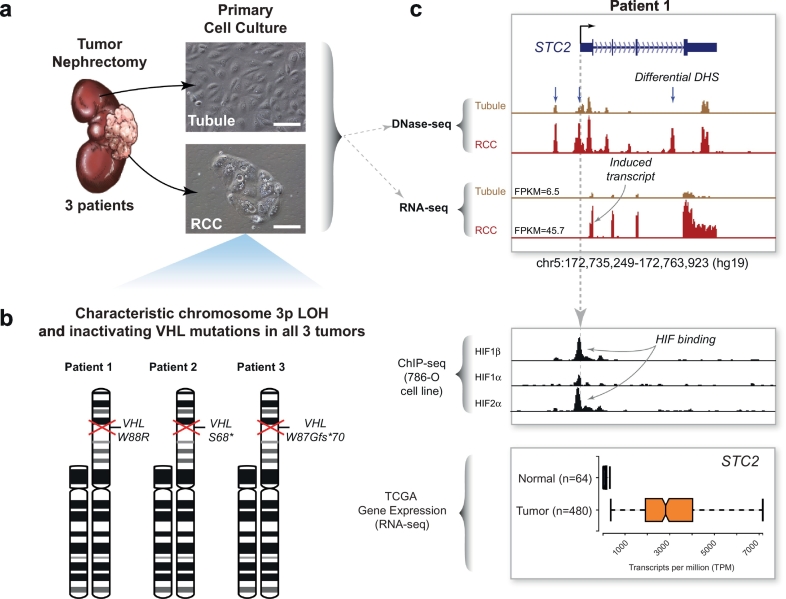
We performed genome-wide chromatin accessibility (DNase-seq) and transcriptome profiling (RNA-seq) on paired tumor/normal samples from 3 patients undergoing nephrectomy for removal of RCC. We incorporated publicly available data on HIF binding (ChIP-seq) in a RCC cell line. We performed integrated analyses of these high-resolution, genome-scale datasets together with larger transcriptomic data available through The Cancer Genome Atlas (TCGA).
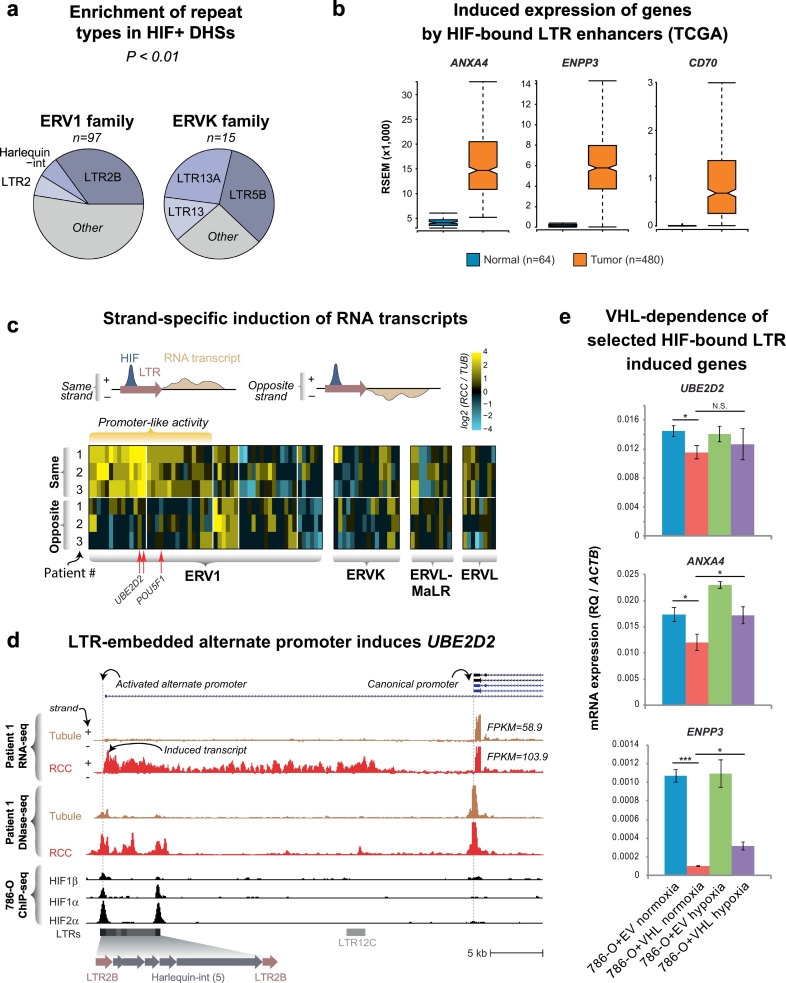
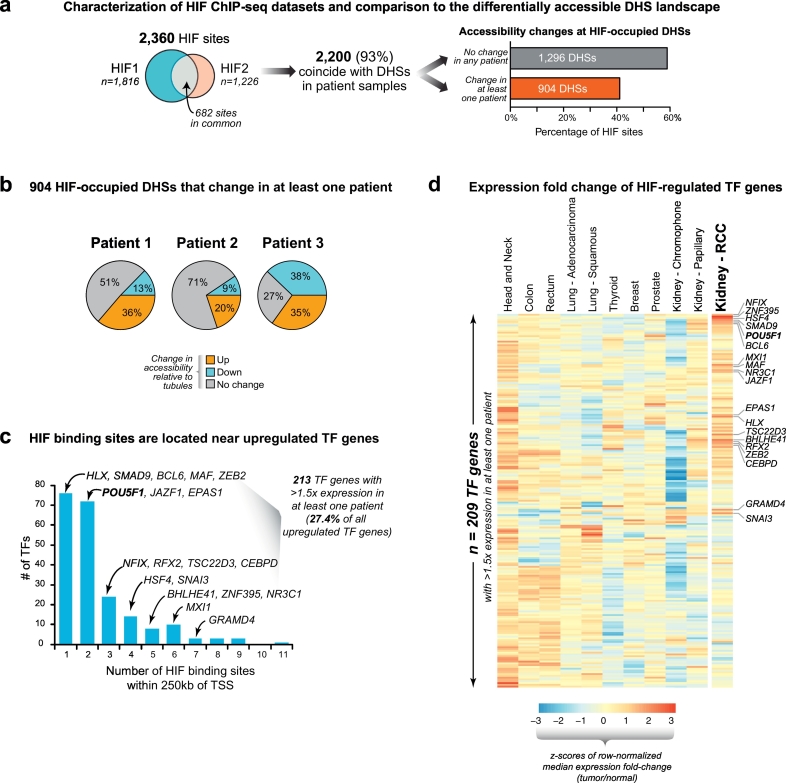
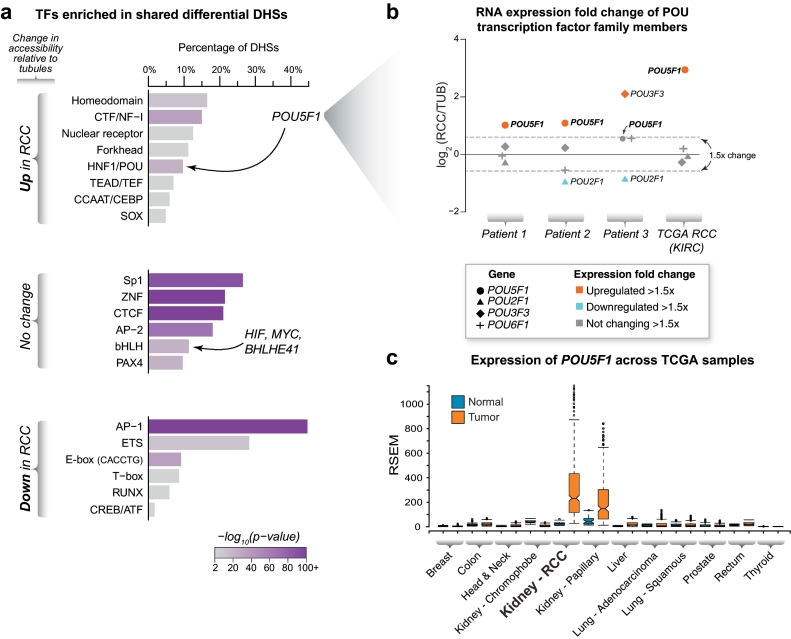
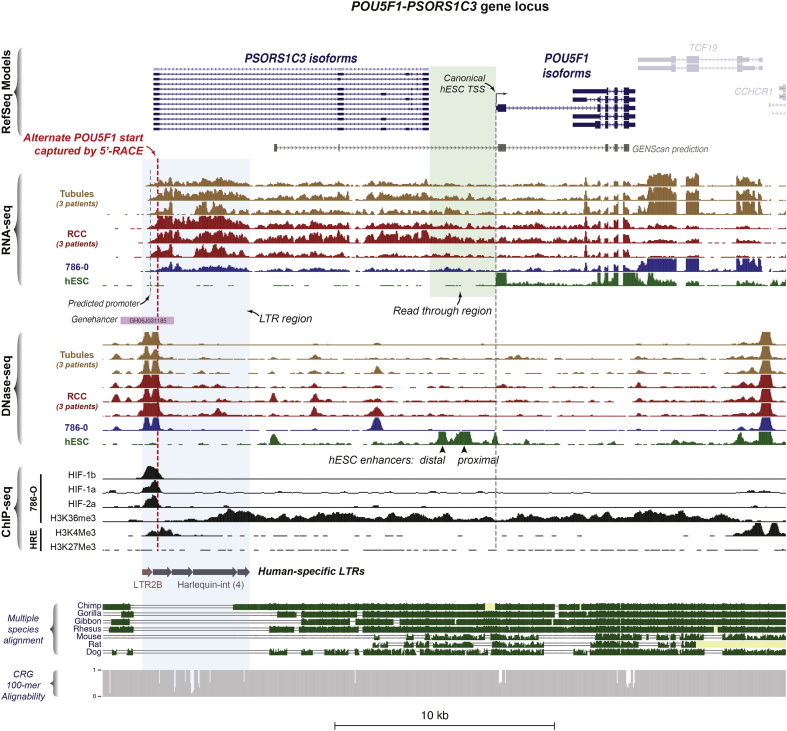
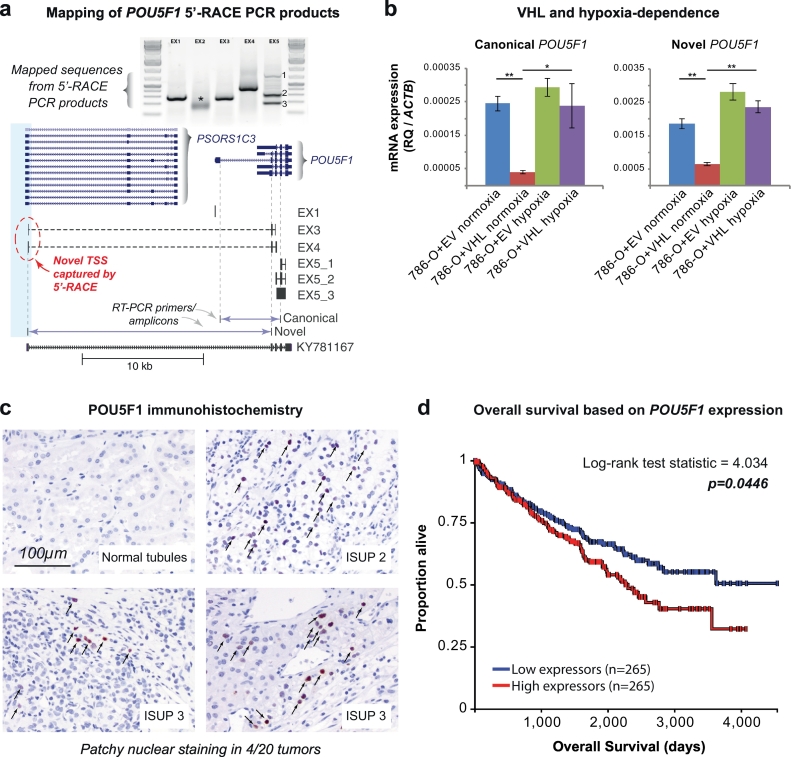
Though HIF transcription factors play a cardinal role in RCC oncogenesis, we found that numerous transcription factors with a RCC-selective expression pattern also demonstrated evidence of HIF binding near their gene body. Examination of chromatin accessibility profiles revealed that some of these transcription factors influenced the tumor's regulatory landscape, notably the stem cell transcription factor POU5F1 (OCT4). Elevated POU5F1 transcript levels were correlated with advanced tumor stage and poorer overall survival in RCC patients. Unexpectedly, we discovered a HIF-pathway-responsive promoter embedded within a endogenous retroviral long terminal repeat (LTR) element at the transcriptional start site of the PSOR1C3 long non-coding RNA gene upstream of POU5F1. RNA transcripts are induced from this promoter and read through PSOR1C3 into POU5F1 producing a novel POU5F1 transcript isoform. Rather than being unique to the POU5F1 locus, we found that HIF binds to several other transcriptionally active LTR elements genome-wide correlating with broad gene expression changes in RCC.
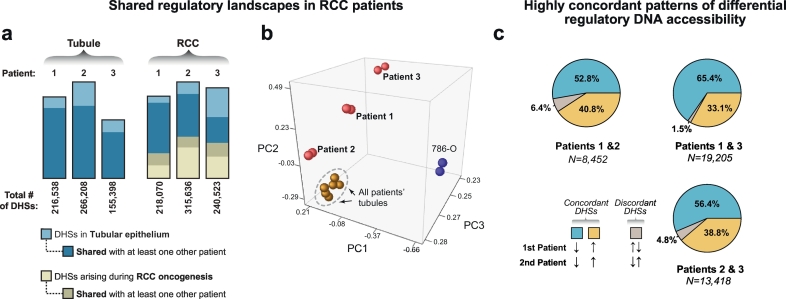
Integrated transcriptomic and epigenomic analysis of matched tumor and normal tissues from even a small number of primary patient samples revealed remarkably convergent shared regulatory landscapes. Several transcription factors appear to act downstream of HIF including the potent stem cell transcription factor POU5F1. Dysregulated expression of POU5F1 is part of a larger pattern of gene expression changes in RCC that may be induced by HIF-dependent reactivation of dormant promoters embedded within endogenous retroviral LTRs.
转录失调驱动癌症的形成,但潜在机制仍知之甚少。肾细胞癌(RCC)是最常见的恶性肾肿瘤,其经典激活缺氧诱导转录因子(HIF)途径。尽管进行了深入的研究,但开发针对 RCC 的新的治疗策略仍然很困难。由于 RCC 的表观基因组相对研究较少,我们试图阐明支持肿瘤表型及其临床行为的关键机制。
我们对 3 名接受肾切除术切除 RCC 的患者的配对肿瘤/正常样本进行了全基因组染色质可及性(DNase-seq)和转录组谱分析(RNA-seq)。我们整合了在 RCC 细胞系中可用的 HIF 结合(ChIP-seq)的公共数据。我们对这些高分辨率、全基因组数据集进行了综合分析,并结合了通过癌症基因组图谱(TCGA)获得的更大的转录组数据。
尽管 HIF 转录因子在 RCC 致癌作用中起着重要作用,但我们发现许多具有 RCC 选择性表达模式的转录因子也显示出其基因体附近有 HIF 结合的证据。染色质可及性谱的检查表明,其中一些转录因子影响了肿瘤的调控景观,特别是干细胞转录因子 POU5F1(OCT4)。在 RCC 患者中,升高的 POU5F1 转录本水平与晚期肿瘤分期和较差的总体生存率相关。出乎意料的是,我们在 POU5F1 上游的 PSOR1C3 长非编码 RNA 基因的转录起始位点处发现了一个 HIF 通路反应性启动子,该启动子嵌入内源性逆转录病毒长末端重复(LTR)元件中。该启动子诱导 RNA 转录物,并通过 PSOR1C3 读入 POU5F1,产生一种新型 POU5F1 转录本异构体。我们发现,HIF 结合到基因组上的几个其他转录活性 LTR 元件,而不仅仅是 POU5F1 基因座,这与 RCC 中广泛的基因表达变化相关。
即使是来自少数原发性患者样本的肿瘤和正常组织的综合转录组学和表观基因组学分析,也揭示了惊人的趋同共享调控景观。几个转录因子似乎在 HIF 下游起作用,包括强大的干细胞转录因子 POU5F1。POU5F1 的失调表达是 RCC 中更大基因表达变化模式的一部分,可能是由内源性逆转录病毒 LTR 内休眠启动子的 HIF 依赖性重新激活引起的。