Zhou Zhijin, Hu Lixia, Sun Cuicui, Li Mingzhu, Guo Fang, Zhao Qingbai
School of Psychology, Central China Normal University, Wuhan, China.
Special Education Research and Guidance Center, Haidian Education, Beijing, China.
Front Psychol. 2019 Feb 7;10:207. doi: 10.3389/fpsyg.2019.00207. eCollection 2019.
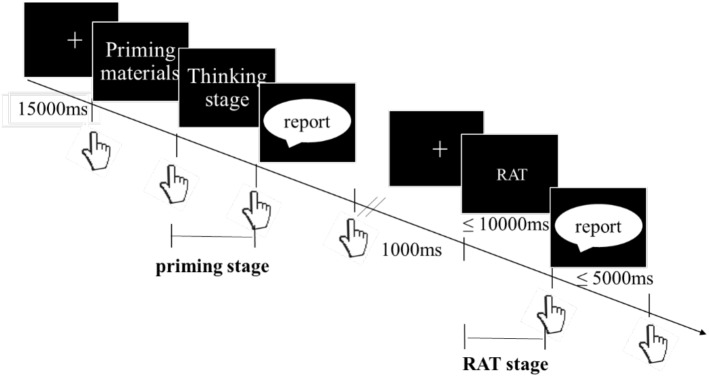
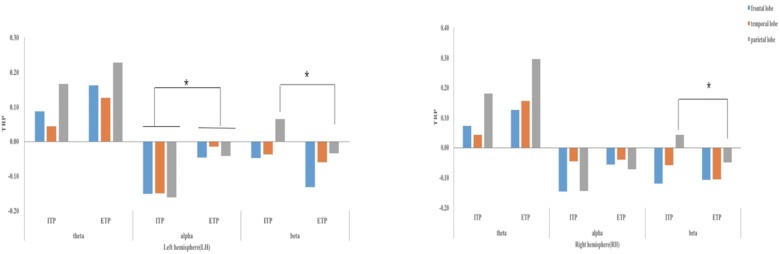
The Doctrine of the Mean (zhongyong) introduced by Confucianism is not only an aspect of faith, but also a way of thinking for Chinese individuals. Zhongyong includes two thinking forms: eclectic thinking (ET; i.e., "neither-A-nor-B") and integrated thinking (IT; i.e., "both-A-and-B"). Given the inclination of Asian individuals toward situational cognition, this study used questions about situations familiar to Chinese undergraduates to activate either ET or IT. This was done to investigate the effects of the two divergent thinking forms of zhongyong on performance levels on the Remote Associates Test (RAT). Both behavioral and EEG results found that participants in the IT condition demonstrated higher RAT scores than those in the ET condition. The conclusion was that the RAT and priming tasks shared the same neural mechanism. This meant that the priming tasks of IT allowed participants to enter a state of creative preparation in advance, further affecting resolution of the RAT.
儒家提出的中庸之道不仅是一种信仰层面的内容,也是中国个体的一种思维方式。中庸包括两种思维形式:折衷思维(ET;即“非A非B”)和整合思维(IT;即“亦A亦B”)。鉴于亚洲个体倾向于情境认知,本研究使用了中国大学生熟悉的情境问题来激活ET或IT。这样做是为了研究中庸的两种不同思维形式对远距离联想测验(RAT)成绩水平的影响。行为和脑电图结果均发现,处于IT条件下的参与者在RAT上的得分高于处于ET条件下的参与者。结论是RAT和启动任务共享相同的神经机制。这意味着IT的启动任务使参与者提前进入创造性准备状态,进而影响RAT的解决。