Facultad de Veterinaria y Ciencias Experimentales, Universidad Católica de Valencia San Vicente Mártir, Valencia, Spain.
NOBIPOL, Department of Biotechnology and Food Science NTNU Norwegian University of Science and Technology, Trondheim, Norway.
PLoS One. 2019 Mar 7;14(3):e0212819. doi: 10.1371/journal.pone.0212819. eCollection 2019.
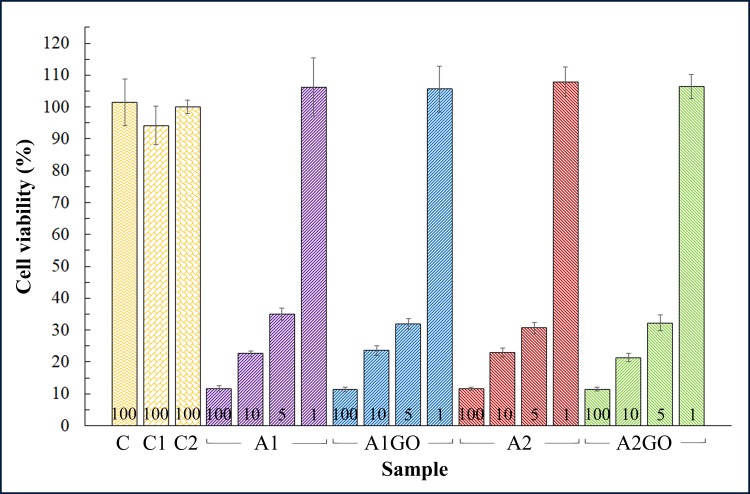
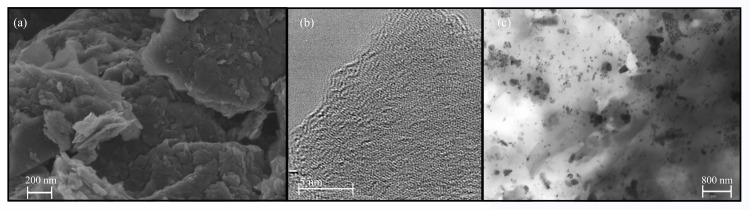
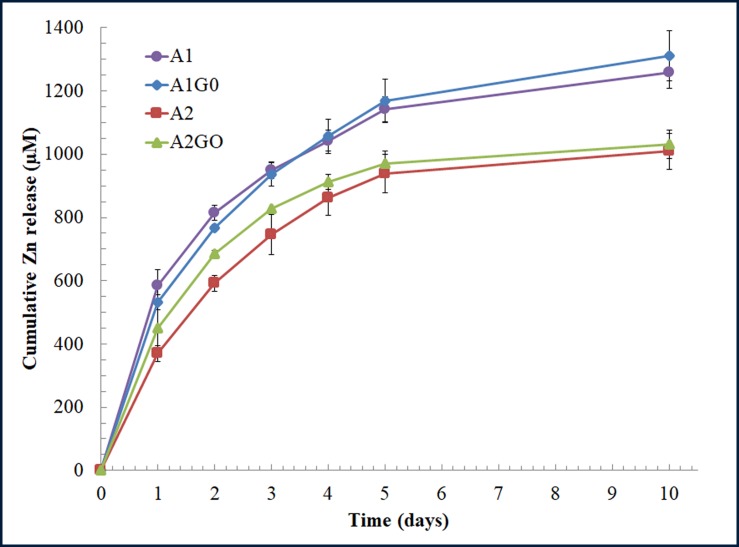
Alginate is considered an exceptional biomaterial due to its hydrophilicity, biocompatibility, biodegradability, nontoxicity and low-cost in comparison with other biopolymers. We have recently demonstrated that the incorporation of 1% graphene oxide (GO) into alginate films crosslinked with Ca2+ cations provides antibacterial activity against Staphylococcus aureus and methicillin-resistant Staphylococcus epidermidis, and no cytotoxicity for human keratinocyte HaCaT cells. However, many other reports in literature have shown controversial results about the toxicity of GO demanding further investigation. Furthermore, the synergic effect of GO with other divalent cations with intrinsic antibacterial and cytotoxic activity such as Zn2+ has not been explored yet. Thus, here, two commercially available sodium alginates were characterised and utilized in the synthesis of zinc alginate films with GO following the same chemical route reported for the calcium alginate/GO composites. The results of this study showed that zinc release, water sorption/diffusion and wettability depended significantly on the type of alginate utilized. Furthermore, Zn2+ and GO produced alginate films with increased water diffusion, wettability and opacity. However, neither the combination of GO with Zn2+ nor the use of different types of sodium alginates modified the antibacterial activity and cytotoxicity of the zinc alginates against these Gram-positive pathogens and human cells respectively.
藻酸盐由于其亲水性、生物相容性、可生物降解性、低毒性和低成本,与其他生物聚合物相比被认为是一种特殊的生物材料。我们最近证明,将 1%的氧化石墨烯(GO)掺入用 Ca2+阳离子交联的藻酸盐薄膜中,对金黄色葡萄球菌和耐甲氧西林表皮葡萄球菌具有抗菌活性,并且对人角质形成细胞 HaCaT 细胞没有细胞毒性。然而,文献中的许多其他报道表明,GO 的毒性存在争议,需要进一步研究。此外,GO 与其他具有内在抗菌和细胞毒性的二价阳离子(如 Zn2+)的协同作用尚未得到探索。因此,在这里,我们对两种市售的海藻酸钠进行了表征,并按照与钙藻酸盐/GO 复合材料相同的化学路线,在 GO 的存在下合成了锌藻酸盐薄膜。本研究结果表明,藻酸盐的类型对锌的释放、水吸附/扩散和润湿性有显著影响。此外,Zn2+和 GO 生成的藻酸盐薄膜具有更高的水扩散性、润湿性和不透明度。然而,GO 与 Zn2+的组合以及不同类型的海藻酸钠的使用都没有改变锌藻酸盐对这些革兰氏阳性病原体和人细胞的抗菌活性和细胞毒性。