Department of Psychology, University of Illinois Urbana-Champaign, Champaign, Illinois, United States of America.
PLoS One. 2019 Mar 7;14(3):e0213276. doi: 10.1371/journal.pone.0213276. eCollection 2019.
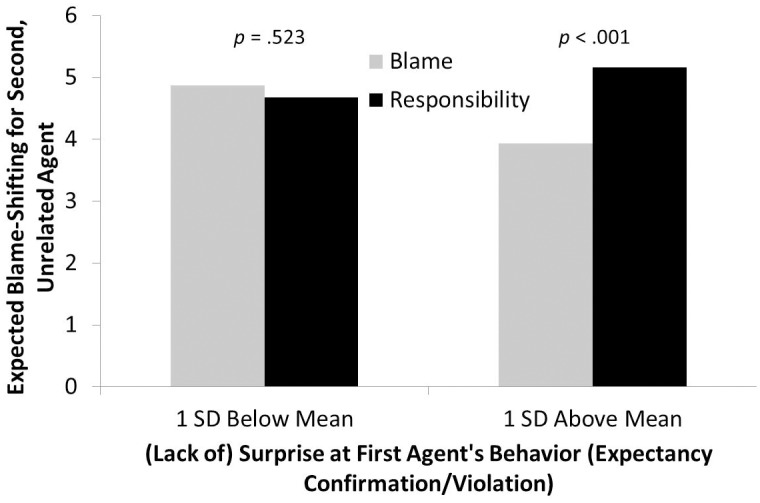
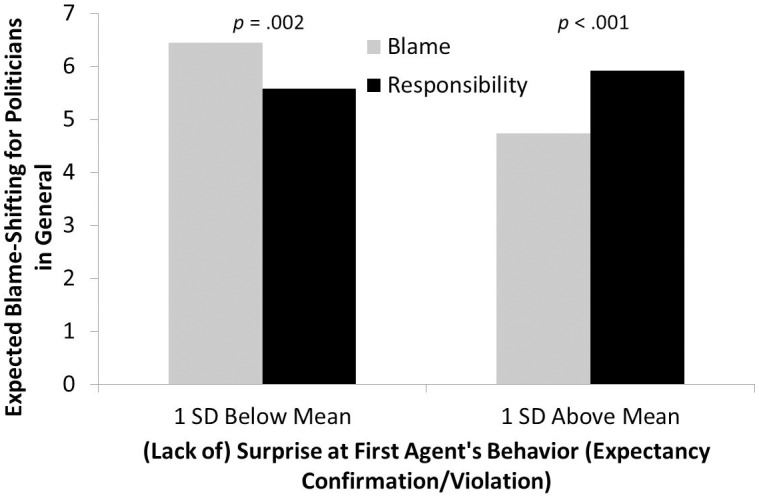
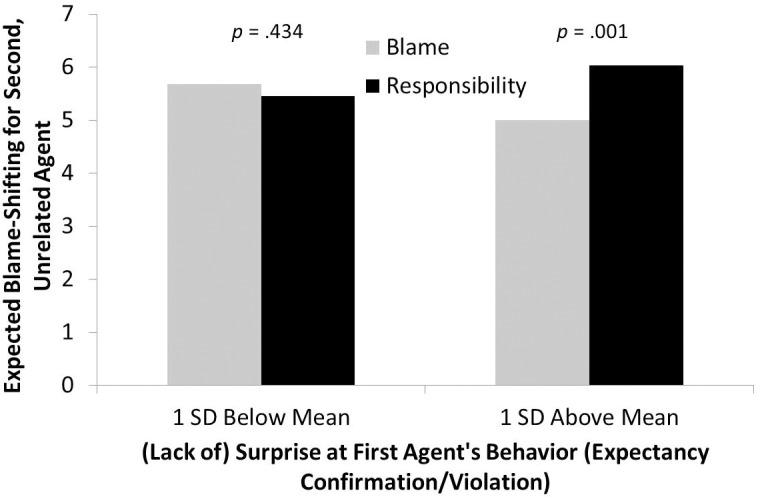
A wealth of research has investigated how and why people cast blame. However, less is known about blame-shifting (i.e., blaming someone else for one's own failures) and how exposure to a blame-shifting agent might lead to expectations that other agents will also shift blame. The present research tested whether exposure to a blame-shifting (versus responsibility-taking) agent would lead perceivers to expect a second, unrelated target to also shift blame. Contrary to our expectations, people expected greater blame-shifting after exposure to a responsible agent, particularly when perceivers were surprised by this reaction to failure. Discussion focuses on how people habitually expect some people to shift blame for their mishaps, and how expectancy violations when people act in unexpected ways predict the extent to which perceivers expect unrelated agents to also shift blame.
大量研究调查了人们如何以及为何指责他人。然而,对于指责转移(即,将自己的失败归咎于他人)以及接触指责转移者如何导致人们期望其他转移者也会指责他人知之甚少。本研究测试了接触指责转移者(而非承担责任者)是否会导致观察者期望第二个不相关的目标也会指责他人。与我们的预期相反,当观察者对失败的这种反应感到惊讶时,人们在接触到有责任感的人后,反而会期望更多的指责转移,尤其是在接触到有责任感的人之后。讨论的重点是人们如何习惯性地期望某些人会为自己的不幸承担责任,以及当人们以出人意料的方式行事时,违反期望如何预测观察者期望不相关的人也会指责他人的程度。