Li Qionghou, Qiao Xin, Yin Hao, Zhou Yuhang, Dong Huizhen, Qi Kaijie, Li Leiting, Zhang Shaoling
State Key Laboratory of Crop Genetics and Germplasm Enhancement, Centre of Pear Engineering Technology Research, Nanjing Agricultural University, 210095 Nanjing, China.
Hortic Res. 2019 Mar 1;6:34. doi: 10.1038/s41438-018-0110-6. eCollection 2019.
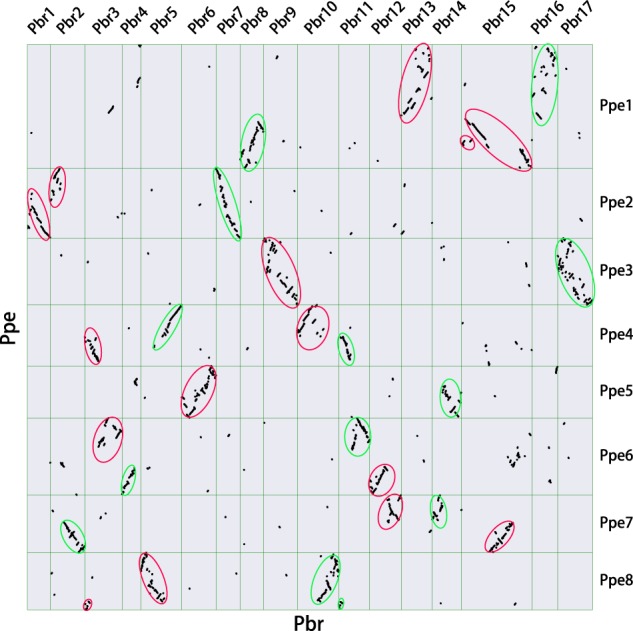
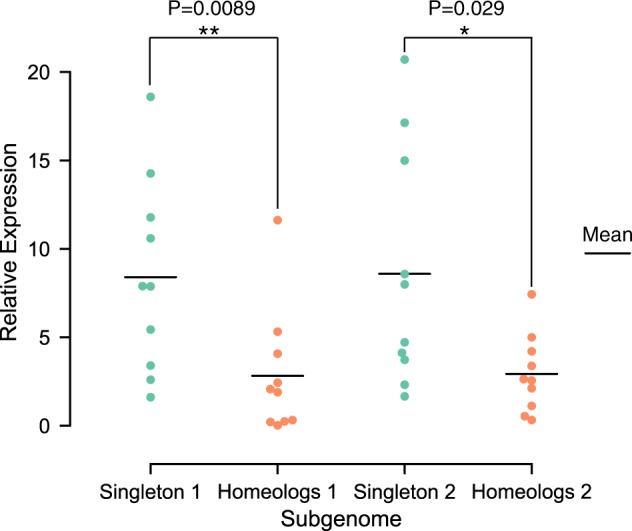
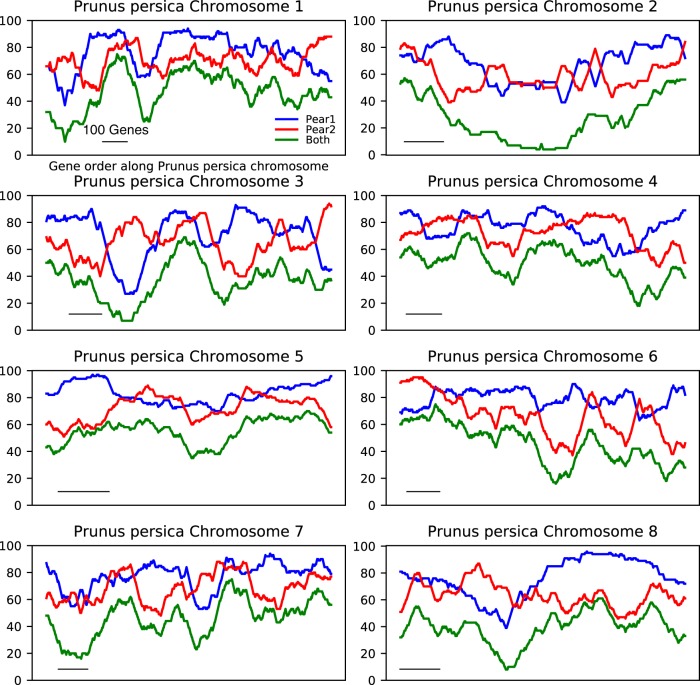
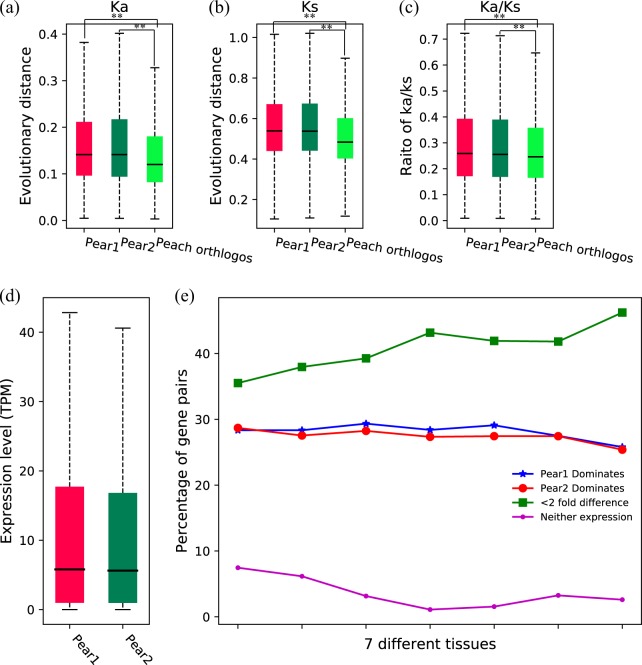
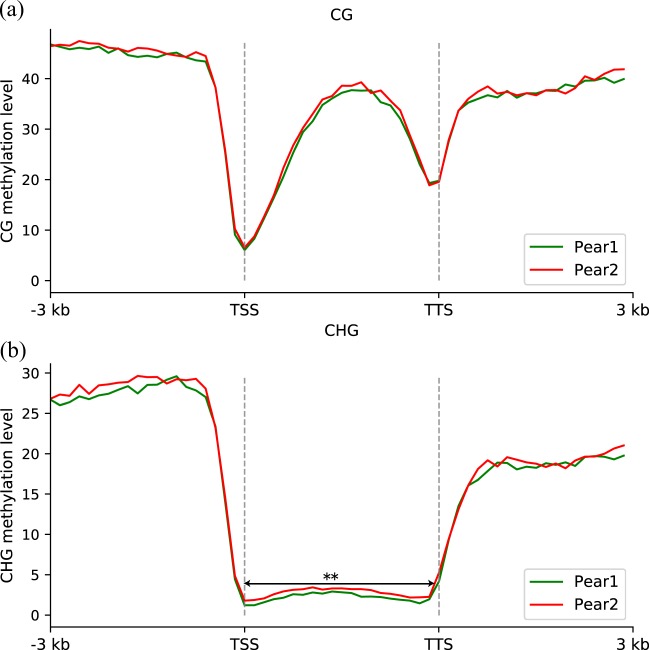
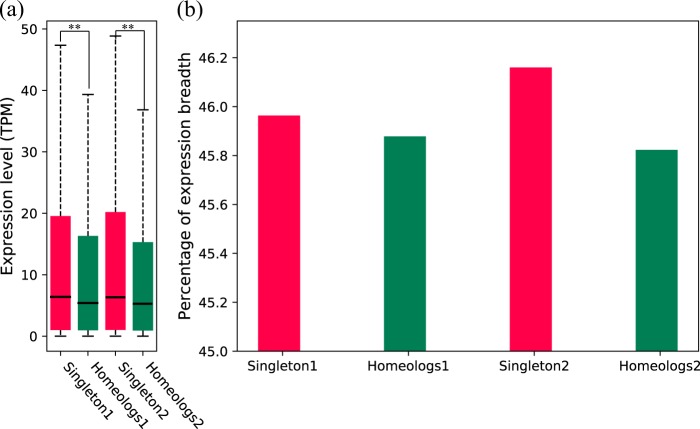
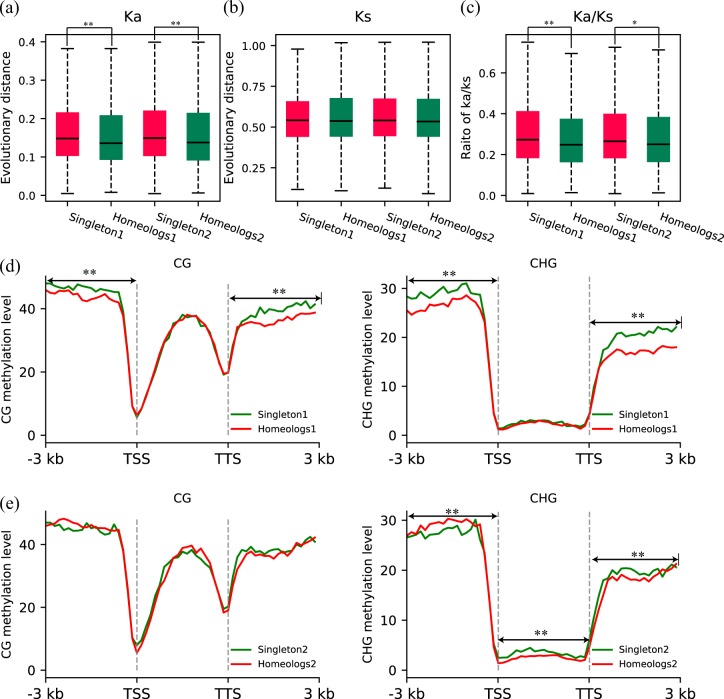
Genome fractionation (also known as diploidization) frequently occurs following paleopolyploidization events. Biased fractionation between subgenomes has been found in some paleo-allopolyploids, while this phenomenon is absent in paleo-autopolyploids. Pear ( Rehd.) experienced a recent whole-genome duplication (WGD, ~30 million years ago); however, the evolutionary fate of the two subgenomes derived from this WGD event is not clear. In this study, we identified the two paleo-subgenomes in pear using peach () as an outgroup and investigated differences in the gene loss rate, evolutionary rate, gene expression level, and DNA methylation level between these two subgenomes. Fractionation bias was not found between the two pear subgenomes, which evolved at similar evolutionary rates. The DNA methylation level of the two subgenomes showed little bias, and we found no expression dominance between the subgenomes. However, we found that singleton genes and homeologous genes within each subgenome showed divergent evolutionary patterns of selective constraints, expression and epigenetic modification. These results provide insights into subgenome evolution following paleopolyploidization in pear.
基因组分离(也称为二倍体化)在古多倍体化事件之后经常发生。在一些古异源多倍体中发现了亚基因组之间的偏向性分离,而在古同源多倍体中则不存在这种现象。梨(Pyrus bretschneideri Rehd.)经历了一次近期的全基因组复制(WGD,约3000万年前);然而,源自该WGD事件的两个亚基因组的进化命运尚不清楚。在本研究中,我们以桃(Prunus persica)作为外类群鉴定了梨中的两个古亚基因组,并研究了这两个亚基因组之间在基因丢失率、进化速率、基因表达水平和DNA甲基化水平上的差异。在两个梨亚基因组之间未发现分离偏向性,它们以相似的进化速率进化。两个亚基因组的DNA甲基化水平几乎没有偏向性,并且我们在亚基因组之间未发现表达优势。然而,我们发现每个亚基因组内的单拷贝基因和同源基因表现出不同的选择约束、表达和表观遗传修饰的进化模式。这些结果为梨古多倍体化后亚基因组的进化提供了见解。