Lipson-Smith Ruby, White Fiona, White Alan, Serong Lesley, Cooper Guy, Price-Bell Georgia, Hyatt Amelia
Cancer Experiences Research, Peter MacCallum Cancer Centre, Melbourne, Victoria, Australia.
Wave Digital, Melbourne, Victoria, Australia.
JMIR Form Res. 2019 Mar 12;3(1):e11111. doi: 10.2196/11111.
Many patients choose to audio-record their medical consultations so that they can relisten to them at home and share them with family. Consultation audio-recordings can improve patients' recall and understanding of medical information and increase their involvement in decision making. A hospital-endorsed consultation audio-recording mobile app would provide patients with the permission and means to audio-record their consultations. The Theory of Planned Behavior provides a framework for understanding how patients can be encouraged to appropriately audio-record consultations.
The aim of this study was to use a co-design process to develop a consultation audio-recording mobile app called SecondEars.
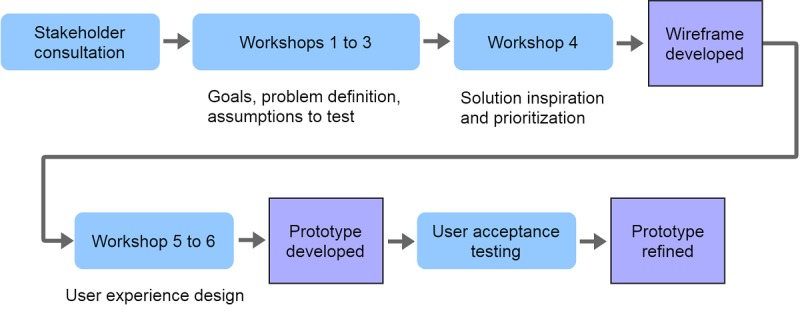
App development began with stakeholder engagement, followed by a series of 6 co-design workshops and then user acceptance testing. Stakeholder engagement included advice from legal, information technology (IT), clinical and allied health leads; digital strategy; and medical records. he co-design workshops were attended by: patient consumers, members of the research team, IT staff, the app designers, clinicians, and staff from medical records. During workshops 1 to 4, the purpose and scope of the app were refined, possible pitfalls were addressed, and design features were discussed. The app designers then incorporated the results from these workshops to produce a wireframe mock-up of the proposed SecondEars app, which was presented for feedback at workshops 5 and 6.
The stakeholders identified 6 requirements for the app, including that it be patient driven, secure, clear in terms of legal responsibilities, linked to the patient's medical record, and that it should require minimal upfront and ongoing resources. These requirements informed the scope of the co-design workshops. The workshops were attended by between 4 and 13 people. The workshop attendees developed a list of required features and suggestions for user interface design. The app developers used these requirements and recommendations to develop a prototype of the SecondEars app in iOS, which was then refined through user acceptance testing.
The SecondEars app allows patients to have control and autonomy over audio-recording and sharing their consultations while maintaining privacy and safety for medical information and legal protection for clinicians. The app has been designed to have low upkeep and minimal impact on clinical processes. The SecondEars prototype is currently being tested with patients in a clinical setting.
许多患者选择对他们的医疗会诊进行录音,以便在家中可以再次收听并与家人分享。会诊录音可以提高患者对医疗信息的回忆和理解,并增加他们在决策中的参与度。一款医院认可的会诊录音移动应用程序将为患者提供对会诊进行录音的许可和方式。计划行为理论提供了一个框架,用于理解如何鼓励患者适当地对会诊进行录音。
本研究的目的是使用共同设计流程来开发一款名为SecondEars的会诊录音移动应用程序。
应用程序开发始于利益相关者参与,随后是一系列6次共同设计研讨会,然后是用户接受度测试。利益相关者参与包括来自法律、信息技术(IT)、临床和联合健康领域负责人的建议;数字战略;以及医疗记录方面的建议。共同设计研讨会的参与者包括:患者消费者、研究团队成员、IT人员、应用程序设计师、临床医生以及医疗记录部门的工作人员。在第1至4次研讨会期间,应用程序的目的和范围得到了完善,解决了可能出现的问题,并讨论了设计功能。然后,应用程序设计师将这些研讨会的结果纳入其中,制作了拟议的SecondEars应用程序的线框图模型,并在第5和第6次研讨会上展示以获取反馈。
利益相关者确定了该应用程序的6项要求,包括它应由患者驱动、安全、在法律责任方面清晰、与患者的医疗记录相关联,并且它应该需要最少的前期和持续资源。这些要求为共同设计研讨会的范围提供了依据。每次研讨会有4至13人参加。研讨会参与者制定了所需功能列表和用户界面设计建议。应用程序开发人员利用这些要求和建议开发了适用于iOS的SecondEars应用程序原型,然后通过用户接受度测试对其进行了完善。
SecondEars应用程序允许患者在对会诊进行录音和分享方面拥有控制权和自主权,同时保持医疗信息的隐私和安全以及对临床医生的法律保护。该应用程序设计为维护成本低且对临床流程影响最小。SecondEars原型目前正在临床环境中与患者进行测试。