Department of Evolutionary Neuroethology, Max Planck Institute for Chemical Ecology, Hans-Knoell-Str. 8, 07745, Jena, Germany.
Nat Commun. 2019 Mar 13;10(1):1201. doi: 10.1038/s41467-019-09069-1.
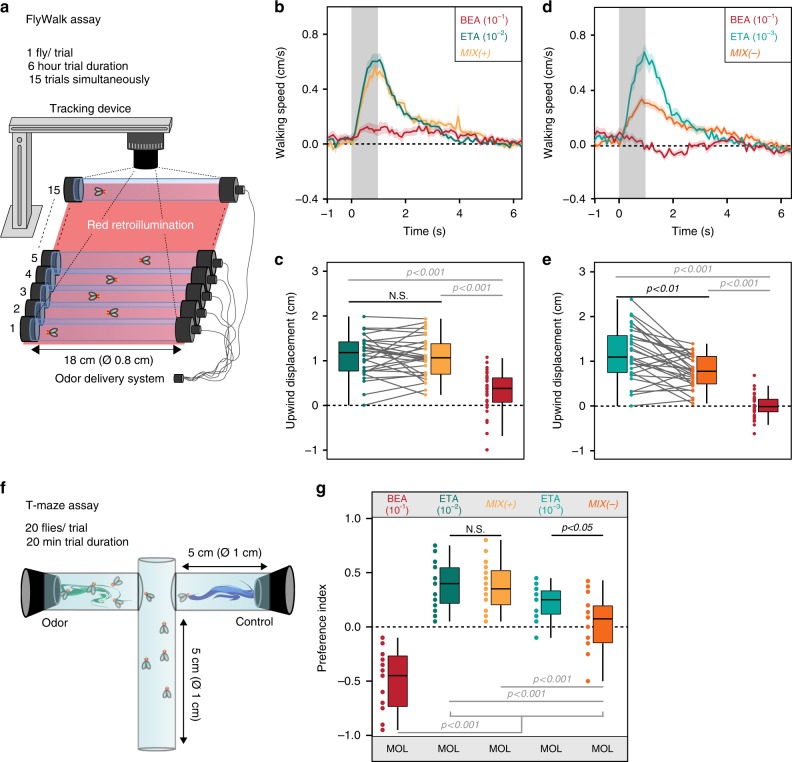
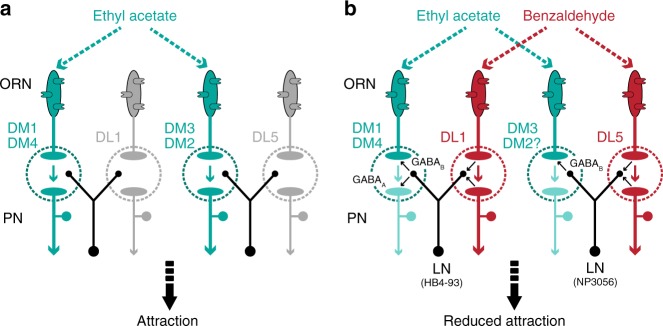
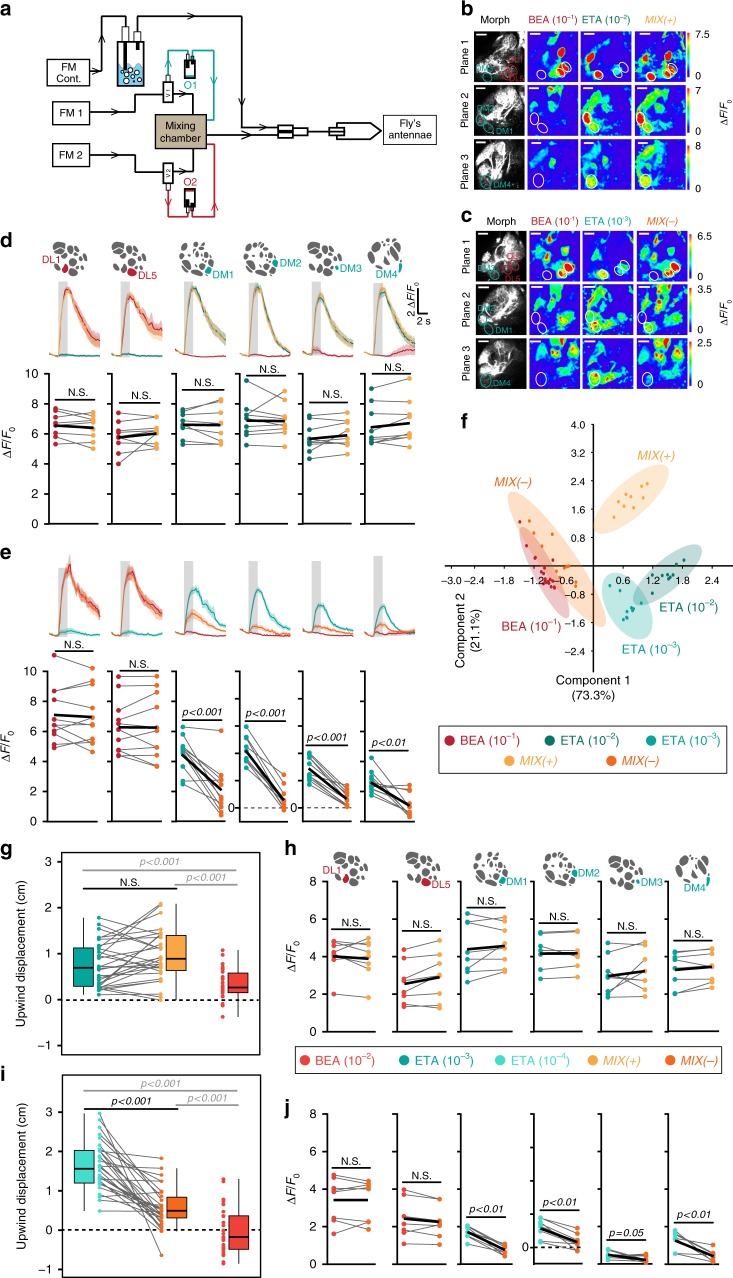
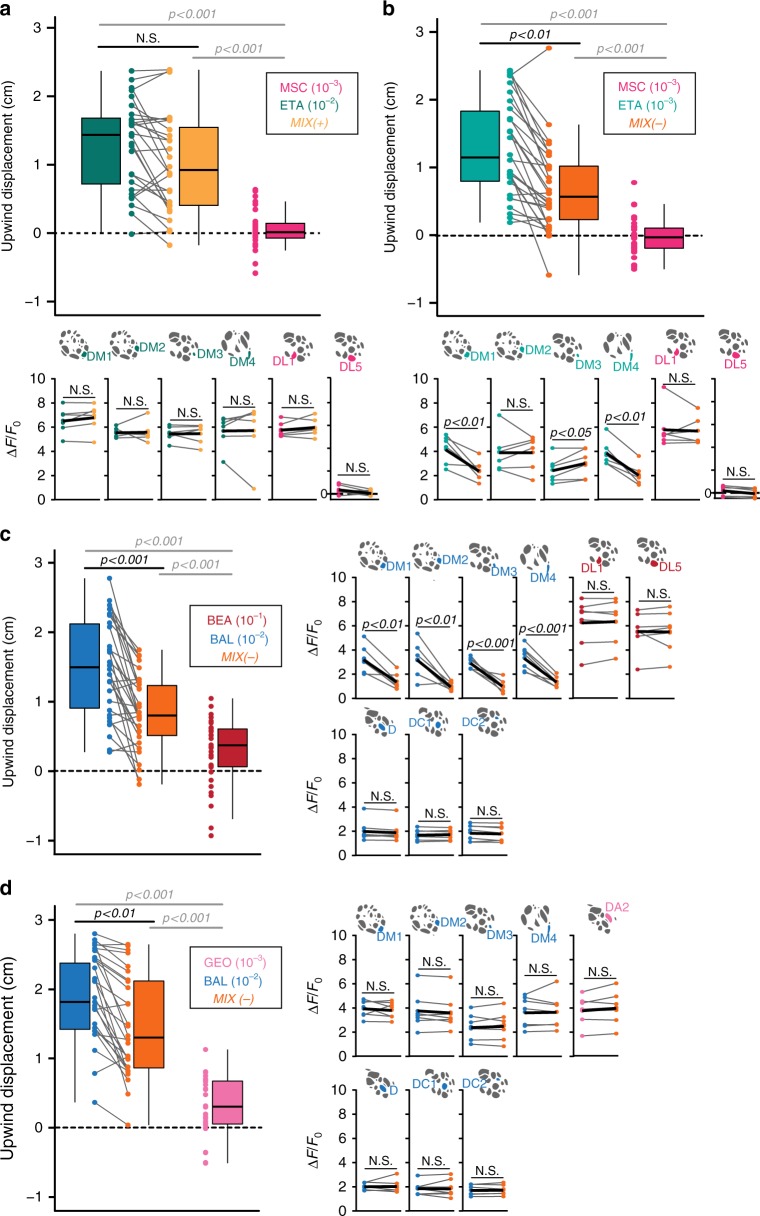
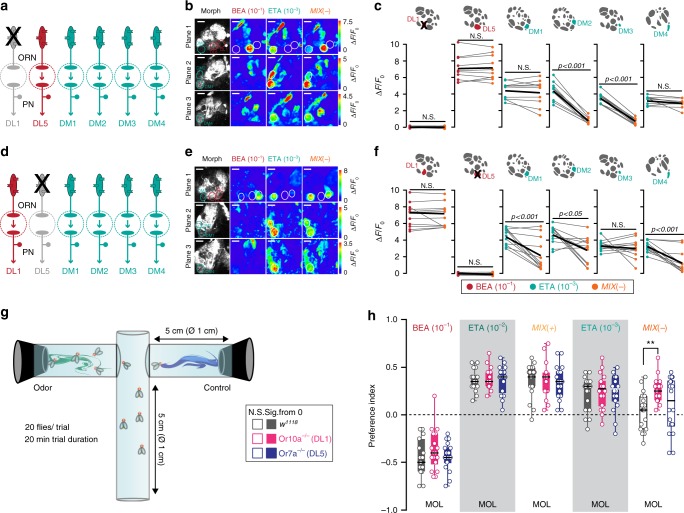
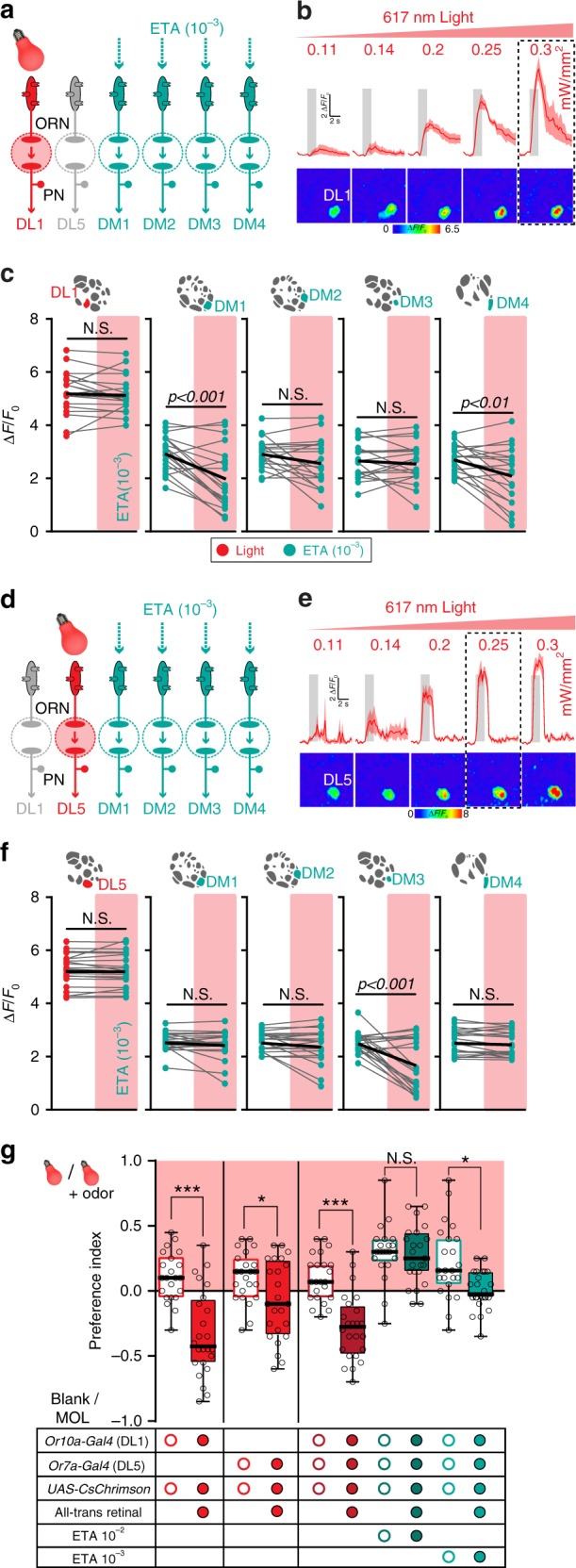
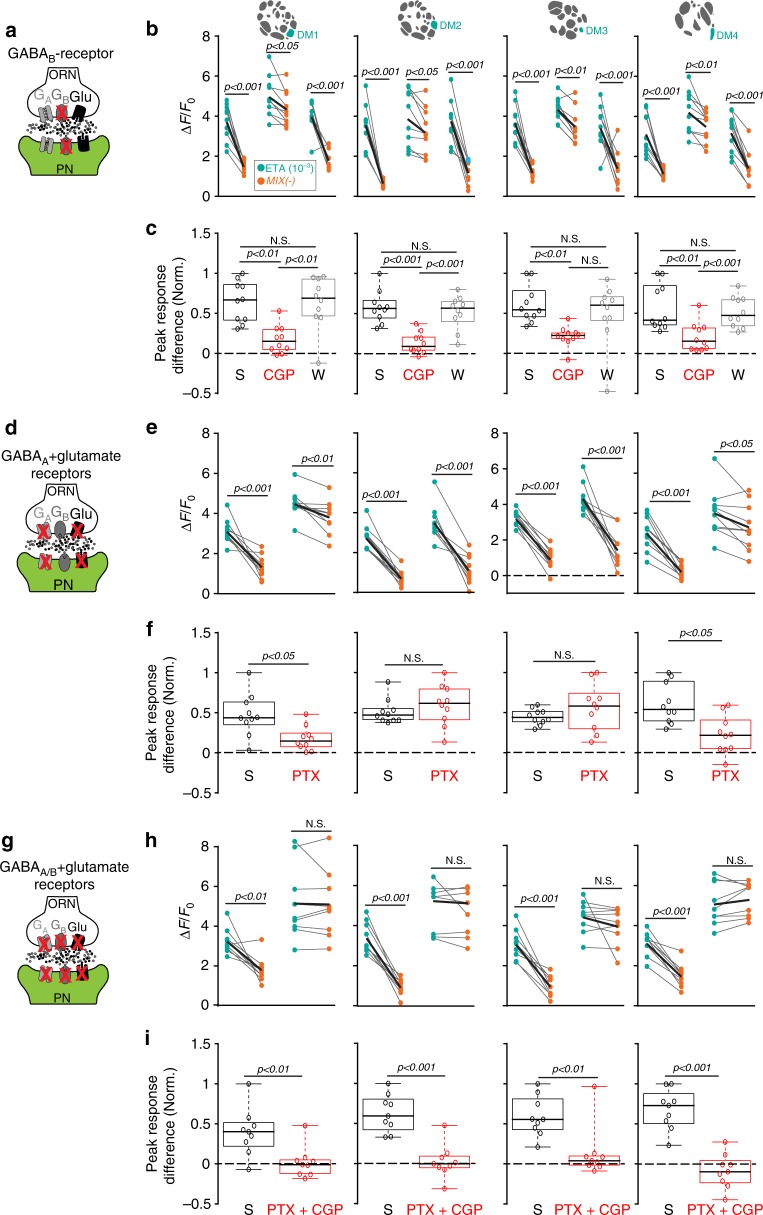
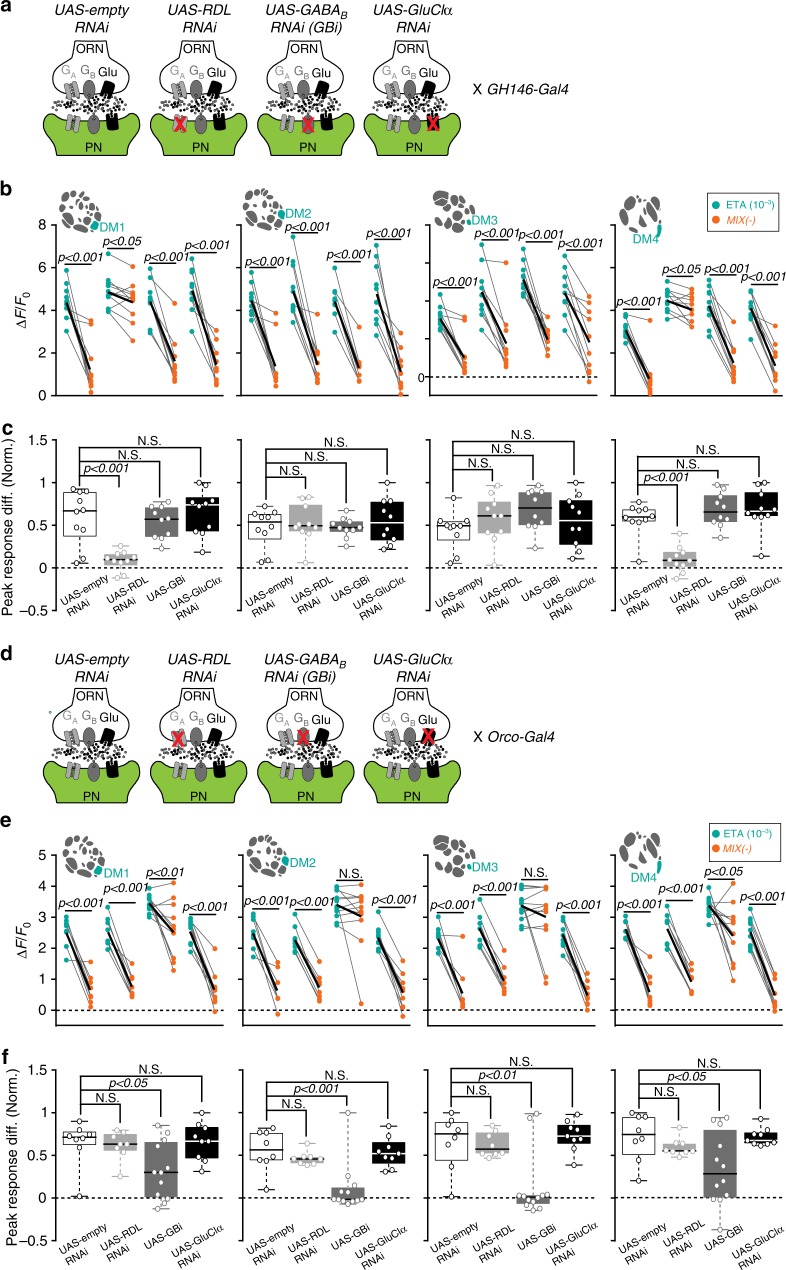
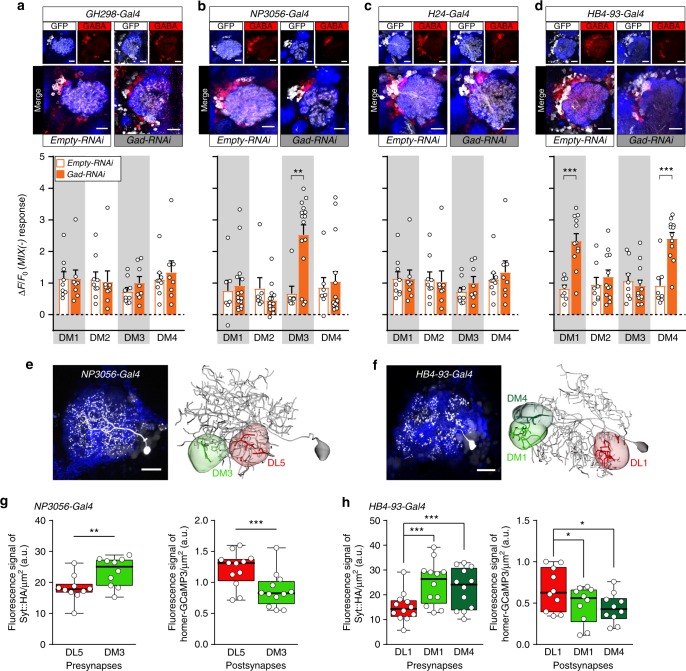
Evaluating odor blends in sensory processing is a crucial step for signal recognition and execution of behavioral decisions. Using behavioral assays and 2-photon imaging, we have characterized the neural and behavioral correlates of mixture perception in the olfactory system of Drosophila. Mixtures of odors with opposing valences elicit strong inhibition in certain attractant-responsive input channels. This inhibition correlates with reduced behavioral attraction. We demonstrate that defined subsets of GABAergic interneurons provide the neuronal substrate of this computation at pre- and postsynaptic loci via GABA- and GABA receptors, respectively. Intriguingly, manipulation of single input channels by silencing and optogenetic activation unveils a glomerulus-specific crosstalk between the attractant- and repellent-responsive circuits. This inhibitory interaction biases the behavioral output. Such a form of selective lateral inhibition represents a crucial neuronal mechanism in the processing of conflicting sensory information.
评估感觉加工中的气味混合物是识别信号和执行行为决策的关键步骤。使用行为测定和双光子成像,我们已经描述了果蝇嗅觉系统中混合物感知的神经和行为相关性。具有相反效价的气味混合物在某些吸引剂反应输入通道中引起强烈的抑制。这种抑制与行为吸引力的降低相关。我们证明,通过 GABA 和 GABA 受体,分别在突触前和突触后位置,特定的 GABA 能中间神经元亚群为这种计算提供了神经元基质。有趣的是,通过沉默和光遗传学激活单个输入通道的操作揭示了吸引剂和排斥剂反应回路之间的一个特定神经节特异性串扰。这种抑制性相互作用会影响行为输出。这种选择性的侧抑制形式是处理冲突感觉信息的关键神经元机制。