• 文献检索
  • 文档翻译
  • 深度研究
  • 学术资讯
  • Suppr Zotero 插件Zotero 插件
  • 邀请有礼
  • 套餐&价格
  • 历史记录
应用&插件
Suppr Zotero 插件Zotero 插件浏览器插件Mac 客户端Windows 客户端微信小程序
定价
高级版会员购买积分包购买API积分包
服务
文献检索文档翻译深度研究API 文档MCP 服务
关于我们
关于 Suppr公司介绍联系我们用户协议隐私条款
关注我们

Suppr 超能文献

核心技术专利:CN118964589B侵权必究
粤ICP备2023148730 号-1Suppr @ 2026

文献检索

告别复杂PubMed语法,用中文像聊天一样搜索,搜遍4000万医学文献。AI智能推荐,让科研检索更轻松。

立即免费搜索

文件翻译

保留排版,准确专业,支持PDF/Word/PPT等文件格式,支持 12+语言互译。

免费翻译文档

深度研究

AI帮你快速写综述,25分钟生成高质量综述,智能提取关键信息,辅助科研写作。

立即免费体验

三餐饮用蛋白质与健康年轻受试者肌肉量的关系:一项横断面研究。

Association of Protein Intake in Three Meals with Muscle Mass in Healthy Young Subjects: A Cross-Sectional Study.

机构信息

Faculty of Sport and Health Science, Ritsumeikan University, 1-1-1 Nojihigashi, Kusatsu, Shiga 525-8577, Japan.

出版信息

Nutrients. 2019 Mar 13;11(3):612. doi: 10.3390/nu11030612.

DOI:10.3390/nu11030612
PMID:30871197
原文链接:https://pmc.ncbi.nlm.nih.gov/articles/PMC6471574/
Abstract

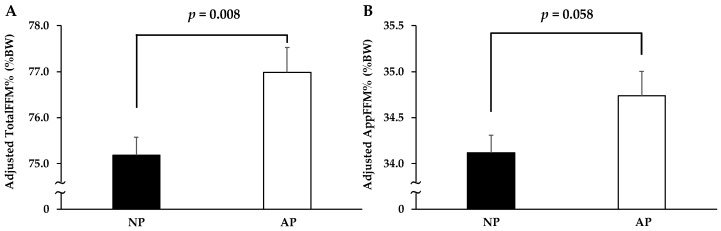
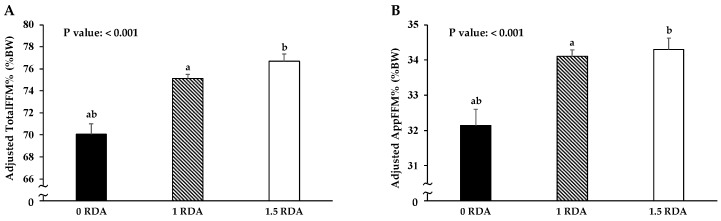
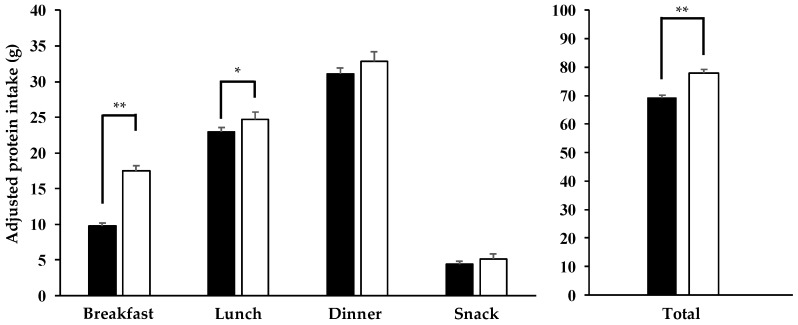
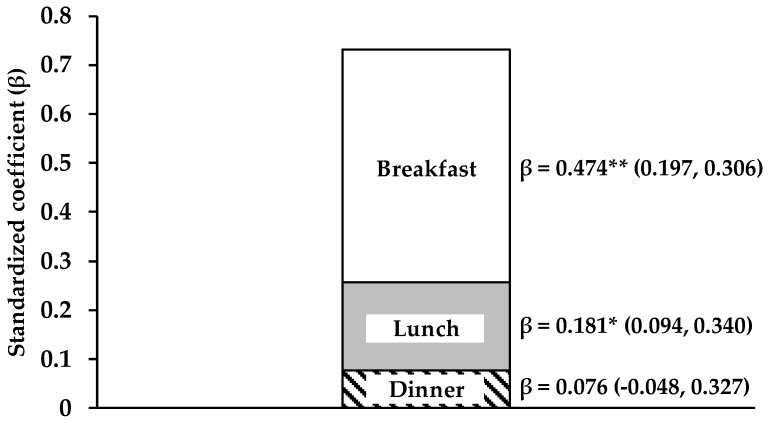
Protein intake of >0.24 g/kg of body weight (BW) at a single meal is necessary to maximize muscle protein synthesis in a young population. However, the association between the protein intake rate for three meals and muscle mass in the young population has not been evaluated. We hypothesized that a protein intake of >0.24 g/kg BW at all three meals is effective for maintaining muscle mass. Therefore, we cross-sectionally examined the association between protein intake at all three meals with muscle mass in 266 healthy young subjects (aged 21.4 ± 2.4 years). Subjects were divided into the AP group, which achieved protein intake >0.24 g/kg BW at all three meals; and the NP group, which did not. We calculated total fat-free mass (FFM) and appendicular fat-free mass (AppFFM) with dual-energy X-ray absorptiometry, and the percentage of total FFM (TotalFFM%) and appendicular FFM (AppFFM%) were calculated as the percentage of BW (%BW). We demonstrated that TotalFFM% (77.0 ± 0.5 vs. 75.2 ± 0.4%, = 0.008) and AppFFM% (34.7 ± 0.3 vs. 34.1 ± 0.2%, = 0.058) were higher in the AP than in the NP group. This finding suggests that achieving protein intake of >0.24 g/kg BW at all three meals is important for muscle mass maintenance in young populations.

摘要

在年轻人中,每餐摄入>0.24 克/公斤体重的蛋白质是最大限度促进肌肉蛋白质合成所必需的。然而,三餐的蛋白质摄入量与年轻人肌肉量之间的关系尚未得到评估。我们假设三餐的蛋白质摄入量>0.24 克/公斤 BW 对维持肌肉量是有效的。因此,我们在 266 名健康年轻受试者(年龄 21.4 ± 2.4 岁)中进行了横断面研究,调查了三餐蛋白质摄入量与肌肉量之间的关系。受试者分为 AP 组,即三餐均达到>0.24 克/公斤 BW 的蛋白质摄入量;NP 组,即没有达到。我们使用双能 X 射线吸收法计算总去脂体重(FFM)和四肢去脂体重(AppFFM),并计算总 FFM(TotalFFM%)和四肢 FFM(AppFFM%)的百分比,作为体重的百分比(%BW)。我们表明,AP 组的 TotalFFM%(77.0 ± 0.5 比 75.2 ± 0.4%, = 0.008)和 AppFFM%(34.7 ± 0.3 比 34.1 ± 0.2%, = 0.058)均高于 NP 组。这一发现表明,在年轻人中,每餐摄入>0.24 克/公斤 BW 的蛋白质对于维持肌肉量是很重要的。
https://cdn.ncbi.nlm.nih.gov/pmc/blobs/9ff7/6471574/70c03574ff27/nutrients-11-00612-g004.jpg
https://cdn.ncbi.nlm.nih.gov/pmc/blobs/9ff7/6471574/2130f364e50a/nutrients-11-00612-g001.jpg
https://cdn.ncbi.nlm.nih.gov/pmc/blobs/9ff7/6471574/c4c78b8fa057/nutrients-11-00612-g002.jpg
https://cdn.ncbi.nlm.nih.gov/pmc/blobs/9ff7/6471574/5111596a3c49/nutrients-11-00612-g003.jpg
https://cdn.ncbi.nlm.nih.gov/pmc/blobs/9ff7/6471574/70c03574ff27/nutrients-11-00612-g004.jpg
https://cdn.ncbi.nlm.nih.gov/pmc/blobs/9ff7/6471574/2130f364e50a/nutrients-11-00612-g001.jpg
https://cdn.ncbi.nlm.nih.gov/pmc/blobs/9ff7/6471574/c4c78b8fa057/nutrients-11-00612-g002.jpg
https://cdn.ncbi.nlm.nih.gov/pmc/blobs/9ff7/6471574/5111596a3c49/nutrients-11-00612-g003.jpg
https://cdn.ncbi.nlm.nih.gov/pmc/blobs/9ff7/6471574/70c03574ff27/nutrients-11-00612-g004.jpg

相似文献

1
Association of Protein Intake in Three Meals with Muscle Mass in Healthy Young Subjects: A Cross-Sectional Study.三餐饮用蛋白质与健康年轻受试者肌肉量的关系:一项横断面研究。
Nutrients. 2019 Mar 13;11(3):612. doi: 10.3390/nu11030612.
2
Skipping breakfast is associated with lower fat-free mass in healthy young subjects: a cross-sectional study.不吃早餐与健康年轻受试者的去脂体重较低有关:一项横断面研究。
Nutr Res. 2018 Dec;60:26-32. doi: 10.1016/j.nutres.2018.09.006. Epub 2018 Sep 19.
3
Distribution of daily protein intake and appendicular skeletal muscle mass in healthy free-living Chinese older adults.健康的中国老年人日常蛋白质摄入量与四肢骨骼肌质量的分布。
Eur J Nutr. 2024 Aug;63(5):1747-1757. doi: 10.1007/s00394-024-03364-4. Epub 2024 Apr 2.
4
Per meal dose and frequency of protein consumption is associated with lean mass and muscle performance.每餐蛋白质摄入量和摄入频率与瘦体重及肌肉表现相关。
Clin Nutr. 2016 Dec;35(6):1506-1511. doi: 10.1016/j.clnu.2016.04.002. Epub 2016 Apr 7.
5
Skeletal muscle mass is associated with higher dietary protein intake and lower body fat in postmenopausal women: a cross-sectional study.骨骼肌质量与绝经后女性较高的膳食蛋白质摄入量和较低的体脂有关:一项横断面研究。
Menopause. 2017 May;24(5):502-509. doi: 10.1097/GME.0000000000000793.
6
Amount, Distribution, and Quality of Protein Intake Are Not Associated with Muscle Mass, Strength, and Power in Healthy Older Adults without Functional Limitations-An enable Study.在没有功能限制的健康老年人中,蛋白质摄入量的数量、分布和质量与肌肉量、力量和力量无关——一项可行的研究。
Nutrients. 2017 Dec 14;9(12):1358. doi: 10.3390/nu9121358.
7
Exploration of the protein requirement during weight loss in obese older adults.肥胖老年人减肥过程中的蛋白质需求探索。
Clin Nutr. 2016 Apr;35(2):394-398. doi: 10.1016/j.clnu.2015.02.016. Epub 2015 Mar 6.
8
Evenly Distributed Protein Intake over 3 Meals Augments Resistance Exercise-Induced Muscle Hypertrophy in Healthy Young Men.均匀分配蛋白质摄入,分 3 餐摄入,可增强健康年轻男性抗阻运动引起的肌肉肥大。
J Nutr. 2020 Jul 1;150(7):1845-1851. doi: 10.1093/jn/nxaa101.
9
Association between meal-specific daily protein intake and lean mass in older adults: results of the cross-sectional BASE-II study.老年人特定餐次的每日蛋白质摄入量与瘦体重的关系:横断面 BASE-II 研究的结果。
Am J Clin Nutr. 2021 Sep 1;114(3):1141-1147. doi: 10.1093/ajcn/nqab144.
10
Body composition and energy intake - skeletal muscle mass is the strongest predictor of food intake in obese adolescents: The HEARTY trial.身体成分与能量摄入——骨骼肌质量是肥胖青少年食物摄入量的最强预测指标:HEARTY试验
Appl Physiol Nutr Metab. 2016 Jun;41(6):611-7. doi: 10.1139/apnm-2015-0479. Epub 2016 Feb 8.

引用本文的文献

1
Protein Intake and Protein Quality Patterns in New Zealand Vegan Diets: An Observational Analysis Using Dynamic Time Warping.新西兰纯素饮食中的蛋白质摄入量和蛋白质质量模式:一项使用动态时间规整的观察性分析
Nutrients. 2025 May 26;17(11):1806. doi: 10.3390/nu17111806.
2
Influences of muscle mass loss and exercise habits and personality traits on lower limb motor function among university students.肌肉质量损失和运动习惯及人格特质对大学生下肢运动功能的影响。
Sci Rep. 2024 May 29;14(1):12341. doi: 10.1038/s41598-024-63089-6.
3
Associations of body composition with physical activity, nutritional intake status, and chronotype among female university students in Japan.

本文引用的文献

1
Characterization and Comparison of Nutritional Intake between Preparatory and Competitive Phase of Highly Trained Athletes.高水平运动员备战期与竞赛期营养摄入的特点及比较。
Medicina (Kaunas). 2018 May 30;54(3):41. doi: 10.3390/medicina54030041.
2
Correlation of Percentage Body Fat and Muscle Mass with Anaerobic an Aerobic Performance in Collegiate Soccer Players.大学生足球运动员体脂百分比和肌肉质量与无氧及有氧运动表现的相关性
Indian J Physiol Pharmacol. 2016 Apr;60(2):137-144.
3
Current protein and amino acid intakes among Japanese people: Analysis of the 2012 National Health and Nutrition Survey.
日本女大学生的身体成分与体力活动、营养摄入状况和昼夜型的相关性。
J Physiol Anthropol. 2024 May 9;43(1):13. doi: 10.1186/s40101-024-00360-9.
4
Relationship Between Protein Intake in Each Traditional Meal and Physical Activity: Cross-sectional Study.各传统餐次的蛋白质摄入量与身体活动的关系:横断面研究。
JMIR Public Health Surveill. 2022 Jul 12;8(7):e35898. doi: 10.2196/35898.
5
Evenness of Dietary Protein Intake Is Positively Associated with Lean Mass and Strength in Healthy Women.饮食蛋白质摄入量的均匀性与健康女性的瘦体重和力量呈正相关。
Nutr Metab Insights. 2022 Jun 16;15:11786388221101829. doi: 10.1177/11786388221101829. eCollection 2022.
6
Muscle-Related Effect of Whey Protein and Vitamin D Supplementation Provided before or after Bedtime in Males Undergoing Resistance Training.乳清蛋白和维生素 D 补充剂在抗阻训练男性睡前或睡后补充对肌肉的影响。
Nutrients. 2022 May 30;14(11):2289. doi: 10.3390/nu14112289.
7
Protein Distribution and Muscle-Related Outcomes: Does the Evidence Support the Concept?蛋白质分布与肌肉相关结局:证据是否支持这一概念?
Nutrients. 2020 May 16;12(5):1441. doi: 10.3390/nu12051441.
8
Acute Effect of the Timing of Resistance Exercise and Nutrient Intake on Muscle Protein Breakdown.抗阻运动及营养摄入时机对肌肉蛋白分解的急性影响。
Nutrients. 2020 Apr 22;12(4):1177. doi: 10.3390/nu12041177.
9
Evenly Distributed Protein Intake over 3 Meals Augments Resistance Exercise-Induced Muscle Hypertrophy in Healthy Young Men.均匀分配蛋白质摄入,分 3 餐摄入,可增强健康年轻男性抗阻运动引起的肌肉肥大。
J Nutr. 2020 Jul 1;150(7):1845-1851. doi: 10.1093/jn/nxaa101.
日本人当前的蛋白质和氨基酸摄入量:2012 年全国健康和营养调查分析。
Geriatr Gerontol Int. 2018 May;18(5):723-731. doi: 10.1111/ggi.13239. Epub 2018 Jan 22.
4
Relationship between Dietary Protein or Essential Amino Acid Intake and Training-Induced Muscle Hypertrophy among Older Individuals.老年人膳食蛋白质或必需氨基酸摄入量与训练诱导的肌肉肥大之间的关系。
J Nutr Sci Vitaminol (Tokyo). 2017;63(6):379-388. doi: 10.3177/jnsv.63.379.
5
Differences in 100-m sprint performance and skeletal muscle mass between elite male and female sprinters.精英男女短跑运动员之间100米短跑成绩和骨骼肌质量的差异。
J Sports Med Phys Fitness. 2019 Feb;59(2):304-309. doi: 10.23736/S0022-4707.18.08267-1. Epub 2018 Jan 10.
6
The effects of dietary protein intake on appendicular lean mass and muscle function in elderly men: a 10-wk randomized controlled trial.膳食蛋白质摄入量对老年男性四肢瘦体重和肌肉功能的影响:一项为期10周的随机对照试验。
Am J Clin Nutr. 2017 Dec;106(6):1375-1383. doi: 10.3945/ajcn.117.160325. Epub 2017 Nov 1.
7
A systematic review, meta-analysis and meta-regression of the effect of protein supplementation on resistance training-induced gains in muscle mass and strength in healthy adults.蛋白质补充对健康成年人抗阻训练引起的肌肉量和力量增加影响的系统评价、荟萃分析和荟萃回归
Br J Sports Med. 2018 Mar;52(6):376-384. doi: 10.1136/bjsports-2017-097608. Epub 2017 Jul 11.
8
Protein intake distribution pattern does not affect anabolic response, lean body mass, muscle strength or function over 8 weeks in older adults: A randomized-controlled trial.蛋白质摄入量分布模式不会影响老年人 8 周内的合成代谢反应、去脂体重、肌肉力量或功能:一项随机对照试验。
Clin Nutr. 2018 Apr;37(2):488-493. doi: 10.1016/j.clnu.2017.02.020. Epub 2017 Mar 3.
9
Relationship between Self-Reported Dietary Nutrient Intake and Self-Reported Sleep Duration among Japanese Adults.日本成年人自我报告的饮食营养摄入量与自我报告的睡眠时间之间的关系。
Nutrients. 2017 Feb 13;9(2):134. doi: 10.3390/nu9020134.
10
Low muscle mass and risk of type 2 diabetes in middle-aged and older adults: findings from the KoGES.中老年人群的低肌肉量与2型糖尿病风险:韩国基因组与流行病学研究(KoGES)的研究结果
Diabetologia. 2017 May;60(5):865-872. doi: 10.1007/s00125-016-4196-9. Epub 2017 Jan 19.